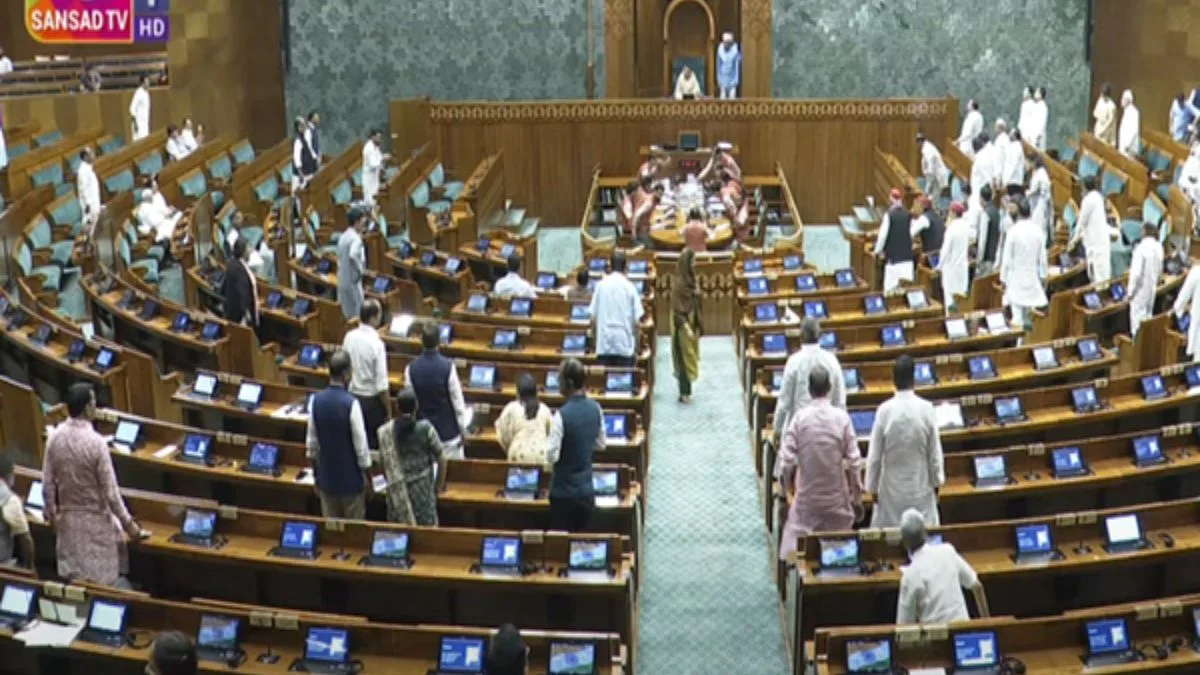
Union Commerce and Industry Minister Piyush Goyal on Monday introduced the Jan Vishwas (Amendment of Provisions) Bill, 2025, in the Lok Sabha, aiming to promote ease of doing business and living by decriminalising minor offenses and rationalising penalties.
The Bill seeks to amend 355 provisions across 16 Central Acts, with 288 provisions to be decriminalised to promote business ease and 67 provisions to facilitate citizen ease.
Advertisement
The Bill was soon referred to a Select Committee, which would be constituted by the Speaker and is expected to submit its report by the first day of the next session of Parliament.
The Bill aims to create a more business-friendly environment by decriminalising minor offenses and replacing imprisonment clauses with monetary penalties or advisory warnings.
The proposed amendments seek to improve the citizen experience by simplifying compliance procedures and reducing judicial burden.
The draft law proposes to decriminalise 288 provisions, replacing imprisonment clauses with monetary penalties or advisory warnings.
Graduated fines for repeat offenses will ensure proportionate action, while designated officers will be empowered to adjudicate and impose penalties through administrative processes.
The Bill provides for a 10 per cent automatic increase in fines and penalties every three years, eliminating the need for repeated legislative amendments.
The Jan Vishwas (Amendment of Provisions) Bill, 2025, builds upon the 2023 Act, which decriminalised 183 provisions across 42 Central Acts. The new bill covers 16 Central Acts under the purview of 10 ministries and departments, further expanding the government’s reform agenda.
The Bill is expected to contribute to sustainable economic growth and create a more business-friendly environment.
The proposed amendments will simplify compliance procedures and reduce judicial burden, improving citizen experience and promoting ease of living.
The government has described the move as a milestone in India’s regulatory reforms, reflecting the vision of “Minimum Government, Maximum Governance.”