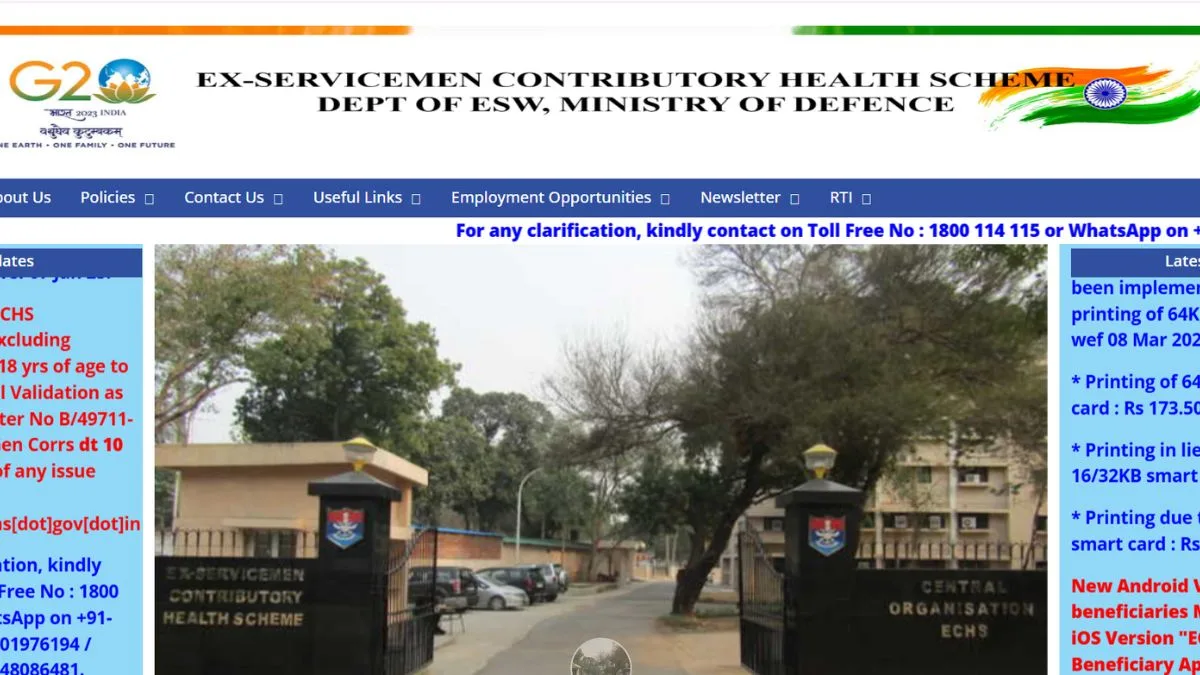
In a significant decision benefiting hundreds of disabled officer trainees discharged from military academies, the government has approved the extension of Ex-Servicemen Contributory Health Scheme (ECHS) benefits to them. Notably, these officer cadets will be exempt from the one-time subscription fee of Rs1.20 lakh, which is currently applicable to ex-servicemen officers.
It may be noted that during a hearing on August 18, the Union government informed the Court that it is open to considering proposals aimed at alleviating the hardships faced by these disabled cadets and exploring avenues for their rehabilitation.
Advertisement
The move came after the apex court had taken suo motu cognizance of the plight of officer cadets who suffer medical disabilities during military training but receive minimal support after being discharged. The court expressed concern over the inadequate healthcare and financial assistance available to these individuals, who are not officially recognized as ex-servicemen.
A two-judge bench comprising Justices B V Nagarathna and R Mahadevan heard the matter. Referring to a report placed before the court, the Bench noted that around 500 cadets from institutions like the National Defence Academy (NDA) and Indian Military Academy (IMA) have sustained varying degrees of disability during training. However, due to their uncommissioned status, they fall outside the scope of the (ECHS) and are denied access to free medical treatment.
The court highlighted the significant gap in support mechanisms, pointing out that these cadets receive only an ex gratia payment of up to Rs 40,000 per month, depending on the severity of their condition. This amount, the judges observed, is often insufficient to meet even basic medical needs, estimated to cost nearly Rs 50,000 per month on average.
In response to these concerns, the court had issued notices to key stakeholders including the Ministry of Defence, Ministry of Finance’s Department of Expenditure, Ministry of Social Justice’s Department for Empowerment of Persons with Disabilities, and the Chiefs of the Army, Navy, and Air Force.
In a statement issued here on Friday, the Ministry of Defence stated that the decision was taken to reaffirm the government’s commitment to the dignity and well-being of the armed forces. “The Government has approved the extension of the Ex-Servicemen Contributory Health Scheme (ECHS) facility to officer cadets who are invalidated from training on medical grounds attributable to or aggravated by military training. Cadets who join prestigious institutions like NDA, OTA and IMA with the aspiration to serve the nation, often suffer lifelong disabilities but are currently not eligible for ECHS as they are not granted ex-servicemen (ESM) status,” it read.
Along with being applicable to the cadets who have been medically boarded out prior to completion of training, the move is extendable to future similar cases.
Considering the humanitarian nature and financial burden on families, the government has approved quality medical care for such cadets without creating a precedent for other categories.
The grant of ECHS facilities is subject to specific conditions. Eligible individuals must apply for membership and agree to abide by the rules of the scheme. The benefits are strictly for individual use and include free outpatient (OPD) services at ECHS Polyclinics, as well as access to cashless OPD, inpatient (IPD) care, and diagnostic services at ECHS-empanelled hospitals. Additionally, beneficiaries must not be enrolled in any other government health scheme.
The government agreed that while a small number of cadets annually are affected, the financial and emotional burden on their families is significant. “In such instances, the practice is to extend a monthly ex-gratia payment to such cadets. In addition, based on the extent of disability (20% to 100%), a monthly ex-gratia disability award is also made available to such cadets. With this approval, these cadets will now be eligible for availing cashless and capless healthcare facilities under ECHS,” the statement read further.