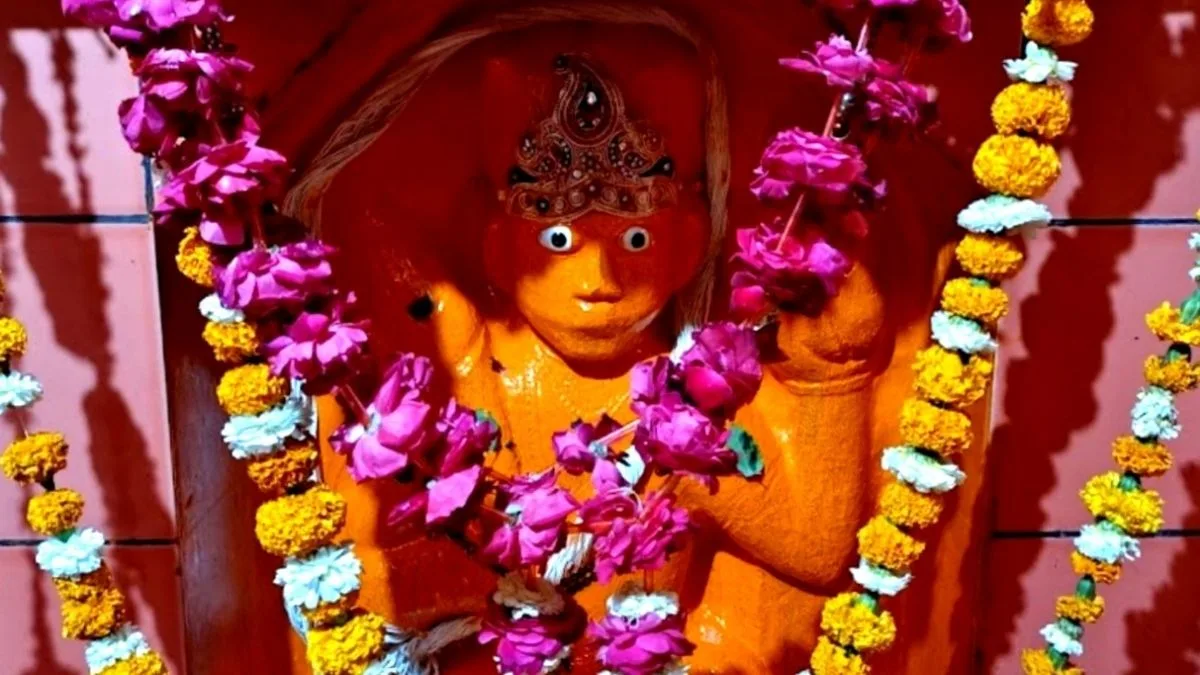
Faith often travels faster than roads and railways. In Firozabad, it has been done so for centuries, drawing devotees from Lucknow, Delhi, Agra, and neighbouring regions to a temple where belief defies logic and wonder begins at first sight.
The famed ‘Pasina Wale Hanuman’ Temple, revered for its unusual and deeply held belief that the deity sweats through all seasons, is now set to receive focused tourism development.
Advertisement
The Uttar Pradesh Tourism Department has allocated a Rs 1 crore project to enhance facilities at this widely worshipped shrine, placing it firmly on the state’s religious tourism map.
Located near the historic Chandwar area on the banks of the Yamuna, the temple is believed to be nearly 2,000 years old. Devotees hold that Lord Hanuman is present here in a living form. What sets the idol apart is the belief that drops of sweat continuously appear on the idol, whether in peak summer or on the coldest winter days. For generations, this phenomenon has drawn pilgrims from major cities such as Lucknow, Delhi, and Agra, turning the temple into a place where faith often outweighs explanation.
UP Tourism and Culture Minister Jaiveer Singh said the department’s initiative is aimed at giving structured shape to a site that already commands immense devotion. He said the development of Pasina Wale Hanuman Temple would help establish Firozabad as a strong religious tourism destination, complementing its existing identity. According to the minister, the project reflects the government’s intent to bring lesser-known but deeply revered places into the mainstream tourism circuit.
The planned works focus on improving the overall temple experience without disturbing its spiritual character. The project includes beautification of the temple complex, modern lighting, a visitor information centre, clean toilets, drinking water facilities and resting areas for devotees. Officials said the effort is meant to ensure comfort and safety for pilgrims who often travel long distances, while also preparing the site for rising footfall in the coming years.
Religious tourism in Firozabad has already been showing steady growth. The district’s location on the Lucknow–Agra route has improved connectivity and increased visitor movement. Tourist arrivals in Firozabad rose from 4,44,850 in 2023 to 6,48,508 in 2024. Between January and June 2025 alone, more than 4.06 lakh tourists visited the district. Officials say the rise is strengthening the local economy and opening new avenues of employment.
Firozabad is steadily evolving beyond its reputation as a glass manufacturing hub. Singh noted that the district combines religious centres, historical landmarks and natural attractions, giving it a wider tourism canvas. Sites such as Jain temples, Vaishno Devi temple, Mata Tila temple, Chandwar Gate, Kotla Fort and Firoz Shah’s tomb add to its historical depth, while eco-spots like Rapdi and Ruriya Swarooppur have begun attracting nature enthusiasts.
With the development of Pasina Wale Hanuman Temple, officials believe Firozabad will gain a stronger foothold in religious tourism circuits that connect Lucknow, Agra and the National Capital Region. The shrine’s unique belief system, coupled with improved infrastructure, is expected to appeal not only to devotees of Lord Hanuman but also to families, children, and history enthusiasts intrigued by living traditions that have endured for centuries.
As the work progresses, the temple’s revival is being seen as a step that blends faith with facilitation, allowing an age-old belief to continue thriving while making space for a growing number of pilgrims who come seeking blessings, reassurance and quiet faith along the banks of the Yamuna.