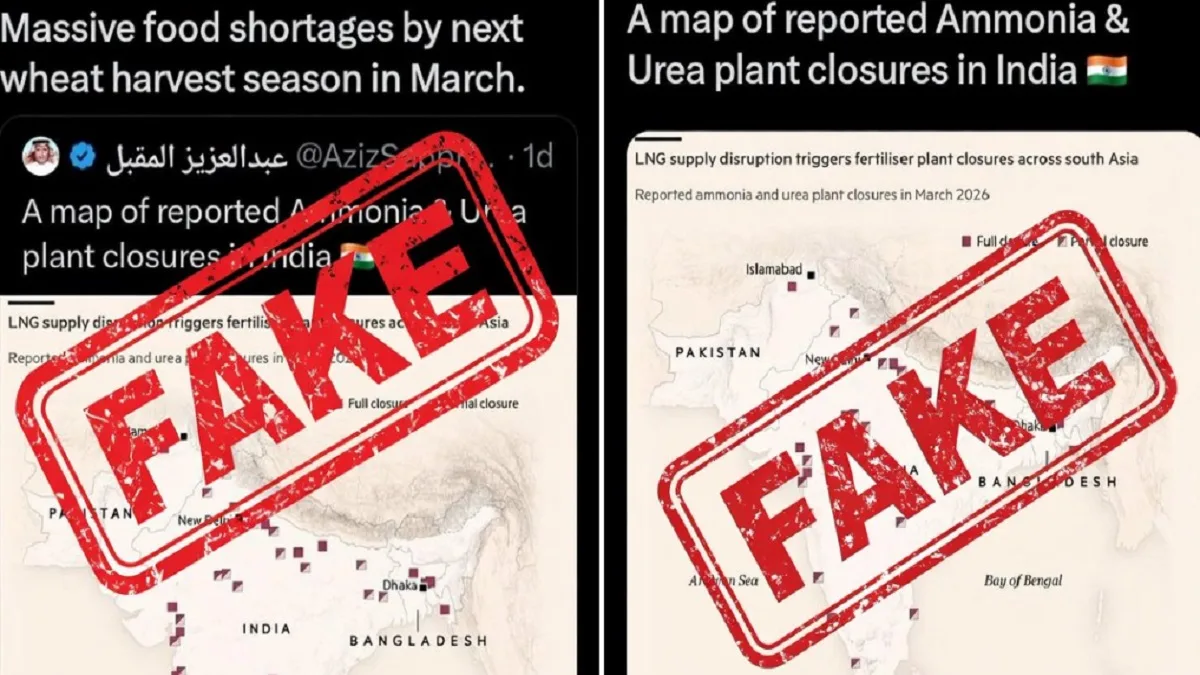
The Ministry of External Affairs on Monday issued a fact-check, dismissing viral social media posts claiming widespread closure of fertiliser plants leading to a massive food shortage in the country as “fake news.”
The MEA clarification came after multiple posts circulating on social media claimed widespread closure of ammonia and urea plants across India. The posts also carried a purported map marked with areas where these fertiliser plants have shut down.
Advertisement
The so-called closure was attributed to the alleged shortage of LNG due to the closure of the Strait of Hormuz. Another post claimed that the shutdown of fertiliser plants may lead to “massive food shortages by next wheat harvest season.”
Reacting to the viral claims, the fact-check unit of the MEA said, “Fake News Alert! Please stay alert against such false and baseless claims and posts on social media!”
According to estimates, around 50 per cent of global food production depends on fertilisers. Disruptions in shipping through the Strait of Hormuz amid the Iran war have triggered a global energy crisis.
Fertiliser production relies heavily on natural gas, and disruptions in gas supply could lead to lower output. This has led to concerns among the farming community ahead of the Kharif sowing season.
Govt assures farmers will not face shortage of fertilisers
However, the government has assured farmers that they will not face a shortage of fertilisers despite these disruptions linked to the Middle East conflict.
To ensure that domestic fertiliser production remains unaffected, fertiliser plants have been categorized under ‘Priority Sector-2’ for natural gas supply.
Under the mandate, fertiliser plants will be provided with at least 70 per cent of their average natural gas consumption based on the last six months.
This measure aims to safeguard fertiliser production against global supply chain disruptions, particularly the LNG supply issues caused by the ongoing conflict in the Middle East.
The priority status ensures that farmers receive fertilisers on time, allowing agricultural activities to continue smoothly despite the global gas crisis.