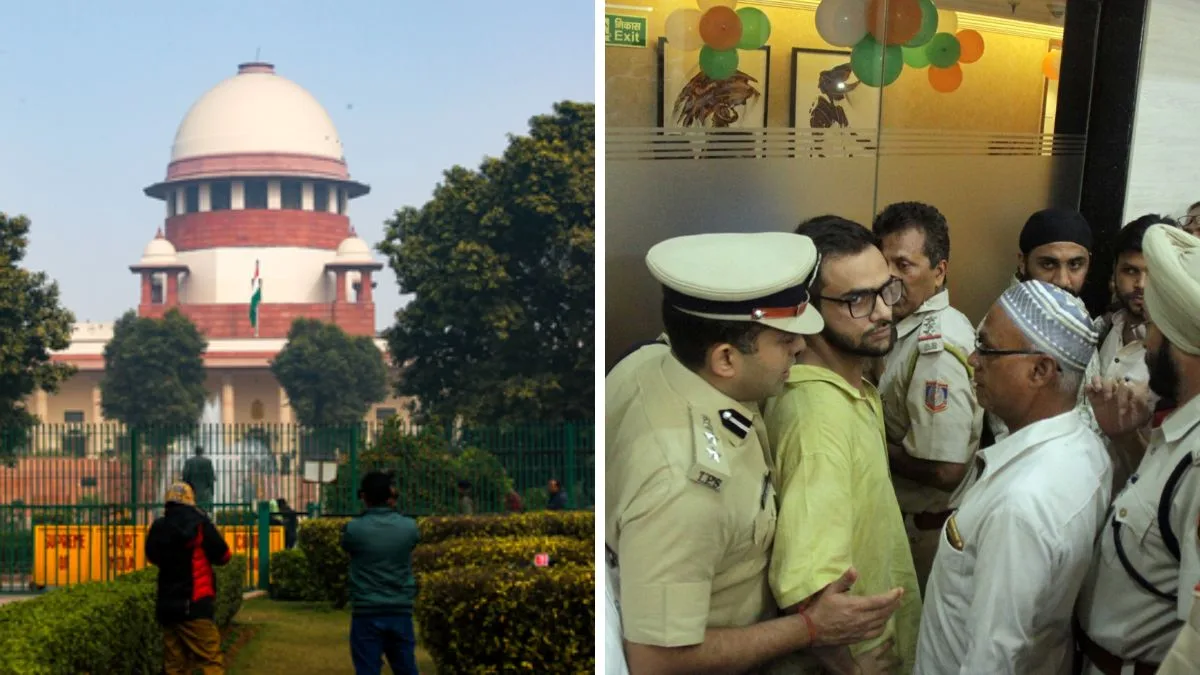
The Supreme Court on Monday rejected the bail pleas of Umar Khalid and Sharjeel Imam, in the 2020 Delhi riots ‘larger conspiracy’ case. The two are in jail on charges under the Unlawful Activities (Prevention) Act (UAPA).
The Supreme Court, however, accepted the bail pleas of the other five persons accused in the case, namely Gulfisha Fatima, Meeran Haider, Shifa Ur Rehman, Mohammad Saleem Khan and Shadab Ahmed.
Advertisement
The Supreme Court, while delivering its order, noted that the case of Umar Khalid and Sharjeel Imam stands on a “qualitatively different footing”, both in terms of prosecution and evidence. The apex court underscored that the two student activists played roles “central” to the alleged offences.
A Bench of Justices Aravind Kumar and Prasanna B Varale said that while the period of incarceration is continued and has been long for the two, it, however, does not violate the constitutional mandate or override the statutory embargo under the law.
While denying bail to Umar Khalid and Sharjeel Imam, the Supreme Court, however, allowed the duo to apply for bail afresh in the trial court, once the examination of all prosecution witnesses in the matter is completed or in any case after one year’s time.
It may be recalled that investigators had described the case as part of a “larger conspiracy”.
The pleas had challenged earlier orders of the Delhi High Court, which had refused bail and held that a prima facie case was made out under the UAPA.
The Supreme Court had reserved its verdict on December 10 after hearing both sides. It later allowed the parties to file additional documents by December 18.
What the accused told the court
During the hearing, lawyers for the accused focused on the delay in the trial.
They said the case has not moved forward for years. They also argued that the trial is unlikely to begin soon.
Several of the accused, they said, have been in custody for more than five years under the UAPA.
The defence also told the court that there is no direct proof linking the accused to acts of violence during the riots, even after years of investigation.
Why the police opposed bail
The Delhi Police opposed the bail pleas.
It said the violence in February 2020 was planned and not spontaneous.
Appearing for the police, Solicitor General Tushar Mehta argued that the riots were part of a deliberate attempt to destabilise the country. He said the protests were organised and coordinated.
The prosecution told the court that the timing of the violence was linked to the visit of the then US President to India. The aim, it said, was to draw international attention.
According to the police, the Citizenship Amendment Act was used as a trigger to mobilise protests in the name of peaceful dissent.
The prosecution also referred to WhatsApp groups and online coordination to support its claims.
It said the violence led to the death of 53 people, injuries to hundreds, and the registration of over 750 FIRs in Delhi.
The police further argued that delays in the trial were caused by the accused themselves. It said each accused took several days to oppose the framing of charges.
In September last year, the Delhi High Court had dismissed bail pleas filed by Khalid, Imam and others, saying the allegations required a full trial.