All eyes on NDA’s ‘Mangal Milan’ meeting on Tuesday
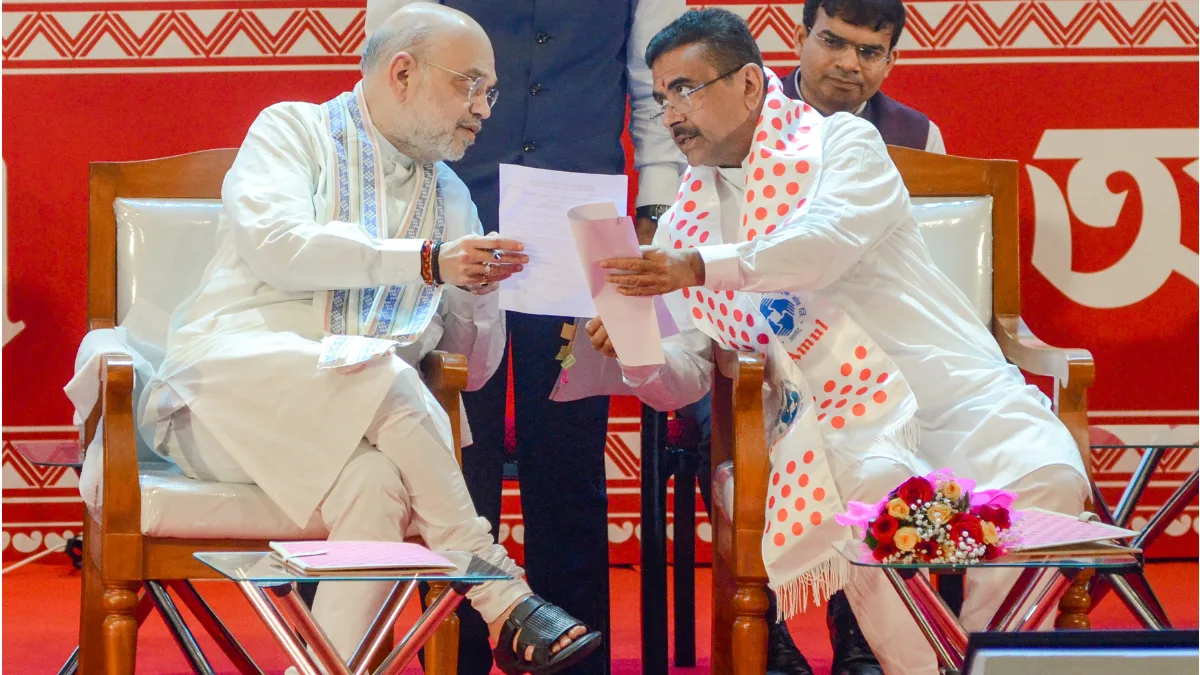
The National Democratic Alliance (NDA) Parliamentary Party meeting, now called 'Mangal Milan', will be held on Tuesday at Parliament House.
The weeks leading to polling day have been marked by fervent rallies, passionate speeches, and relentless outreach by political parties across the spectrum, reflecting the vibrant, if complex, political fabric of Bihar.





As the extensive and electrifying campaign for Bihar’s 243-member Legislative Assembly elections comes to a close, the state stands on the cusp of a crucial democratic exercise that has captured national attention.
The weeks leading to polling day have been marked by fervent rallies, passionate speeches, and relentless outreach by political parties across the spectrum, reflecting the vibrant, if complex, political fabric of Bihar.
Advertisement
The campaign witnessed the dominant National Democratic Alliance, spearheaded by Prime Minister Narendra Modi and Chief Minister Nitish Kumar, vigorously defending its governance record, emphasising development achievements, infrastructure projects, and law and order restoration. Their message targeted aspirations for stability and growth, promising continuity and progress.
Advertisement
On the other side, the Mahagathbandhan (Grand Alliance), led by Rashtriya Janata Dal’s Tejashwi Yadav, pitched itself as the voice of the marginalised, focusing on social justice, employment, and addressing agrarian distress. The alliance sought to capitalise on public discontent and the desire for change, framing the election as a battle for Bihar’s soul.
Adding a new dynamic to the contest was the entry of Prashant Kishor’s Jan Suraaj Party, which aimed to disrupt traditional vote banks with promises of good governance and clean politics, appealing especially to younger and urban voters.
The campaign was not without its controversies and challenges. Reports of heated exchanges, sporadic disruptions in assembly proceedings, and allegations of electoral malpractices surfaced, highlighting the high stakes and intense competition. Yet, the Election Commission of India undertook stringent measures to ensure free, fair, and transparent polling.
Voter engagement surged, with efforts to reach rural and marginalised communities intensifying. The role of women and youth as crucial voting blocs shaped campaign narratives, with parties tailoring promises to their needs and aspirations.
With polling over for November 6 in the first phase, and campaigning ending today for the second phase on November 11, the spotlight shifts to the electorate. Bihar’s voters, representing a mosaic of castes, communities, and interests, hold the power to shape the state’s trajectory for the coming years.
The election results, slated for November 14, will not only determine Bihar’s political future but also reflect evolving social dynamics and the broader currents influencing Indian democracy. In this pivotal moment, the nation watches closely—hoping for a peaceful, participative, and meaningful exercise of democracy in one of India’s most politically consequential states.
Advertisement