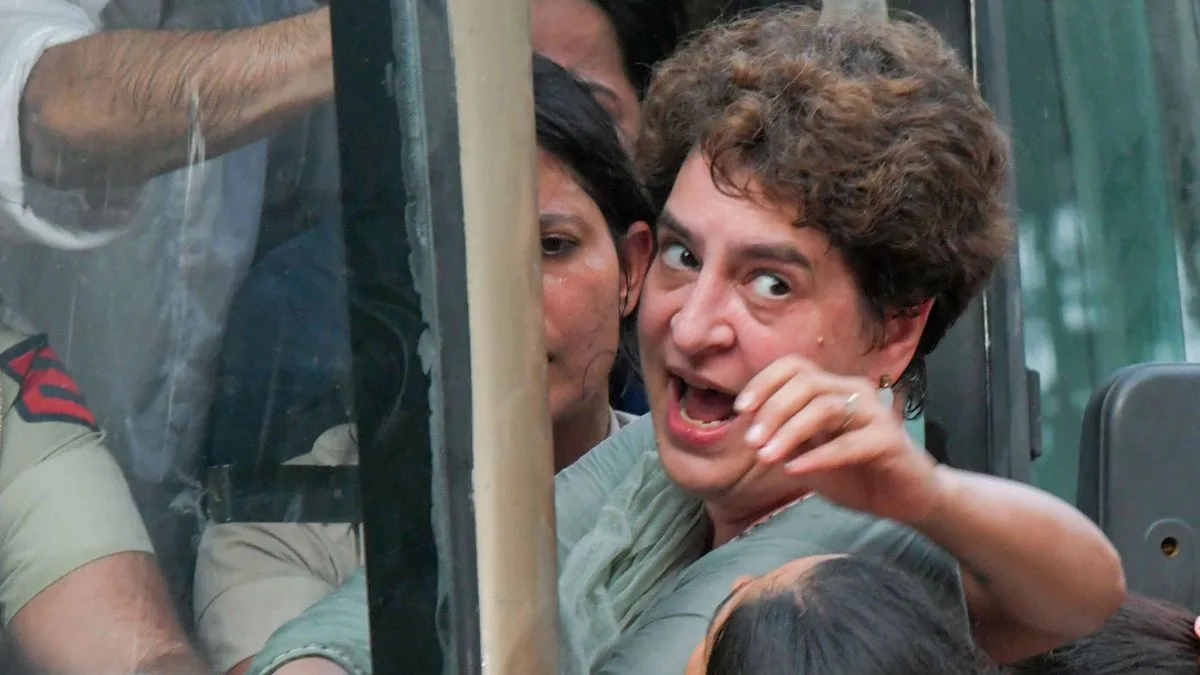
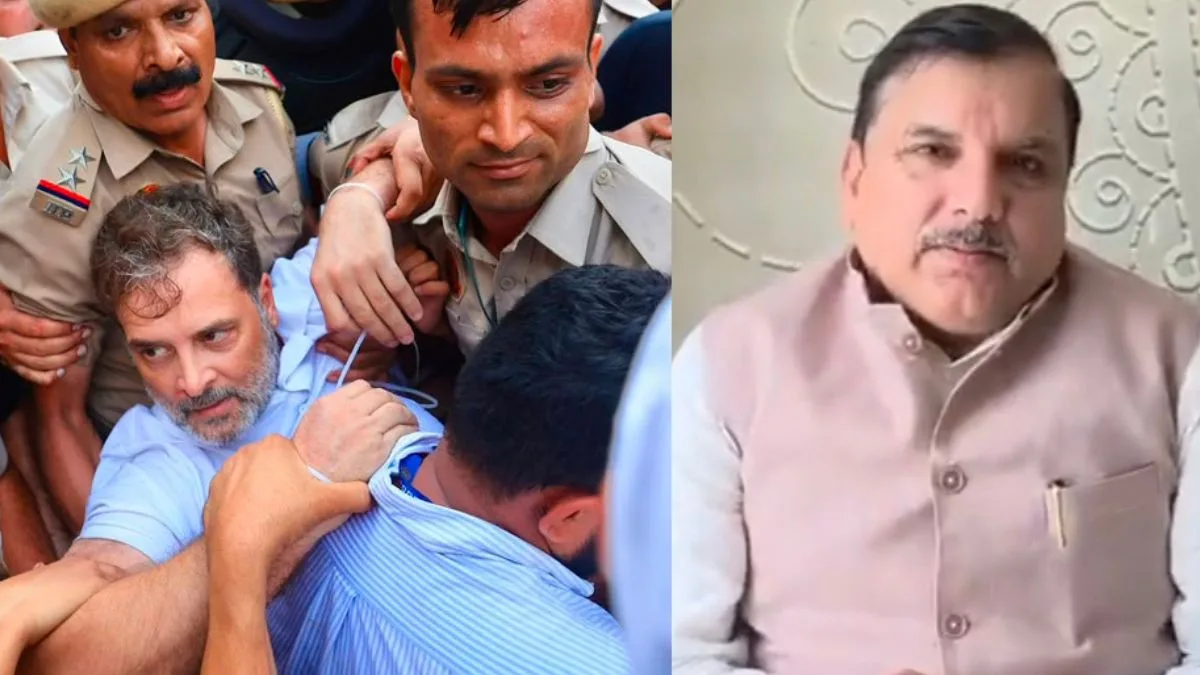
The Congress Party Friday launched a sharp offensive against the newly-passed Viksit Bharat – Guarantee for Rozgar and Ajeevika Mission (Gramin) Bill, 2025 (VB–G RAM G), labeling the replacement of the MGNREGA with the new legislation a direct insult to India’s founding icons.
The legislation cleared Parliament early Friday after a contentious session in the Rajya Sabha, where Opposition protests failed to stall the Bill’s passage.
Advertisement
The VB–G RAM G legislation restructures the funding pattern of the existing Mahatma Gandhi National Rural Employment Guarantee Act.
While MGNREGA currently has the Central government covering full wage costs, up to 75% of material costs, and some administrative expenses, with states contributing the rest along with unemployment allowance and delay compensation, the new bill designates the scheme as a Centrally Sponsored Scheme. Under this, the Central and state governments will share the costs in a 60:40 ratio (90:10 for North-eastern and Himalayan states), with states required to cover any expenditure beyond their normative allocations determined annually by the central government.
Crucially, any expenditure exceeding the Central government’s annual “normative allocations” must now be covered entirely by the states.
Speaking at a press conference, Congress General Secretary Jairam Ramesh slammed the move as a betrayal of Mahatma Gandhi, Jawaharlal Nehru, and Rabindranath Tagore.
“The Winter Session started with insulting Tagore and ended up insulting the Father of the Nation, Mahatma Gandhi,” Ramesh stated. “In between, the government tried to malign Pandit Jawaharlal Nehru as well.”
He argued that the 60:40 funding split would overburden state treasuries and dismantle the “right to work” for millions of marginalized citizens, specifically targeting Scheduled Castes, Scheduled Tribes, and women.
Beyond the fiscal impact, the Congress leadership warned of a “larger conspiracy.” Ramesh suggested that the dismantling of MGNREGA is a precursor to weakening other landmark rights-based legislations, such as:
The Right to Information (RTI) Act
The Forest Rights Act
The Land Acquisition Act
Ramesh also took a swipe at the government’s refusal to prioritize the national pollution crisis during the legislative term. Terming it a “pollution session”, rather than a Winter Session, he accused the administration of ignoring the critical link between air quality and public health.
The Congress Working Committee (CWC) is scheduled to meet on December 27 to finalize a national strategy to oppose the new Bill and defend rural labour rights.