Centre seeks 50 acres for Subsidiary Intelligence Bureau along Indo-Bangladesh border
A high-level meeting between officials of the union home ministry and the West Bengal home department has already been held to discuss the proposal.
It may be noted that the country’s first IICT, based in Mumbai, opened its doors with the first batch of students in the month of August this year.




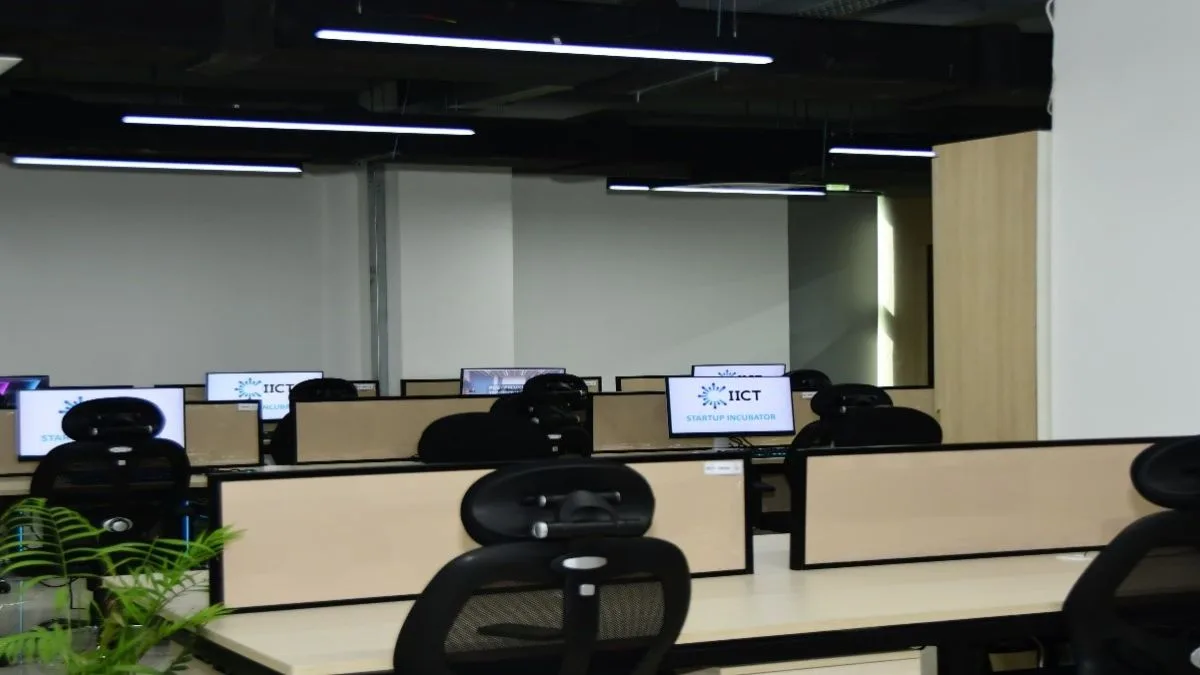
A classroom at IICT-NFDC Campus (Photo: SNS)
In a move to strengthen India’s creative, entertainment, and digital industries, the Ministry of Information and Broadcasting has announced plans to establish 10 new Indian Institutes of Creative Technologies (IICTs) across the country over the next decade, offering specialised, industry-oriented courses in these sectors.
It may be noted that the country’s first IICT, based in Mumbai, opened its doors with the first batch of students in the month of August this year. The Rs 400 crore- project offers industry-oriented courses ranging from three months to three years, aimed at building a skilled workforce for India’s growing media and entertainment sectors.
Advertisement
Operating from the NFDC campus, the IICT is currently offering 18 courses in the AVGC-XR (Animation, Visual Effects, Gaming, Comics, and Extended Reality) sector. The inaugural academic offering includes six specialized courses in Gaming, four courses in Post Production and eight courses in Animation, Comics and XR.
Advertisement
In another landmark move, the government is working towards the creation of 100 PhD seats at the Indian Institute of Mass Communication (IIMC) to promote advanced research and capacity building in journalism and communication studies.
In the broadcast sector, significant reforms are underway with the formulation of new TRP Rating Agency Guidelines. The first round of public consultation has already been completed, and ministry sources indicated that further rounds may follow to ensure a fully consultative and transparent approach.
Further, under the theme of institutional strengthening and convergence, the Press Information Bureau (PIB) has intensified its outreach, issuing regular backgrounders and research-based documents on key national topics. Efforts are also on to integrate the Registrar of Newspapers for India (RNI), PIB, and the Central Bureau of Communication (CBC) to enhance coordination and streamline media outreach, publicity, and regulatory functions.
Technological innovation continues to be a key government priority. A fact-checking chatbot is being developed to verify the authenticity of videos and digital content, enhancing media credibility and combating misinformation.
Furthering the vision of technological self-reliance, over 12 lakh Central Government employees have been onboarded on Zoho’s indigenous digital suite, which includes tools such as Writer, Show, and Drive. Indigenous chipsets for CCTV and other applications are currently under development, and India is on track to achieve complete domestic production of mobile phone components within the next two years. To accelerate innovation, the government will invest over Rs 200 crore to develop energy-efficient microprocessors for high-performance computing and server applications, reinforcing India’s ambition to become a global hub for advanced technology and digital infrastructure.
Advertisement