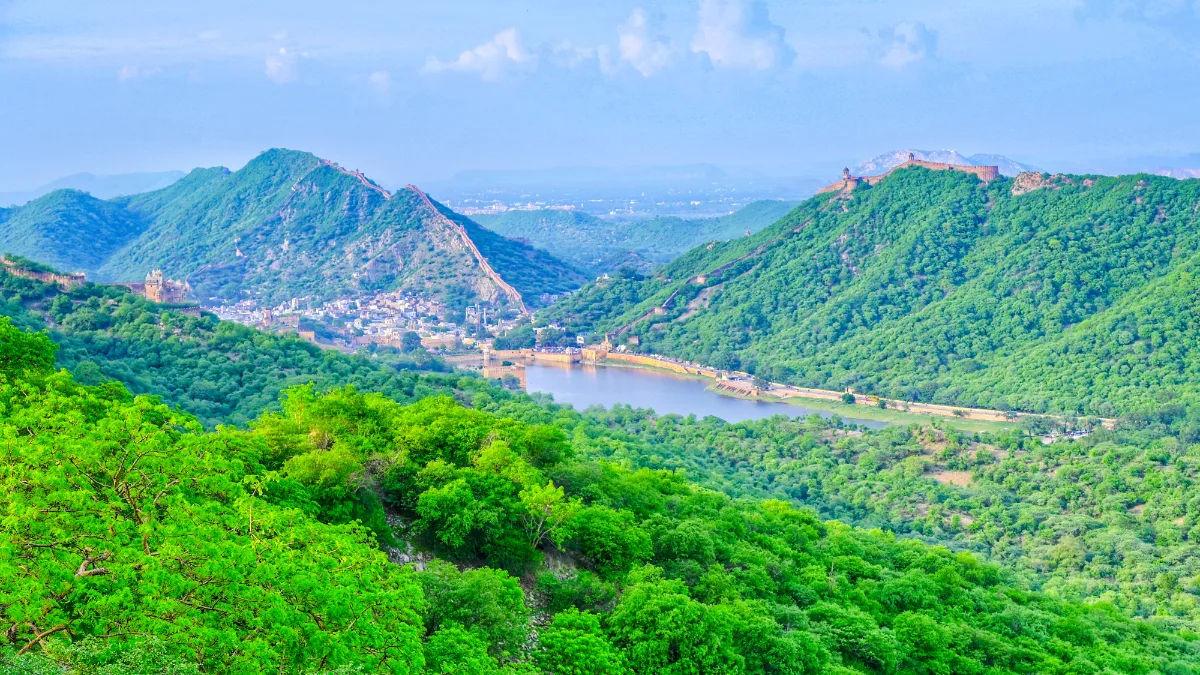
The ecological future of one of India’s most environmentally significant mountain systems has come under focus, with the Supreme Court ordering a detailed scientific review of the Aravalli Hills and Ranges. Highlighting the fragile nature of the region’s ecosystem, biodiversity and geological importance, the top court has constituted a High-Powered Committee to re-examine how the Aravallis should be defined and demarcated, warning that poorly informed decisions could trigger consequences that may be extremely difficult to undo.
The move places environmental protection and sustainable development at the centre of an issue that has long been linked to land use, mining, conservation and regional planning across several states.
Advertisement
Supreme Court orders fresh assessment
A three-judge Bench comprising Chief Justice of India Surya Kant and Justices Joymalya Bagchi and Vipul M. Pancholi directed the formation of a five-member High-Powered Committee to undertake a comprehensive review of scientific, environmental and geological aspects connected to the Aravalli Hills and Ranges.
The committee has been tasked with examining the parameters used for identifying the Aravalli system and assessing their wider implications before submitting its report by August 31, 2026.
The proceedings arise from a suo motu matter concerning the definition of the Aravalli range. In December last year, the Supreme Court had paused the implementation of certain earlier directions after observing that previous recommendations and judicial observations were being interpreted incorrectly.
Aravalli ecology under spotlight
While outlining the purpose behind the committee’s formation, the Bench stressed that the review must be guided by scientific expertise, particularly given the ecological sensitivity of the Aravalli landscape.
The court noted that any future decision affecting the region should be based on a careful understanding of its environmental significance and long-term sustainability.
It observed that the committee’s role would be to assess whether proposed measures could result in ecological, environmental or other consequences that may later become difficult, or even impossible, to reverse.
The Bench further emphasised that any eventual framework must remain consistent with the principles of environmental protection and sustainable development.
Who is on the panel?
The Director General of the Indian Council of Forestry Research and Education (ICFRE) will serve as the ex officio Chairperson of the committee.
Other members include former Forest Survey of India Director General Dr Subhash Ashutosh, retired Geological Survey of India Director Dr Rajendra Kumar Sharma, former Ministry of Environment, Forest and Climate Change Joint Secretary Brij Mohan Singh Rathore and former Delhi University Botany Department head Prof. Ashok K. Bhatnagar.
The court has also designated Professor Jagdish Krishnaswamy, Dean of the School of Environment and Sustainability at the Indian Institute for Human Settlements, and Professor Laxmikant Sharma of the Central University of Haryana as special invitees who may assist the committee when required.
Stakeholder consultation mandated
The Supreme Court has directed the committee to adopt an inclusive approach while carrying out its exercise.
Governments, environmental experts, conservation groups, non-profit organisations, mining lease holders, project developers, farmers, mine workers and local residents are among the stakeholders whose views are expected to be considered.
To facilitate wider participation, the committee has been asked to issue a public notice inviting suggestions, representations and inputs from interested individuals and organisations.
Next hearing in September
The High-Powered Committee is expected to submit its findings by August 31, 2026, following a comprehensive and balanced evaluation of all relevant issues.
The matter has been scheduled for further hearing on September 7, after the committee places its report before the court.