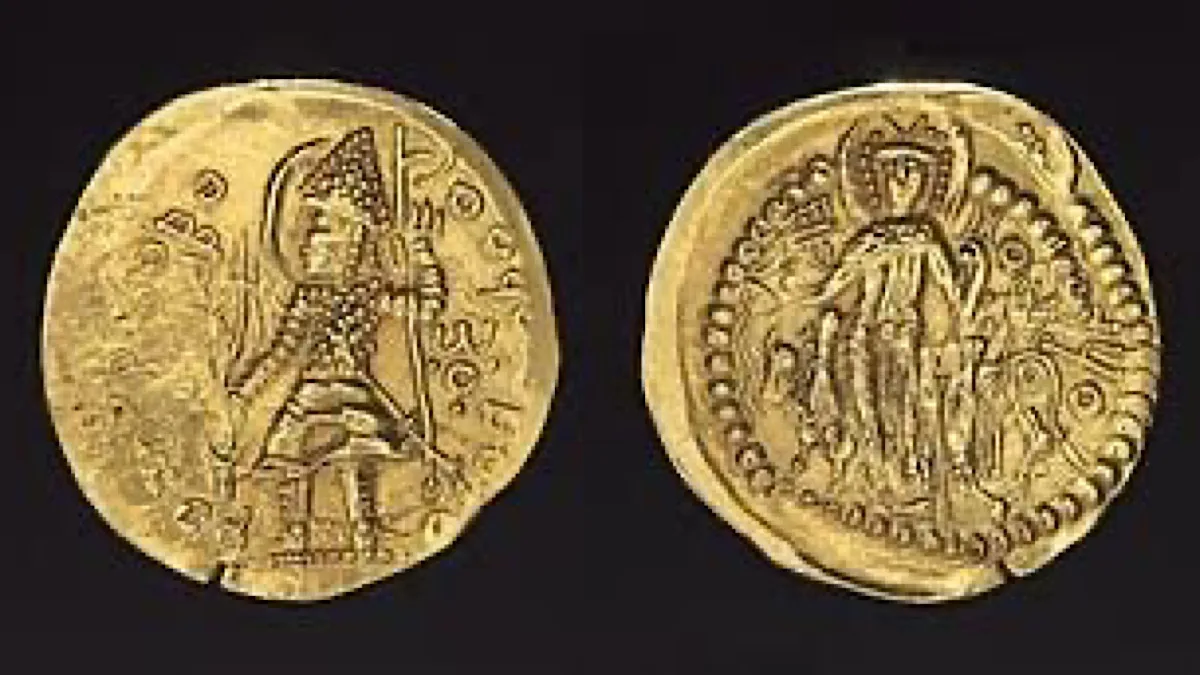
A significant archaeological discovery was made in Banarsia Kala village of Laxmipur area, where labourers unearthed a pot filled with ancient copper coins believed to be from the Kushan period (30 CE to 375 CE).
The discovery occurred during the digging of the foundation for the construction of a boundary wall around the historic Buddhist Stupa at Devdaha, officials confirmed on Tuesday.
Advertisement
The pot, made of clay and filled with coins, weighs approximately 36 kilograms in total. Upon the discovery, the site’s watchman, Om Prakash, promptly secured the artifacts and informed the officials of the State Archaeology Department.
Regional Archaeological Officer from Gorakhpur, Krishan Mohan Dwivedi, arrived at the site and took custody of the coins. The artifacts were then transported to the State Archaeology Department office in Lucknow for further examination and preservation.
Banarsia Kala spans 88.8 acres of protected land under the supervision of the Archaeology Department. Two phases of excavation have already been conducted at this site, revealing numerous historical artifacts, including earthenware, terracotta toys, ring wells, and remnants of ancient walls, all dating back to the Kushan era.
The discovery further supports theories that this region may have been connected to the maternal home of Lord Buddha in Devdaha, though no definitive evidence has been found yet to confirm this claim.
“This site was once a flourishing Kushan-era settlement, so finding coins here is quite natural,” said Dwivedi. He confirmed that all the coins recovered are made of copper and align with other findings from previous excavations in the area.
The current excavation and boundary wall construction aim to further preserve and protect this historically rich site for future archaeological research and heritage conservation.