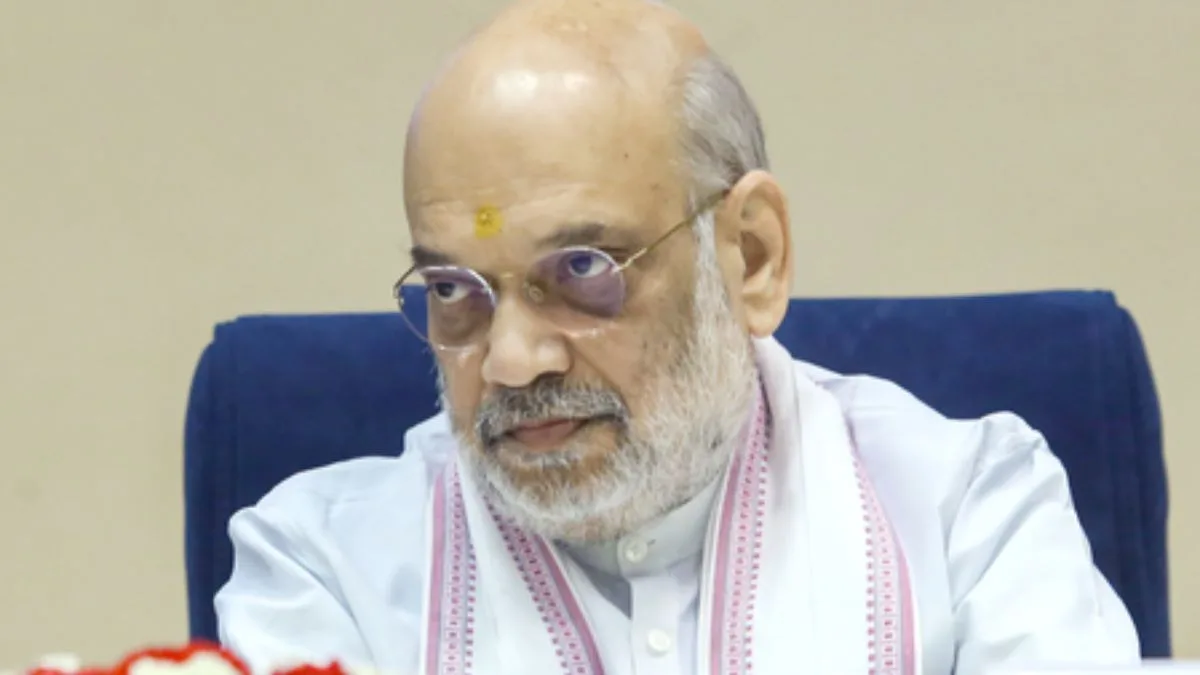
Union Home Minister and Minister of Cooperation Amit Shah on Sunday said that India has recorded a 97 per cent reduction in malaria cases and over 90 per cent improvement in kala-azar, reflecting the country’s steady progress towards becoming malaria-free.
“Through initiatives such as Ayushman Bharat, Mission Indradhanush, a 97 per cent reduction in malaria, more than 90 per cent improvement in kala-azar, a reduction in dengue mortality to one per cent, a 25 per cent decline in the maternal mortality rate, and a 50 per cent reduction in infant mortality have been achieved. These outcomes have been possible because the schemes were not merely announced but implemented effectively,” he said.
Advertisement
Addressing the national conference, IMA NATCON 2025, organised by the Indian Medical Association (IMA) in Ahmedabad, Gujarat, Shah said that 1.81 lakh Ayushman Bharat Health Centres have proved to be a major boon for the poor.
He added that under the leadership of Prime Minister Narendra Modi, the country has witnessed not only rapid expansion of healthcare infrastructure but also unprecedented improvements in public health outcomes.
Highlighting the increase in government spending on health, Shah said that the Centre’s health budget stood at Rs 37,000 crore in 2013–14, which has now risen to Rs 1.28 lakh crore—an increase of 102 per cent. He emphasised that government schemes have moved beyond paperwork and are being implemented effectively on the ground.
Speaking at the event attended by several dignitaries, including Gujarat Chief Minister Bhupendra Patel, the Union Home Minister said that ethics cannot be enforced through legislation, as they are rooted in moral values. He added that if the IMA redefines ethical dimensions and recommends their inclusion in the medical curriculum, it would help nurture a generation of doctors who regard service as a sacred duty—something the nation deeply needs.
He further said that such an approach would help preserve the trust and respect earned by the medical fraternity through decades of dedicated service.
Shah also noted that Rs 1.65 lakh crore has been invested in strengthening the infrastructure of Community Health Centres (CHCs) and Primary Health Centres (PHCs). In addition, a wide network of affordable generic medicine outlets has been established, and insurance costs have been reduced through the removal of GST, according to a Home Ministry statement.
He added that the number of medical seats in the country has increased from 51,000 to 1.3 lakh, significantly boosting the availability of trained doctors. The expansion of AIIMS institutions is also underway, and a new initiative will soon enable telemedicine and video-based consultations from AIIMS to PHCs and CHCs across the country.