Nine killed in landslides, shooting stones in J&K
Nine people were killed in the Jammu division on Monday in landslides and shooting stones triggered by incessant rains in the Poonch and Doda districts.
Jammu and Kashmir is losing its lifelines of water at an alarming pace, with nearly half of its lakes disappearing over the years in what experts describe as a looming ecological disaster.




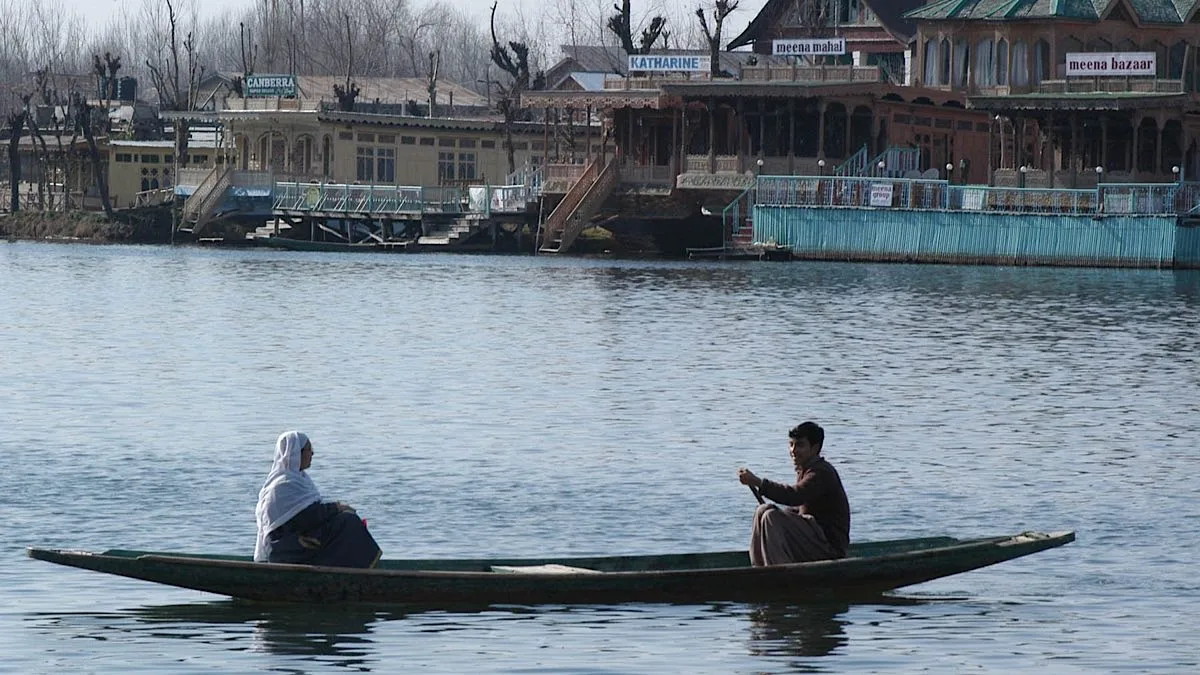
Photo:SNS
Jammu and Kashmir is losing its lifelines of water at an alarming pace, with nearly half of its lakes disappearing over the years in what experts describe as a looming ecological disaster.
A report by the Comptroller and Auditor General of India (CAG), tabled in the Assembly by Chief Minister Omar Abdullah, reveals that out of 697 lakes, 315 have vanished entirely while 203 have shrunk — together they account for a massive loss of 2,851 hectares of water area.
Advertisement
Flagging a major environmental setback, the CAG has warned that iconic lakes are quietly fading away, leaving behind a growing environmental void.
Significantly, the disappearance of lakes cuts across administrative jurisdictions. Of the 315 vanished lakes, 80 were under the Forest Department, while a majority — 235 lakes — fell under the Revenue and Agriculture Departments, highlighting fragmented governance and lack of coordinated oversight.
Advertisement
Presenting a grim picture, the CAG has said that in total, nearly three-fourths of J&K’s lakes — 518 in number — have either vanished or degraded.
This large-scale decline is not natural but largely man-made. The audit identifies rapid land use changes — conversion of lake beds into agricultural land, urban expansion, and encroachments — as the primary drivers behind the disappearance. Satellite-based analysis of 63 lakes between 2014 and 2020 confirmed a steady reduction in open water areas, replaced by built-up zones, horticulture, and fallow land.
Even iconic lakes such as Dal and Wular — once symbols of Kashmir’s natural heritage — are struggling due to poor implementation of conservation programmes. Issues such as untreated sewage discharge, malfunctioning sewage treatment plants, encroachments, and ineffective weed control continue to plague Dal Lake, preventing restoration of its open water area.
Environmental damage is already visible. Key water bodies like Anchar Lake and Khushal Sar Lake are shrinking rapidly, with portions turning into land due to unchecked human activity.
This ecological decline has led to the loss of biodiversity, disruption of aquatic ecosystems, and depletion of essential environmental services provided by these water bodies. Expansion of built-up areas, agricultural activities, horticulture, and encroachments have steadily eaten into lake territories.
Ground verification and satellite mapping using Google Earth Pro further validated the findings. Seven lakes from the audit sample were found to have either dried up or become nearly invisible.
The report also exposes systemic gaps in lake conservation efforts. Despite multiple departments — including Forest, Revenue, Agriculture, Housing & Urban Development, and Tourism—being involved, there is no centralized authority to ensure integrated lake management.
In Dal Lake, issues such as malfunctioning sewage treatment plants, inadequate waste management, unchecked urbanisation, and failure to rehabilitate dwellers have hindered restoration efforts. Similarly, lack of monitoring bodies has impacted conservation work in Wular Lake.
The audit links the loss of these natural water reservoirs to increased flood vulnerability, citing their crucial role as flood buffers—particularly during the devastating 2014 Jammu and Kashmir floods.
The report calls for urgent corrective measures and warns that without decisive intervention, the region’s remaining water bodies may continue to degrade.
Advertisement