Extraction of minerals from the Indian offshore: Opportunities and challenges
The mineral economy of India is at a crucial moment of structural transition.
Water festivals in North-east India form a fascinating cultural bridge between the Indian subcontinent and Southeast Asia.




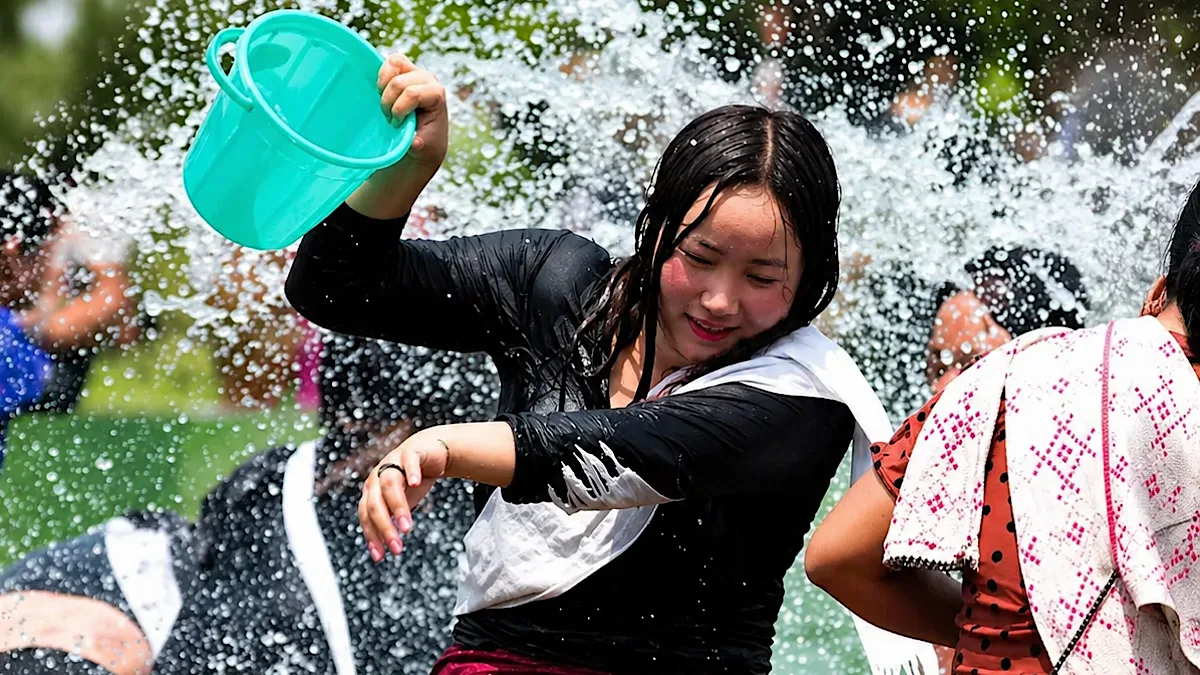
Photo:SNS
Water festivals in North-east India form a fascinating cultural bridge between the Indian subcontinent and Southeast Asia. Rooted in agrarian rhythms, seasonal transitions, and Buddhist or indigenous belief systems, these festivals celebrate purification, renewal, and community bonding through the symbolic use of water. The region ~ especially Assam and Arunachal Pradesh ~ hosts some of the most distinctive water festivals in India. Ali-Aye-Ligang is one such festival observed by the Mising community of Assam. These festivals resemble Southeast Asian celebrations like Songkran and Thingyan, underscoring historical migration and cultural exchange across borders.
But the most important one is the Poi Sangken Water Festival of Assam and Arunachal Pradesh. In Assam, Poi Sangken is celebrated mainly in Tinsukia and nearby areas. Observed in mid-April, it marks the Tai-Khamti New Year. The ritual begins with the ceremonial bathing of images of Gautam Buddha, followed by joyful water-splashing among people. This act is not merely playful; it signifies the washing away of past sins and the welcoming of a purified new year. The festival is deeply spiritual, yet filled with communal warmth, music, and traditional feasting. The Maha Sangken International Festival 2026 was celebrated from 14 to 16 April 2026, primarily at the Golden Pagoda (Kongmu Kham) in Namsai, Arunachal Pradesh.
Advertisement
This three-day water festival marks the Theravada Buddhist New Year, featuring sacred Buddha-bathing rituals, cultural processions, and festive water-splashing to symbolise purification, renewal, and the washing away of misfortunes. It is primarily centred in Namsai district, with major events at the Golden Pagoda. Known as India’s largest water festival, it focuses on p e a c e , harmony, and new beginnings. Festival highlights include the ceremonial bathing of Buddha idols, traditional dances, and community water-splashing. The 2026 festival featured troupes from Thailand, giving it a broader global character.
Advertisement
Celebrated by the Tai Khamti, Singpho, and Tangsa communities, it marks a spiritual transition and a time for community gathering. The festivities are marked by high enthusiasm, drawing tourists and devotees to experience the cultural traditions of Arunachal Pradesh. The Sangken festival is celebrated by the Buddhist community, specifically the Theravada Buddhist sect. It is primarily observed by the Khamti and Singpho tribes in Arunachal Pradesh and parts of Northeast India during April to mark the New Year.
This festival marks the Tai New Year and closely resembles the famous Southeast Asian water festivals like Songkran of Thailand and Thingyan of Myanmar, reflecting deep historical and cultural ties across the region. The term “Poi Sangken” itself carries symbolic meaning: “Poi” means festival, while “Sangken” refers to the ritual bathing of sacred images, particularly those of Gautama Buddha. The festival is deeply rooted in Theravada Buddhist traditions and signifies purification, renewal, and the washing away of sins and misfortunes of the past year. The celebrations typically begin with the ceremonial cleaning of monasteries and homes.
Devotees visit Buddhist viharas, where they gently pour water over the idols of Buddha ~ an act that symbolises spiritual cleansing. This ritual is carried out with great reverence, often accompanied by chanting and prayers led by monks. One of the most visually striking aspects of Poi Sangken is the playful water-splashing that follows the religious rituals. People of all ages participate, sprinkling water on each other as a gesture of goodwill, joy, and blessing. Unlike mere festivity, this act carries a deeper meaning ~ it represents the washing away of negativity and the welcoming of a fresh, prosperous beginning. Temporary structures known as “Kyongfra” are built to house the Buddha images during the festival.
These beautifully decorated pavilions become focal points for community gatherings. Traditional music, dance, and feasting are integral parts of the celebration, showcasing the rich heritage of the Tai-Khamti people. Local cuisine, often simple yet flavourful, is shared among families and visitors, reinforcing bonds of community and hospitality. Poi Sangken is not just a festival of water; it is a celebration of harmony between humans, nature, and spirituality. It reflects a worldview where renewal is both physical and metaphysical. In today’s fast-paced world, such festivals serve as reminders of the importance of cultural continuity, collective joy, and inner cleansing. Another important water-centred celebration is Ali-Aye-Ligang, observed by the Mising community of Assam. Though not exclusively a water festival, water plays a symbolic role in agricultural fertility and life cycles.
Celebrated in February, it marks the beginning of sowing seeds. Ritual offerings, dances like Gumrag, and community feasts define the festival, with rivers and water bodies often serving as sacred spaces for rituals. Similarly, Bohag Bihu, widely celebrated across Assam, incorporates water in subtle but meaningful ways. The first day, known as Goru Bihu, involves bathing cattle in rivers, symbolising purification and respect for agricultural life. While it is more agrarian than ritualistic in water usage, the act of washing and renewal aligns it conceptually with other water festivals. Among the Tai-Phake community, festivals akin to Sangken are also observed with slight variations, reinforcing the shared cultural matrix across ethnic groups.
What unites these festivals is the philosophy behind water ~ it is seen as a purifying, life-giving force capable of cleansing not just the body but also the spirit. In the lush, riverine landscapes of Northeast India, where mighty rivers like the Brahmaputra shape both geography and culture, water naturally becomes central to ritual life. Today, these festivals are gaining wider recognition, attracting visitors who seek to experience their unique blend of spirituality and celebration. Yet, they remain deeply rooted in local traditions, sustained by community participation and oral heritage.
In essence, the water festivals of Northeast India are not just seasonal celebrations; they are living expressions of cultural identity, ecological awareness, and spiritual renewal ~ where every drop of water carries the promise of a new beginning. Poi Sangken, in both ritual and meaning, emphasises cleansing and renewal. Temporary shrines are constructed to house Buddha images, and devotees pour scented water over them before engaging in community-wide celebrations. The festival highlights the Theravada Buddhist influence that connects Northeast India culturally with Southeast Asia.
In recent years, Poi Sangken has also attracted tourists and cultural enthusiasts, contributing to the preservation and wider recognition of Assam’s diverse ethnic traditions. However, the essence of the festival remains deeply local and spiritual, rooted in centuries-old practices that continue to thrive in the quiet corners o f Northeast India. Thus, Assam’s Poi Sangken stands as a luminous example of how tradition, faith, and festivity can merge into a meaningful celebration of life, renewal, and shared humanity.
(THE WRITER IS A FORMER AFFILIATE FACULTY, VIRGINIA COMMONWEALTH UNIVERSITY, AND RETIRED HEAD, POSTGRADUATE DEPARTMENT OF ENGLISH, DUM DUM MOTIJHEEL COLLEGE)
Advertisement