Assam’s demographic reckoning
When Assam Chief Minister Himanta Biswa Sarma tells audiences that his state faces an “existential” demographic threat, he is not reaching for hyperbole in a vacuum.
Winter has settled in the hills in December and the intensity of the dancers, the hypnotic drumbeats, and the earthy resonance of folk songs of the Hornbill Festival of Nagaland creates an atmosphere that is both primal and poetic.




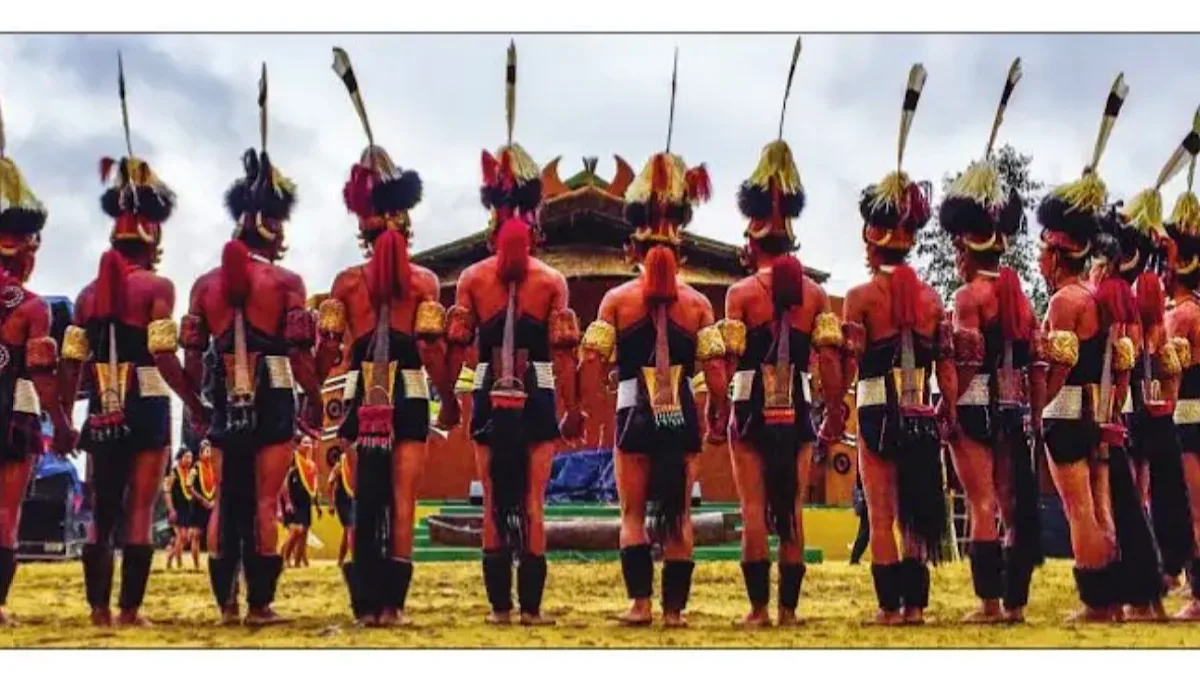
Photo:SNS
Winter has settled in the hills in December and the intensity of the dancers, the hypnotic drumbeats, and the earthy resonance of folk songs of the Hornbill Festival of Nagaland creates an atmosphere that is both primal and poetic. Held annually from the 1st to the 10th of December at the Kisama Heritage Village near Kohima, the festival has become a cultural bridge linking history with contemporary life, local communities with global audiences, and oral traditions with modern forms of expression. Equally captivating is the display of traditional attire. But in recent years, the Hornbill festival, though rooted in cultural context, has evolved to incorporate contemporary forms of expression.
The big question is whether this is diluting its cultural core as it is happening to Bihu in Assam and Durga Puja in Bengal or other cultural festivals of India. Modern music concerts, rock performances, and fusion acts have become integral components of the festival’s evenings. Nagaland’s strong rock music scene finds a prominent platform during Hornbill, attracting youth from across the region and beyond. Many are justifying the blending of tradition with modernity and they believe that the festival still reflects a dynamic cultural confidence—the ability to honor ancestral roots while embracing global influences. The Hornbill Festival functions as a powerful classroom without walls, offering learning far beyond textbooks. For students, researchers, and travellers, the festival becomes an open-air learning space where history, anthropology, ecology, and art come alive through experience rather than theory.
Advertisement
By interacting with artisans, observing age-old crafts, tasting traditional food, and listening to oral stories, learners gain firsthand insight into the resilience and creativity of Naga communities. The festival teaches lessons on cultural preservation, unity in diversity, and respect for indigenous knowledge systems. In this way, the Hornbill Festival becomes not just a celebration, but an immersive educational journey—an authentic classroom where culture breathes, identities speak, and learning becomes joyful, sensory, and deeply human. Northeast is a mosaic of cultures, languages, and traditions, and its festivals beautifully express this rich diversity.
Advertisement
The Hornbill Festival of Nagaland, often described as the “Festival of Festivals,” stands as one of India’s most vibrant cultural spectacles, a living mosaic of ancestral traditions, tribal memory, music, dance, and communal pride. It is far more than a calendar event; it is a collective affirmation of identity by the Naga people, bringing together the diverse tribes of Nagaland on a shared platform of celebration and storytelling. Though each festival is rooted in its own cultural context, together they showcase the harmony, unity, and shared spirit that define the North East. Through these festivals, the region preserves its ancient heritage while embracing modernity, making it one of the most culturally diverse and vibrant corners of India.
Nagaland’s cultural heritage is one of the richest and most vibrant in India, shaped by its many tribes, each with its own customs, folklore, and traditional knowledge. The state is home to sixteen major tribes: the Ao, Angami, Sema, Lotha, and Konyak—whose festivals, dance forms, music, and handicrafts form the soul of Naga identity. Traditional dances like the War Dance or Zeliang Dance, performed with rhythmic chants and log drums, reflect the bravery, unity, and spiritual strength of the tribes. Naga shawls, spears, beadwork, and intricate wood carvings showcase a sophisticated craft tradition passed down through generations.
The communal lifestyle, respect for nature, and ancestral worship are central to Naga culture. Performances of men and women clad in exquisite handwoven shawls, feathered headgear, and bead ornaments perform synchronized movements to the rhythm of log drums and folk instruments are not staged merely for spectacle; they are also expressions of communal memory, recounting stories of harvest, valor, courtship, and spiritual belief. Naga shawls are rich with symbolism, with specific patterns and colors once indicating social status, achievements, or clan identity.
The Hornbill Festival provides a rare opportunity to see these textiles worn with pride, not as museum artifacts but as living garments. The craftsmanship involved in weaving these shawls—often using age-old looms and natural dyes—reflects the intimate relationship between Naga culture and its environment. Through such displays, the festival reinforces the importance of preserving indigenous knowledge systems in a rapidly industrializing world. The culinary dimension of the Hornbill Festival is another highlight, offering visitors a sensory immersion into Naga food culture. Traditional dishes prepared using fermented bamboo shoots, smoked meats, herbs, and local spices reveal a cuisine shaped by ecology and tradition.
Food stalls bustle with activity as cooks demonstrate age-old methods of preparation, transforming simple ingredients into deeply flavorful meals. Sharing food at the festival is an act of hospitality, reinforcing the communal ethos central to Naga society. Beyond cultural performances and gastronomy, the Hornbill Festival also showcases indigenous games and sports that once played an essential role in village life. Events such as Naga wrestling, tug-of-war, high jump, archery, and stone-pulling contests evoke ancient practices connected to physical strength, endurance, and honour. These games are not merely competitive; they serve as reminders of a time when physical prowess was closely tied to survival, defense, and social standing.
The enthusiastic participation of young people in these events signals a hopeful continuity of tradition. The Hornbill Festival plays a crucial role in promoting cultural tourism in Nagaland and extension of tourism is the lifeline for the local people. For a state that remained relatively unknown to mainstream travelers for decades, the festival always opened a gateway to wider recognition. Visitors from across India and around the world gather at Kisama to experience a culture that is at once ancient and vibrant. This influx of visitors has created new economic opportunities for local communities, from artisans and performers to homestay owners and small entrepreneurs. When managed sensitively, such tourism supports cultural preservation rather than commodification.
Yet the significance of the Hornbill Festival extends beyond tourism or entertainment. At its core, it is a statement of cultural self-respect and unity. Nagaland’s tribes, once marked by inter-tribal conflicts, come together during the festival in a spirit of harmony. Each tribe presents its uniqueness while participating in a collective celebration of shared identity as Naga people. This communal affirmation has profound social value, fostering dialogue, mutual respect, and cultural pride in a multi-tribal society. Naga culture has traditionally emphasized harmony with nature, viewing forests, rivers, and animals as sacred partners in human existence. Many rituals and songs performed during the festival reflect this ecological worldview.
In recent years, greater emphasis has been placed on sustainable practices, waste management, and responsible tourism, aligning the festival’s growth with its cultural values. Environmental consciousness is subtly woven into the ethos of the Hornbill Festival. The symbolic choice of the hornbill bird itself underscores the importance of wildlife conservation and respect for biodiversity. The political and historical context of Nagaland also finds indirect expression during the festival. While Hornbill is not a political platform, it provides space for cultural assertion within the Indian national framework.India firmly holds the faith in the principle of ‘Unity in Diversity”. By celebrating distinct identity through art and tradition, the festival affirms pluralism and inclusivity as a strength rather than a threat.
It communicates to the wider world that cultural diversity can coexist with national belonging, enriching the democratic fabric of the country. As years pass, the Hornbill Festival continues to evolve, adapting to changing times while remaining anchored in tradition. Its growing scale and popularity inevitably pose challenges—maintaining authenticity, preventing excessive commercialization, and ensuring equitable representation of all tribes. Addressing these challenges requires ongoing dialogue between community leaders, cultural custodians, and policymakers. The success of the festival ultimately depends on safeguarding its integrity as a people-centered celebration rather than a spectacle detached from its roots.
The modernization of the festival cannot really dilute its cultural core as many are expressing their apprehensions. This is chiefly because , the essence of the Hornbill Festival is a celebration of life as understood by the Naga people—a life grounded in community, memory, courage, creativity, and reverence for nature. It is a reminder that culture is not a static relic but a living force, sustained when people come together to sing, dance, eat, compete, and remember.
(THE WRITER IS A FORMER AFFILIATE FACULTY VIRGINIA COMMONWEALTH UNIVERSITY & RETD HEAD PG ENGLISH DEPT DUM DUM MOTIJHEEL COLLEGE IS A MULTILINGUAL INTERNATIONAL POET CUM COLUMNIST)
Advertisement