Embarkation headquarters Kolkata gets a new commandant
Group Captain Pankaj Upadhyay took over as Commandant, Embarkation Headquarters, Kolkata, today.
Meeting Kankana Chakraborty on a Sunday morning in Park Street, Kolkata, was the start of a great interaction.





Photo:SNS
Meeting Kankana Chakraborty on a Sunday morning in Park Street, Kolkata, was the start of a great interaction. Talking to the young director gave so many deep insights into filmmaking, story-telling, and most importantly, human relations. Chakraborty started her film career working with stalwarts like Amitabh Bachchan, and Shyam Benegal. Her latest film sees yet another veteran actor, Barun Chanda, as the film portrays Gangtok as living, breathing characters. This will be the director’s second collaboration with Barun Chanda.
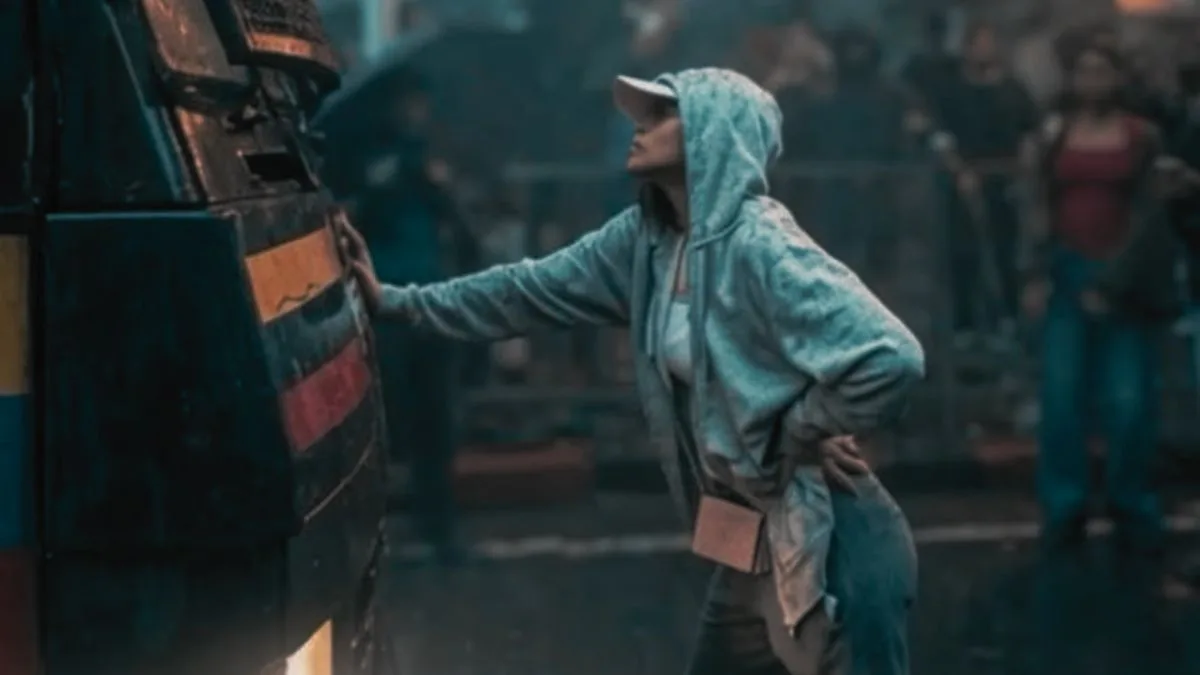
Talking about Re Routing, Chakraborty said, “The black and white choice for the film has a very interesting story. We were initially shooting this back in 2020, and due to non-cooperation, our shoot was stopped when only three hours were left to shoot. That was like a curtain drawing before the climax. But I didn’t really give up on the film, or the story. It was a colour film back then, but cut to 2024. I met Barun sir at some film festival and, with my hat in my hands, approached him for the film. It was then that I decided to shoot the film again, this time the plethora would change, the blueprint would remain the same, but there would be creative changes. My cinematographer, Mridul Sen and I, we are both very obsessed with colour palettes. We had two options: a futuristic view because there is a bridge between real and surreal. Then we saw a show, and realised we could work with b/w. This is a psychological thriller, not a murder mystery. In a thriller, if you bombard the audience with too much information, the audience gets distracted. Hence, to focus on the characters, we chose the greys. It is also the reason we went with the 4:3 ratio shooting, to represent the claustrophobia here as well.”
Advertisement
Re Routing has been a hit with the audience, engaging them nationally. There have been panel discussions, the latest being in SRFTI (Satyajit Ray Film & Television Institute). The film is a tell-tale story of characters in limbo. It is not geography-based; there’s just claustrophobia, and more claustrophobia. Revolving around three characters, the girl, the old man, and the passenger, the roles change from time to time. It is brilliant storytelling and leaves the audience with undertones of undead endings.
Advertisement
On being asked how it was working with the legendary Shyam Benegal, Chakraborty said, “I cannot explain to you how it was. I was a newcomer at that point. So many famous names of my own city Kolkata, had rejected me. Yet, Benegal sir said yes based just on the synopsis, no questions asked. The man talked about such a topic in the documentary that is still not talked about. It was about marital rape, and how that rape happens every day after marriage till a woman gives birth to a boy, or just for the man’s pleasure. It is not domestic violence. Benegal sir was so happy with the topic. He said, “It makes me so happy that the future generation is not going to give up on good storytelling.” He even invited me to his sets; we saw the shoot. The feeling was ethereal for a newcomer. I had the fortune of showing the documentary to the man himself, and he was super happy and proud. He stayed in touch until…”
This interaction was not only rare, but shows how Shyam Benegal was in his filmmaking choices as well. He took those risks, and Chakraborty added aptly, “We were taught in IFA that we must always close the doors of the lift after we have ascended, so that the people on the ground floor can come up. Benegal practised that.”
Talking about her newest project, The Family I Chose, Chakraborty says, “I’ve been fortunate to receive wholehearted support from the local community in Sikkim, along with institutional backing from the Sports Development Board, Government of Sikkim; the Music, Dance, Drama & Film Board, Government of Sikkim; and the SKM Culture Wing. This initiative represents a significant step toward enhancing regional storytelling and promoting Sikkim’s vibrant creative ecosystem on a national stage. The film, tentatively titled The Family I Chose, will be shot in Gangtok. It revolves around a lonely old man and a street-smart girl finding in each other the family they never thought they deserved, until the past returns to test what they’re trying to build. Shooting begins at the end of 2026.”
On being asked about how she sees the cast members being locals to Sikkim, Chakraborty elaborated, “I feel, even during my stay in Los Angeles, we stereotype way too often, and without reason. She’s brown-skinned, so make her an Indian or an Arab. The same negative stereotypes are here as well. Northeast will mean they are outsiders, or work in restaurants, which is very frustrating. But I wanted to be true when representing through art. At the end of the day, you cannot deny that we do hold a very powerful position as a storyteller. We have the power to make someone stop and make someone question. I also believe that if the world you are creating for those minutes or hours in a film is not authentic, you are not doing justice to the audience.”
Chakraborty is an ardent Amitabh Bachchan follower, and lucky for her, she has had many interactions with the man himself. She explained, “That man has eidetic memory. He remembers all my emails verbatim. Even though I don’t remember them, he still knows. He is also a pen enthusiast. So, one time, he liked a silver pen I was using. He told me that if I could get him that pen, I could come to his shoot. I ran like my life depended on it and got him the pen. Years later, he told me he still buys that pen from that shop. That is what Bacchan sir is.”
When asked about her favourite director, Chakraborty said, “My favourite remains Clint Eastwood. He could effortlessly transition between being a director and an actor. My first acting job was with Sabyasachi Chakraborty in my own fiction film, written by me. So that becomes a challenge that you are a director to your actors, but when acting, it is also a transition when you are in front of the camera.”
Chakraborty is a brilliant storyteller with very sharp eyes for humane characters. She weaves characters which are relatable and very connected in the post-modern society. She uses negative spaces in her films to hold the audience captive in the age of mindless scrolling and reduced retention times.
Advertisement