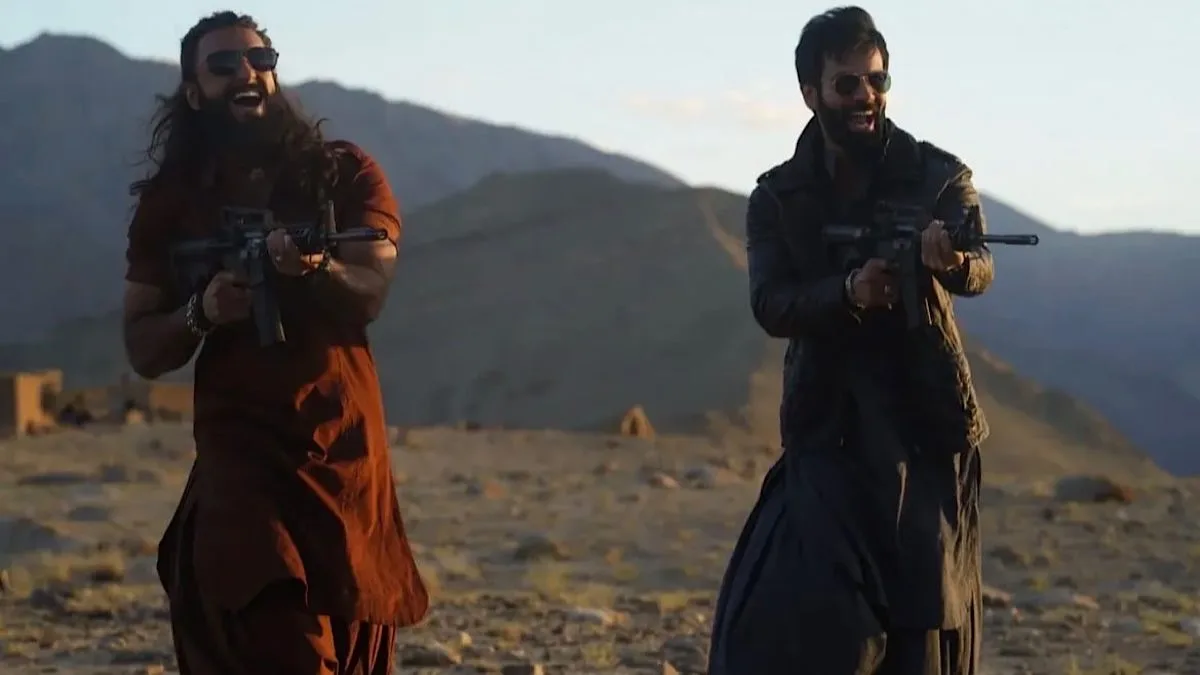
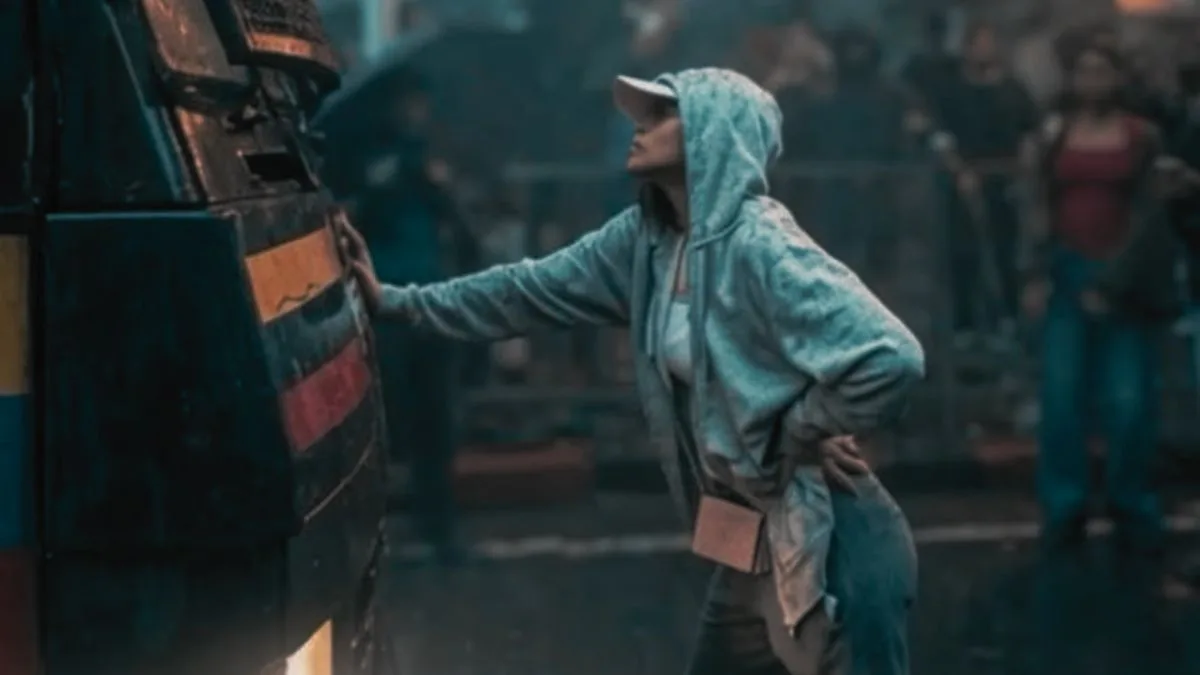
Contemporary action cinema has long rested on the conviction that adrenaline is its most bankable currency ~ a sensory jolt that promises quick thrills, shriller impact, and an audience held captive by velocity. But beneath the roaring engines, explosive crescendos, and shimmering pyrotechnics lies a more compelling truth ~ that adrenaline earns its worth not through sheer scale but through meticulous orchestration. When deployed with intention, it sheds the superficiality of a stimulant and becomes part of the film’s narrative axis. Aditya Dhar’s Dhurandhar stakes its claim in this charged milieu with a confidence that is both deliberate and disarming. Positioned at the volatile crossroads of high-octane nationalism and mass-market spectacle, the film has inevitably catalysed a crucial polarising discourse.
What lends this discourse its current immediacy is the fact that Dhurandhar arrives at a moment when popular cinema is no longer consumed merely as entertainment but identified as a cultural locus where political anxieties, ideological leanings, and moral suspicions collide. The film’s invocation of religious extremism ~ framed by the makers as an artistic attempt to foreground the perils festering beneath its surface ~ has become entangled in a broader critical unease. On one side rests the belief that art possesses the prerogative to illuminate uncomfortable truths; on the other arises a fear that an impressionable audience might appropriate its imagery to legitimise existing prejudices. The debate therefore transcends the film itself. It becomes a referendum on responsibility, on the custodianship of narrative, and on the extent to which cinematic provocation must be tempered in anticipation of misreading.
Advertisement
Even Dhurandhar’s pre-release traction was generated by its calculated coupling of adrenaline and nationalism, a duet long proven irresistible to the Indian box office. Combined with a luminous ensemble, it further enhanced the film’s gravitational potential. However, following its release, this very commercial potency drew Dhurandhar into the corridors of moral scrutiny, with critics vehemently interrogating its imagery, intent, and the ideological impulses it seems to convey. Allegations abound that the film traffics in subtle propaganda, foregrounds religious extremism in ways that could mislead, and glorifies violence for patriotic effect. These serious allegations have rerouted the conversation away from the film’s cinematic verve ~ which continues to be endorsed by audiences ~ to an examination of the sociopolitical realities that underlie audience perception and the broader cultural landscape.
As debates transition from cinematic critique to moral panic, they illuminate a key fault line ~ the audience’s persistent inability to distinguish between acts of religious extremism and the broader faith with which they are improperly deemed tantamount. This perceptive lapse becomes most apparent in the tendency to regard Islamic terrorism as tantamount to Islam ~ the very conflation that fuels ‘Islamophobic’ narratives. In this curious predicament, an artistic jibe at terrorism can be misconstrued as an attack on Islam itself, leaving the artist contending with an outrage that verges on a high-stakes comedy of errors.
Cross-border terrorism emerges from extremist tendencies that subvert the very core ideals of humanity. It cloaks itself in faith, yet in reality, it exploits belief to justify its violence. And yet, despite this understanding, it is remarkable how a film like Dhurandhar ~ which seeks to navigate these stark realities with deliberate intensity ~ can itself become a target, thrusting the artists involved into a precarious position. Many observers have noted that the criticism aimed at Dhurandhar and Aditya Dhar’s team often feels misplaced, as it leaps past the film’s narrative to target perceived bigotry. In doing so, it casts the artists onto a tightrope, where portraying the gory grounds of cross-border terrorism risks attracting disproportionate backlash.
Dhurandhar stands as a case study in how creative risks can be policed even when market forces choose to reward them. It underscores that artists operate within a landscape where acclaim and censure coexist, and where narrowly framed audience perceptions delineate the boundaries of permissible storytelling. However, for all the debate it inspires, the film’s undeniable craft keeps viewers riveted across its three hours and thirty-four minutes, a testament to what disciplined, finely-calibrated filmmaking can achieve.
(The writer is a journalist at The Statesman)