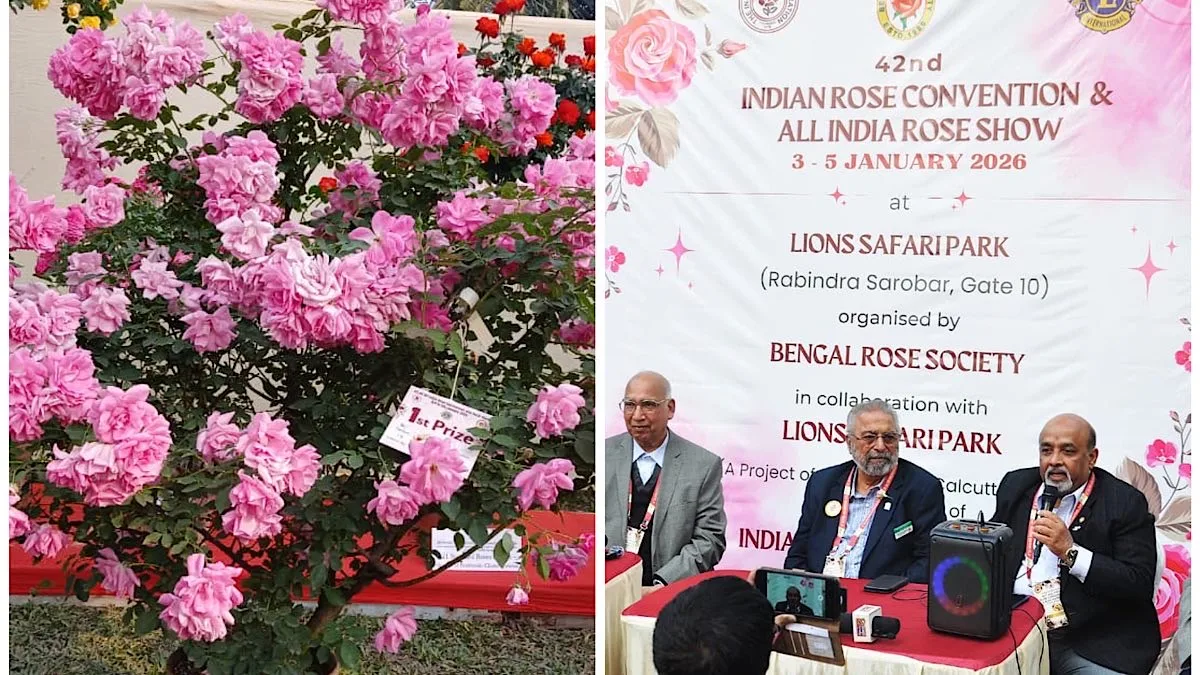
Kolkata has emerged as a national focal point for floriculture as the Bengal Rose Society hosted the 42nd Indian Rose Convention and All India Rose Show from 3-5 January at Lions Safari Park. Organised under the aegis of the Indian Rose Federation, the prestigious convention highlighted Bengal’s historic and contemporary leadership in rose cultivation, breeding, and exhibition standards in India.
The three-day national convention witnessed participation from over 250 delegates, including eminent rosarians, breeders, horticulturists, researchers, and floriculture experts from across the country. The event was graced by noted personalities such as Narendra Dadlani, President, Bengal Rose Society, Sushil Prakash, President, World Federation of Rose Societies, Sanyogita Dhanwatey, President, Indian Rose Federation, and Sanjay Mukherji, Jt. IRC Convener, Girija Viraraghavan, a globally acclaimed rosarian, and Ashok Mehta, Chairman, Lions Safari Park, and is serving as a significant platform for knowledge exchange, collaboration, and the promotion of best practices within India’s growing floriculture sector.
Advertisement
A key attraction of the convention was the All India Rose Show, which showcased nearly 2,500 cut rose exhibits presented by leading growers from different regions of India. Bengal’s distinctive excellence in pot-grown roses continues to draw particular attention, with more than 700 potted rose exhibits on display. Several entries featured over 100 blooms per pot, reflecting advanced cultivation methods, specialised growing media, and refined horticultural techniques that have become hallmarks of the region. The exhibits were evaluated by a panel of renowned rose experts from across the country.
Advertisement
Speaking at the convention, Narendra Dadlani, President, Bengal Rose Society, said, “Hosting the 42nd Indian Rose Convention in Kolkata is a proud milestone for the Bengal Rose Society. This convention represents decades of passion, discipline, and innovation by Bengal’s rosarians. Beyond the exhibition of roses, it is fostering scientific cultivation, encouraging sustainable practices, and enabling meaningful collaboration among growers, researchers, and institutions across India.” He added, “We had an abundance this year. The pots that have come this year are by 40 people, but some of them have presented 15, some have 1, some have gone over 50. It has become a huge task for the judges as well to select a winner among such a sea of flowers. The number of exhibits is in the thousands.”
Sushil Prakash, President, World Federation of Rose Societies, remarked, “The quality, scale, and diversity of roses being showcased here are truly world-class. Bengal’s leadership, particularly in pot-grown roses, reflects a depth of expertise that places India prominently on the global floriculture map.”
Echoing similar sentiments, Sanyogita Dhanwatey said, “The Indian Rose Convention in Kolkata demonstrates how regional excellence can drive national growth. Such platforms are vital for strengthening India’s floriculture ecosystem through shared learning and innovation.”
Presenters came from different parts of the country, including Maharashtra, Tamil Nadu, and Andhra Pradesh. The convention also featured technical sessions led by experts, focusing on innovation, sustainability, and future trends in floriculture. A dedicated presentation is outlining India’s roadmap for hosting the 21st World Rose Convention in Bhopal in 2028. The release of special publications, including the Bengal Rose Annual, further underscores the convention’s role as a key knowledge and networking hub for India’s floriculture community.
Advertisement