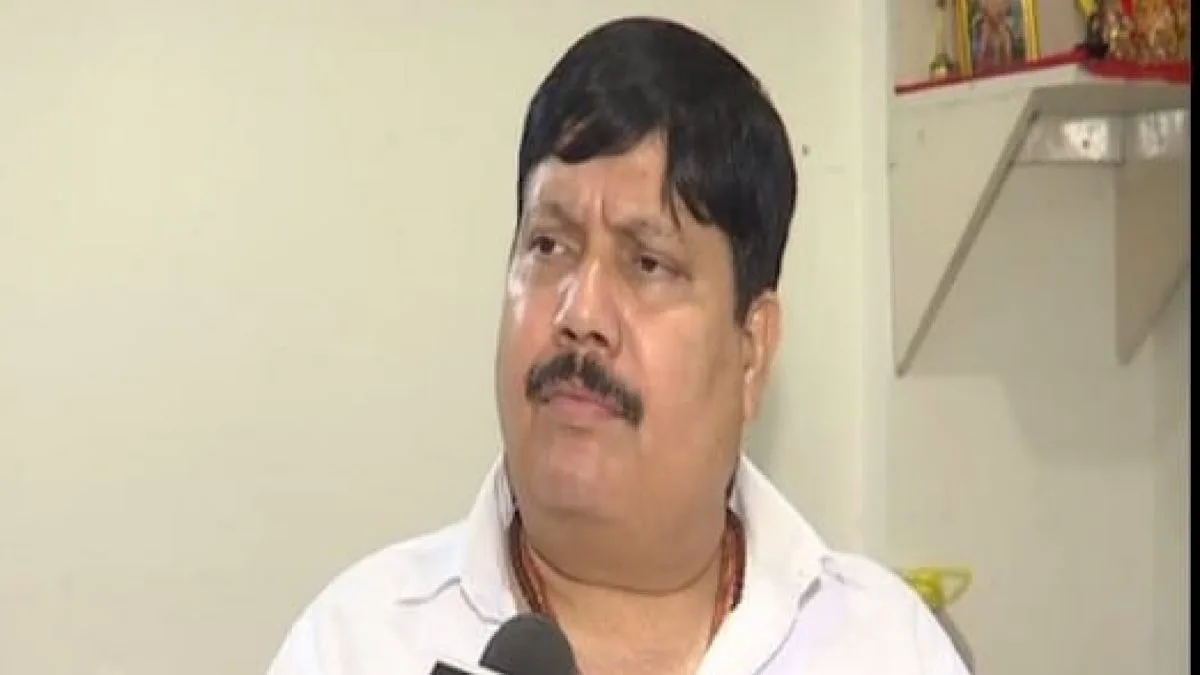
Having witnessed numerous highs and lows over a political career spanning more than two decades, Arjun Singh has emerged as one of the most influential figures in the Barrackpore industrial belt. From his rise in the Trinamool Congress to his switch to the Bharatiya Janata Party (BJP), years of political battles, controversies and legal challenges have marked his journey. Now, with his induction as a Cabinet Minister, the five-time MLA and former MP believes a long-standing chapter of unfulfilled ambition has finally come to a close.
In an exclusive interview with The Statesman, the newly appointed minister admitted that not securing a ministerial position earlier had remained a lingering disappointment.
Advertisement
“There was certainly a sense of regret. But that chapter has now ended,” he said.
According to Singh, his political life became significantly more turbulent after he left the Trinamool Congress and joined the BJP in 2019. He alleged that he was subjected to constant surveillance and faced an unprecedented legal onslaught.
“As many as 256 cases were filed against me. It reached a point where I felt I was being monitored round the clock. Managing those cases became exhausting,” Singh claimed.
Legal battles, however, were only one part of the struggle. The veteran leader also spoke of repeated threats to his life and attacks targeting him and his family.
“I have received death threats on several occasions. Even my house was targeted in bomb attacks. But I never retreated,” he said.
Political observers believe that his elevation to a full Cabinet berth reflects both his organisational influence and the hardships he endured during years of political confrontation.
A dominant force in the politics of the Barrackpore industrial region, Singh first won the Bhatpara Assembly seat on a Trinamool Congress ticket in 2001. He retained the constituency in 2006, 2011 and 2016, steadily consolidating his position in the region. His influence extended well beyond Bhatpara, making him one of the key power centres in North 24 Parganas politics.
Singh maintained that he had devoted himself entirely to strengthening the Trinamool Congress during its formative years, only to face repeated neglect and political hostility in return. Referring to the violence that followed the 2021 Assembly elections, he said the developments had deeply disturbed him.
“What happened after the elections shook me. We will certainly act against wrongdoing, but everything will be done through legal and constitutional means,” he said.
Asked about the biggest challenge before him as a minister, Singh responded with a message centred on discipline and restraint.
“A fruit-bearing tree always bends towards the ground. Power often makes people lose perspective. Our greatest challenge is to keep our workers grounded, maintain discipline and continue working for the people,” he remarked.
The minister also expressed reservations about accommodating leaders from the Trinamool Congress despite growing political realignments following the party’s electoral setback.
“The people voted against the Trinamool Congress. Personally, I do not think it would be right to induct leaders from that party into ours,” he said.
Singh was equally critical of former Chief Minister Mamata Banerjee and the functioning of the Trinamool Congress government. He alleged that the police had been drawn directly into partisan politics.
“The Trinamool relied heavily on the police and political strongmen. The people have rejected that model of politics,” he claimed.
Questioning the party’s future prospects, Singh argued that internal differences had surfaced almost immediately after its electoral defeat, raising doubts about its long-term cohesion.
For Arjun Singh’s supporters, the ministerial berth represents more than an administrative responsibility. It is, they believe, recognition of a long political journey marked by defections, legal battles, controversies and survival against the odds.
For Singh himself, it signals the beginning of a significant new chapter in a career defined by confrontation, resilience and political reinvention.