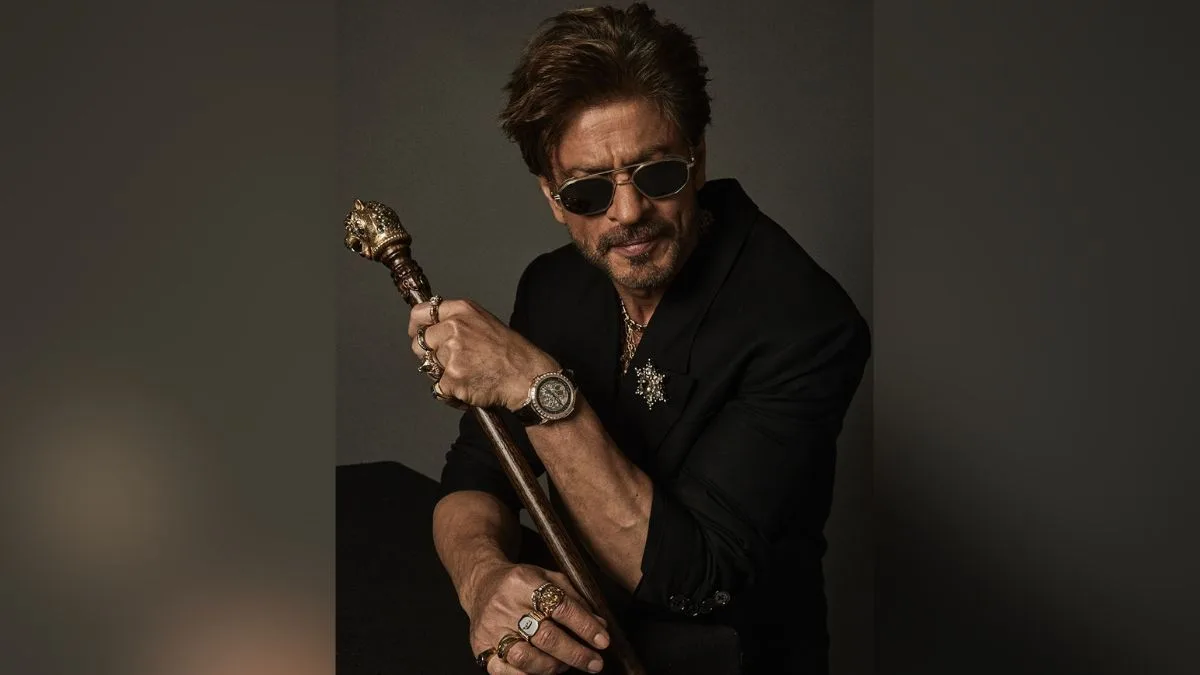
When the 71st National Film Awards were announced, a collective pause swept across India’s cinephile community. Among the celebrated names and remarkable wins, one stood out, not because it surprised anyone, but because it felt like history was finally catching up. Shah Rukh Khan, the undisputed King of Bollywood, was named Best Actor. It wasn’t just a personal victory. It was a national moment. It was a moment that struck a chord, deep and personal, for the millions who’ve grown up with Shah Rukh Khan on their screens, in their lives, and quite honestly, in their hearts.
For those who saw in him not just a superstar, but someone who redefined what it meant to be a man in Indian cinema: emotional without weakness, romantic without apology, powerful without aggression. So yes, the win brought joy. Immense pride. But let’s be honest, there was also a quiet, unshakable thought echoing across timelines and living rooms: This should’ve come long ago. And yet, to say that isn’t to undermine the honour itself. The National Film Awards have always stood for more than popularity; they represent craft, depth, and the cultural pulse of the nation.
Advertisement
Their selections are thoughtful, deliberate, and rooted in integrity. It’s about recognising that sometimes, the brightest stars take the longest to be seen through a certain lens. Because when someone’s brilliance is so constant, so ever-present, it can almost become invisible. And in Shah Rukh’s case, that consistency, of performance, of presence, of impact, may have made his greatness feel inevitable, even taken for granted. Which is why this win means something deeper. It’s not just another award in a room already full of them. It’s the highest form of artistic recognition in Indian cinema. And that kind of validation? That’s not just overdue.
That’s historic. For a man who has shaped not just Bollywood but global perceptions of Indian storytelling, this award is more than recognition, it is an embrace from the very institution that holds cinema to its highest standards. Still, one can’t help but reflect on the journey. This wasn’t a sudden ascension. Shah Rukh Khan didn’t become a great actor in 2023. His performances in Swades, Chak De! India, My Name is Khan, Kabhi Haan Kabhi Naa, and Devdas have long been carved into the cultural memory of this nation. These weren’t just critically acclaimed films, they were transformational moments in the way we saw grief, ambition, faith, and love on screen. And yet, the National Award remained elusive.
Until Jawan. It’s not uncommon in cinema for recognition to arrive at the peak of popularity or after years of consistent excellence. Amitabh Bachchan, another legend whose artistic prowess is undisputed, received his first National Award for Agneepath, not for Sholay or Deewar. Similarly, Leonardo DiCaprio won his first Oscar for The Revenant, long after The Aviator or The Wolf of Wall Street had already showcased his depth. These moments aren’t oversights— they are reminders that awards, by nature, follow time and perspective. In Jawan, Shah Rukh delivered a performance that married mass appeal with sharp political commentary, emotional complexity, and technical finesse. It was action, yes, but it was also rage, fatherhood, grief, and hope.
The film held a mirror to society while keeping the audience rapt, and that balance is no small feat. In many ways, it was the perfect moment for a National Award. Because Jawan wasn’t just a hit, it was a reckoning. The National Film Awards have, in recent years, shown remarkable adaptability, honouring performances that speak to India’s evolving sociocultural fabric. Shah Rukh’s win, then, represents a moment of beautiful convergence: a superstar returning to cinema not just with power, but with purpose, and being honoured for it in the most dignified way.
But here’s another way to look at the delay: maybe this wasn’t the system catching up, but a testament to Shah Rukh’s own consistency. Maybe the fact that this could come even now, decades into his career, says something profound about who he is, not just as an actor, but as a phenomenon. He never stopped delivering. Never stopped surprising. Never stopped evolving. Most actors have peaks. Shah Rukh Khan has had eras. Perhaps this is what makes the award feel timely. He didn’t need one defining role to prove his mettle; he had dozens. He didn’t have to make a comeback to remind us of his power, he simply returned to the screen, and the world lit up again. And maybe Jawan, with its social commentary, blockbuster swagger, and deeply human story telling, was the one film that finally combined everything he’s always been into one roaring, heartfelt performance.
Because Jawan wasn’t just another Shah Rukh film, it was a film that felt like India was rising. And he carried it not just with star power, but with soul. This moment, in truth, transcends individual films. It marks the culmination of a career that has consistently delivered vulnerability wrapped in charisma, brilliance behind stardom, and storytelling that shaped not only the silver screen but our very sense of identity. Shah Rukh Khan was never just a superstar; he was always an actor. A powerful, intuitive, deeply emotional actor whose range was too vast to be boxed into one genre, one era, or one award.
And now, finally, the recognition has arrived, from the highest authority in Indian cinema. It came not late, but right at a time when his return to the screen felt like a homecoming. After hiatuses, health battles, shifting tides, and public silence, Shah Rukh re-emerged not to prove anything, but to remind us that legends never leave, they just wait for the perfect time to speak again.
This National Award does not define him. It simply dignifies what his audiences have always known: that he is not just a beloved icon, but a performer of remarkable depth and substance. In honouring Shah Rukh Khan today, the National Film Awards have not just awarded a performance, they have acknowledged an era.
[The writer is a former civil servant, writes on cinema and strategic communication. Views are personal. Inputs provided by Zoya Ahmad and Vaishnavie Srinivasan ]