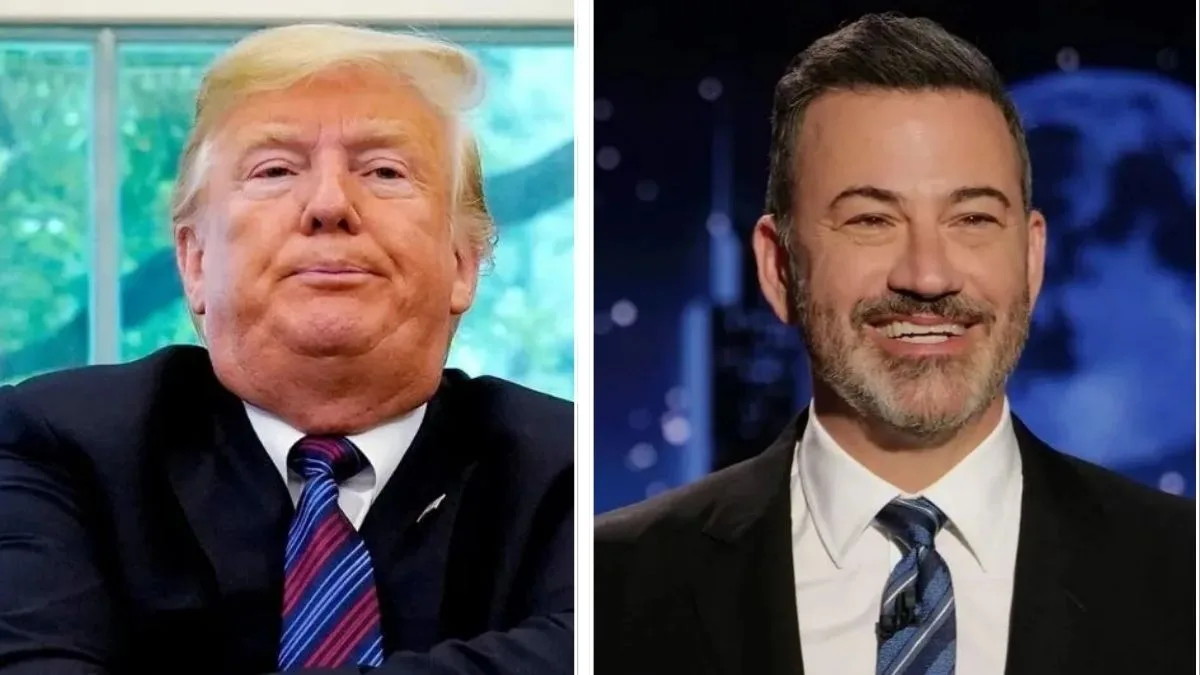
Jimmy Kimmel vs Donald Trump: Late night television has once again landed in the middle of a political storm in the United States. This time, the focus is on comedian Jimmy Kimmel and his show ‘Jimmy Kimmel Live!’ along with Disney, which owns ABC.
The situation started building after remarks and jokes made on the show came under fire from supporters of Donald Trump. What followed was a wave of political pressure involving government officials and media companies.
Advertisement
At the centre of it all is a familiar pattern: a comedy monologue, political anger, and a bigger debate about free speech in American broadcasting.
Disney chooses silence after past experience
Disney, which also owns ABC where Kimmel’s show airs, has decided not to respond loudly this time. The company appears to be acting carefully after facing a similar controversy last year involving Kimmel.
During that earlier situation, Disney temporarily pulled Kimmel off air after pressure and threats linked to Federal Communications Commission (FCC) chairman Brendan Carr. That move triggered backlash and became a major media talking point.
Now, with tensions rising again, Disney has stayed mostly quiet. Internally, the company seems to believe that responding publicly would only increase attention and extend the controversy.
Instead, Disney issued a short legal-style statement saying it is confident about its broadcast licenses and will respond through proper legal channels if required.
FCC chairman Brendan Carr’s role draws attention
FCC chairman Brendan Carr has become a key figure in this situation. He has been accused by critics of using the agency’s influence to pressure companies that broadcast content critical of Donald Trump.
Carr’s earlier public comments included warnings directed at ABC and its affiliates, suggesting action could be taken if Kimmel was not dealt with. His tone at the time, described in media reports as aggressive, sparked debate about whether the FCC was stepping outside its traditional role.
Despite criticism, Carr has continued to raise questions about Disney’s operations, including its broadcast licenses and corporate practices.
Free speech debate returns to the center
As pressure builds, the issue has once again turned into a debate about free speech in the United States.
Critics of the government’s approach argue that targeting a comedian over jokes risks crossing a line between regulation and political punishment. They say broadcasting rules are meant to ensure fairness, not to respond to political disagreement.
The National Association of Broadcasters also weighed in. Its CEO Curtis LeGeyt said that broadcast license renewals must follow clear, fair, and predictable rules. He warned that unusual or rushed regulatory requests for a single company could create uncertainty for the entire industry.
The broadcasting community, which is often considered politically conservative, also expressed discomfort with how the situation is unfolding.
Trump’s comments and political context add fuel
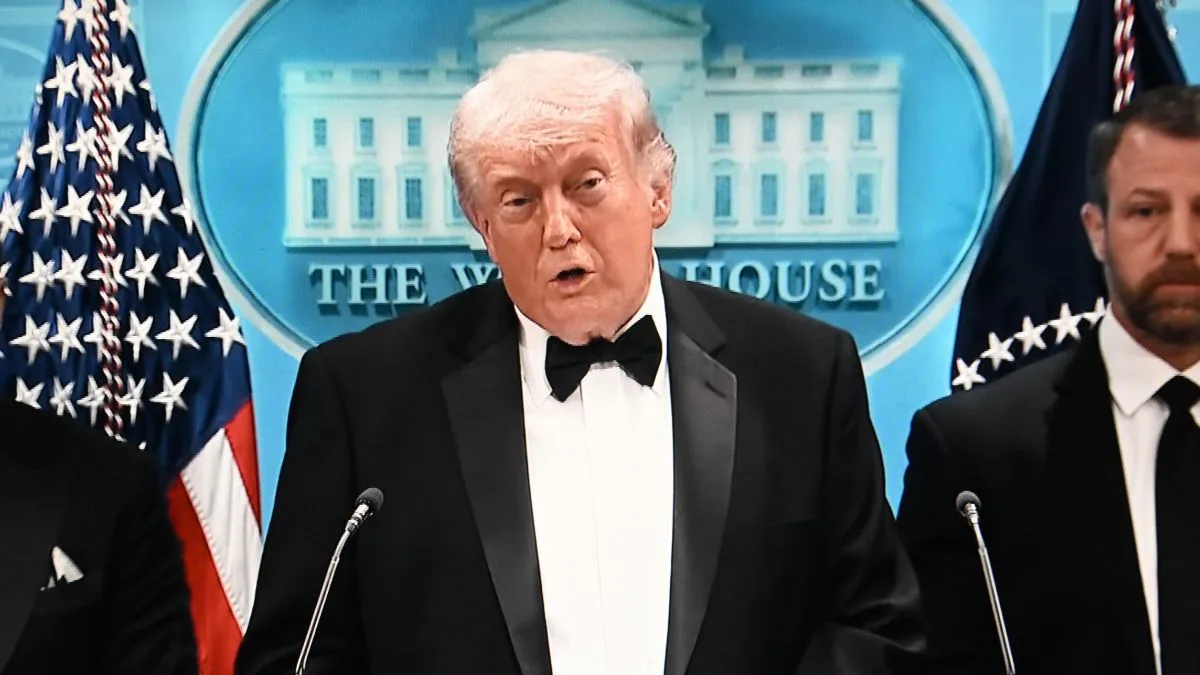
The controversy has also drawn attention because of Donald Trump’s own public statements.
Critics point out Trump has made strongly worded remarks about political opponents, media, public figures. These include calling opponents “evil”, using harsh language against journalists, making controversial comments during political disputes.
In this latest situation, Trump has reportedly supported criticism of Kimmel and suggested consequences over certain jokes made on-air.
The Kimmel monologue at center of it all
At the heart of the issue is comedy monologue from Jimmy Kimmel that triggered backlash among Trump supporters.
The joke in question referenced political themes including age and public figures. It was interpreted by critics as inappropriate in timing and tone. Supporters of Kimmel say the remarks were part of standard late-night satire, where political figures are regularly targeted.
Kimmel later addressed situation on his show. He noted that free speech applies to everyone including politicians, comedians, viewers.