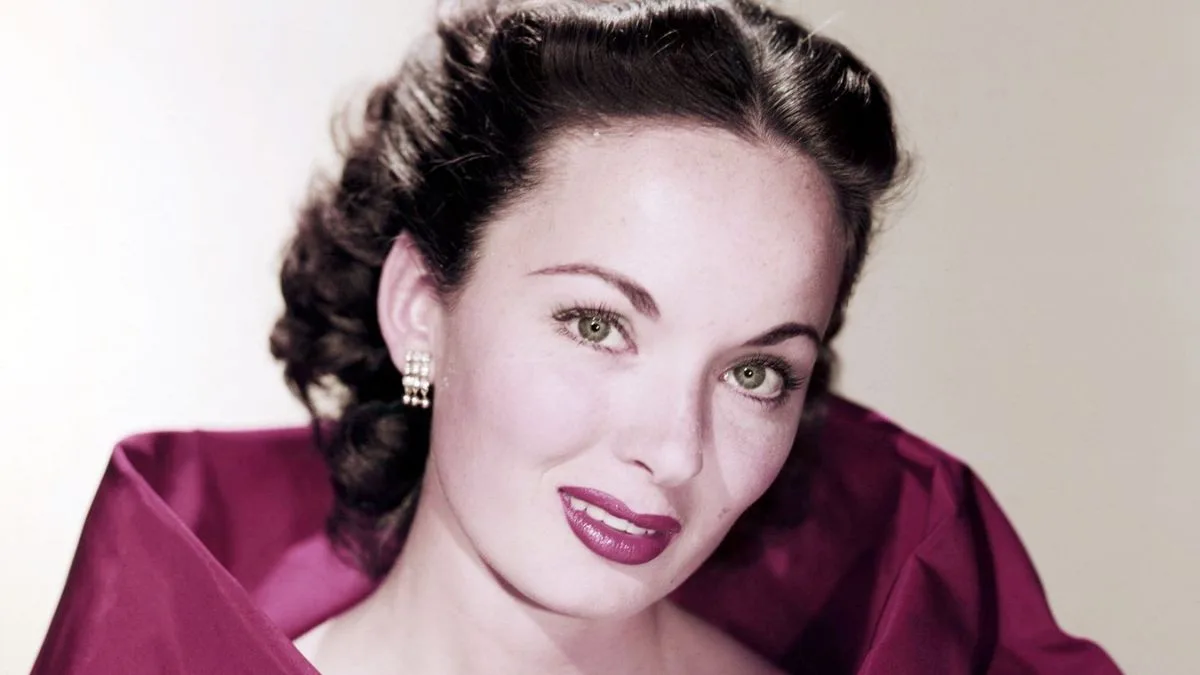
She was 16 years old, on loan from Universal Studios, and playing opposite one of the most feared women in Hollywood. When the cameras rolled on ‘Mildred Pierce’ in 1945, nobody expected Ann Blyth to be the one the critics would not stop talking about. She was. Ann Blyth died on June 24, 2026, of natural causes. She was 98. One of the last surviving stars of the Golden Age of Hollywood was gone, less than two months before what would have been her 99th birthday.
A New York childhood, an unlikely path
Anne Marie Blythe was born on August 16, 1927, in Mount Kisco, New York. After her father left the family, she was raised on the Lower East Side of Manhattan by her mother, alongside her older sister Dorothy.
Advertisement
She started performing on radio at age six, reciting poetry and singing on children’s programmes across New York. When she was nine, she joined the San Carlos Opera Company and began training as an operatic soprano. The stage found her early and never really let go.
At twelve, she was cast in the Broadway production of Lillian Hellman’s Watch on the Rhine, playing the daughter of actor Paul Lukas. The production ran for 378 performances and won the New York Drama Critics’ Circle Award. When the play went on tour and landed in Los Angeles, a Universal Studios executive saw her perform. A screen test followed. A contract followed after that.
Hollywood at fourteen
Blyth made her film debut in 1944 in Chip Off the Old Block, a musical comedy starring Donald O’Connor. Three more similar films followed that same year. They were light, forgettable work. Nothing suggested what was about to come.
Universal loaned her to Warner Bros. for Mildred Pierce, directed by Michael Curtiz and starring Joan Crawford. Blyth was 16 when she played Veda Pierce, the scheming, manipulative daughter who competes with her mother for the affections of her own stepfather. It was a villainous role, starkly at odds with her ingenue status at Universal.
Crawford herself insisted on doing the screen test with Blyth. Blyth later recalled the moment in a 2013 interview. “I knew that other people wanted the part as well but I was the lucky one because Joan Crawford did the test with me, and it made a world of difference. People just didn’t do that, not people of her stature,” she said.
Crawford won the Academy Award for Best Actress. Blyth received a nomination for Best Supporting Actress, making her one of the youngest actors ever nominated in the category.
The accident that changed everything
Five days after finishing Mildred Pierce, Blyth broke her back in a tobogganing accident in the mountains near Lake Arrowhead, California. She wrote about the moment years later. “One minute we were sailing down the hard-packed icy hillside like snowbirds, then there was a crash and I fell on my back with a sickening thud. I didn’t cry out. The feeling was too big for that.”
She spent seven months in a body cast and several more in a wheelchair. She still attended the 1946 Academy Awards ceremony, wearing a studio-designed gown constructed to fit over her back brace. And, she was nominated. She was in a brace. She went anyway.
The injury slowed her momentum at exactly the wrong moment. She recovered, returned, and rebuilt.
Two careers in one
Blyth’s post-Mildred Pierce work showed a range that the industry rarely gave her full credit for. She appeared alongside Burt Lancaster in the gritty prison film Brute Force in 1947, played William Powell’s mermaid in the comedy Mr. Peabody and the Mermaid in 1948, and starred opposite Bing Crosby in Top o’ the Morning in 1949.
In 1952 she left Universal and signed a long-term contract with MGM, where the studio put her operatic soprano to serious use. She introduced the standard The Loveliest Night of the Year while playing Enrico Caruso’s wife opposite Mario Lanza in The Great Caruso in 1951, one of the year’s biggest box office hits. MGM then cast her in Rose Marie, The Student Prince, and Vincente Minnelli’s Kismet across 1954 and 1955.
Her final film was The Helen Morgan Story in 1957, directed by Michael Curtiz, the same director who had made Mildred Pierce. She played the alcoholic torch singer Helen Morgan opposite Paul Newman. She reportedly beat forty other actresses for the part. Her vocals were dubbed by Gogi Grant for the film, despite her being the more technically capable singer.
She made no further films after that.
Life after the screen
After leaving film, Blyth moved into musical theatre, appearing in productions including The King and I, South Pacific, Show Boat, The Sound of Music, and A Little Night Music across the following decades. She continued working in television throughout the 1960s, appearing on Wagon Train, The Twilight Zone, and later on Murder, She Wrote, which served as her final television appearance in 1985. In the 1970s, she became familiar to a new generation of viewers through a long-running series of television commercials for Hostess Cupcakes, pitching Twinkies, Crumb Cakes, and Ding Dongs.
In 1953, she married Los Angeles obstetrician Dr. James McNulty, the brother of singer Dennis Day. They had five children: Timothy, Maureen, Kathleen, Terence, and Eileen. Dr. McNulty died in 2007 at the age of 89. They had been married for 54 years.
Ann Blyth is survived by her five children, ten grandchildren, and five great-grandchildren.