North Bengal Tea Producers Association (NBTPA) members have suspended procurement of green tea leaves from small tea growers (STGs), leaving nearly 50,000 grower families staring at a livelihood crisis.
The decision, communicated to various small tea growers’ associations on 24 July and made effective from 27 July, follows growing concerns over the presence of hazardous chemical residues in green tea leaves supplied by some growers.
Advertisement
In a letter issued to the associations, the NBTPA stated that no bought leaf factory (BLF) would accept green tea leaves unless accompanied by a mandatory Maximum Residue Level (MRL) compliance test report issued by an NABL-accredited (National Accreditation Board for Testing and Calibration Laboratory) or Tea Board-approved laboratory.
Advertisement
The association said the move had become unavoidable after leading tea buyers informed producers that they would not purchase made tea unless it complied with prescribed MRL norms.
NBTPA president Neeraj Poddar alleged that some small tea growers were using “Monocrotophos”, a chemical that could result in pesticide residue levels exceeding permissible limits.
According to him, major buyers, including Hindustan Unilever Ltd (HUL), Tata Consumer Products Ltd (TCPL) and the Federation of All India Tea Traders’ Associations (FAITTA), have conveyed that tea lacking MRL compliance would not be accepted.
Poddar urged the state government to intervene immediately by stopping the supply of such hazardous chemicals at the source.
“If the chemical is prevented from entering the market, growers will not be able to procure or use it. That alone can provide a long-term solution to the problem,” he said.
NBTPA chairman Sanjay Dhanothia said bought leaf factories were left with no alternative but to halt procurement.
“The industry is passing through a critical phase. The government must arrive at an immediate solution to protect the tea sector and all stakeholders dependent on it,” he said.
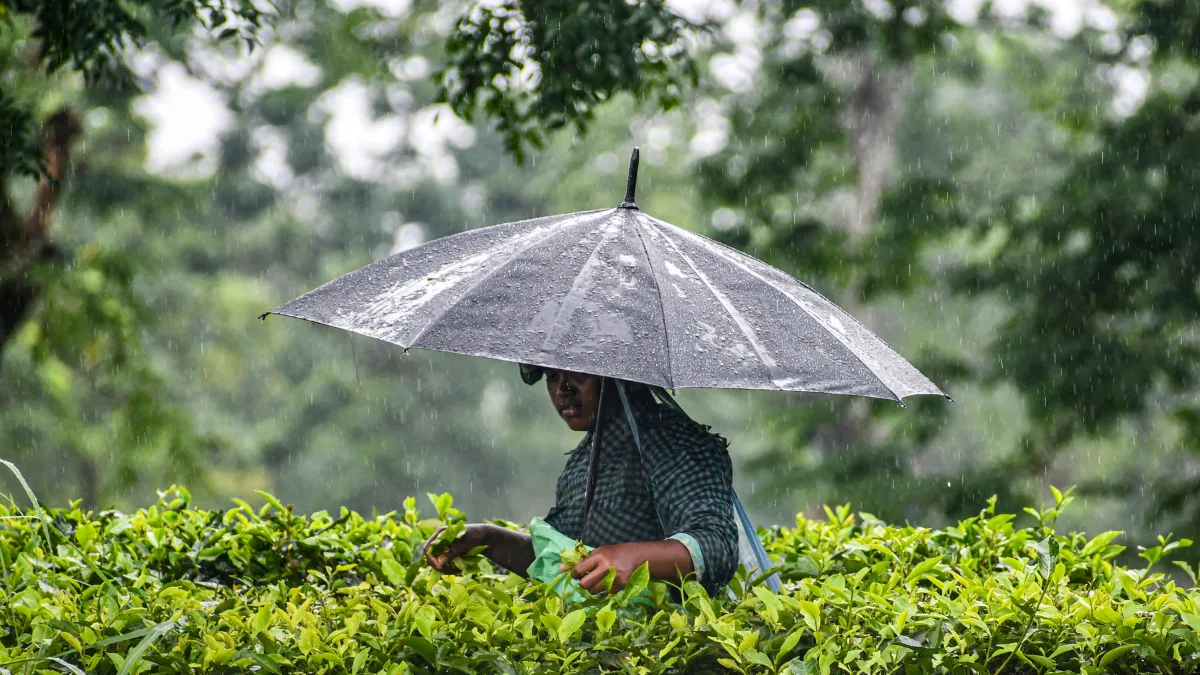
The decision has, however, triggered widespread concern among small tea growers, who depend entirely on selling green leaves to bought leaf factories. The Confederation of Indian Small Tea Growers’ Association (CISTA) has appealed to the state government to intervene without delay.
CISTA president Bijoy Gopal Chakraborty, in a letter to Chief Minister Suvendu Adhikari on 27 July, urged the government to resolve the issue urgently. He said nearly 50,000 small tea grower families across North Bengal had been severely affected after procurement came to a standstill.
Chakraborty argued that, with a stakeholders’ meeting already scheduled at Nabanna on 31 July, the procurement suspension could have been deferred until a decision emerged from that meeting. The sudden stoppage, he said, had pushed thousands of growers into financial distress during the peak plucking season.
Both the growers’ body and the producers’ association have sought the intervention of the state government ahead of the Nabanna meeting, where stakeholders are expected to discuss the issue and explore a way forward.
North Bengal’s tea production system broadly functions through two distinct categories—registered tea gardens (RTGs) and small tea growers (STGs). While registered tea gardens manufacture tea within their own estates, the STG model, introduced by the Tea Board of India to promote small growers, allows farmers to cultivate green leaves and sell them to bought leaf factories for processing. The present dispute is confined to the STG-BLF supply chain and has no bearing on registered tea gardens.
With procurement suspended and uncertainty prevailing over the enforcement of MRL compliance, thousands of small tea growers and bought leaf factories are anxiously awaiting the outcome of the 31 July meeting, hoping it will pave the way for an early resolution and restore normalcy to North Bengal’s tea industry.
Advertisement