West Bengal may finally be approaching an inflection point in its industrial journey. After more than a decade in which discussions on the state’s investment climate were often overshadowed by concerns over land acquisition, policy uncertainty and investor confidence, business leaders now sense an opportunity for a fresh beginning.
The advent of a new government, coupled with expectations of policy continuity and reform, has generated cautious optimism that the state can reclaim its position as one of eastern India’s leading industrial and investment destinations.
Advertisement
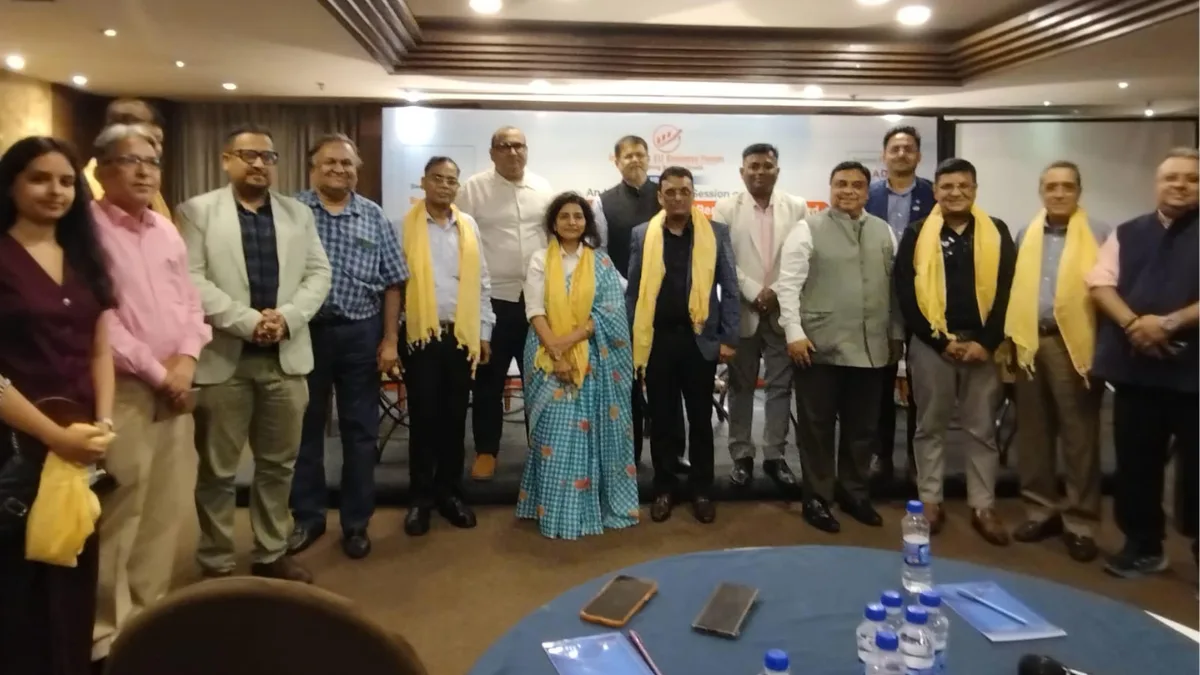
That optimism was evident during an interactive panel discussion on “Industrial Investment Climate of West Bengal: Way Forward,” organised by the India Swiss EU Business Forum, where industrialists, investors and policy experts argued that the conversation around Bengal is gradually shifting from historical baggage to future potential.
Advertisement
The consensus was unmistakable: perception matters, but execution will matter even more.
West Bengal enters this new phase with several inherent advantages. It boasts one of India’s largest consumer markets, strategic proximity to the Northeast and South-East Asia, a major port, improving transport infrastructure and a diversified economic base spanning manufacturing, services and agriculture. If these strengths are complemented by investor-friendly policies and lower transaction costs, participants believe the state could emerge as an attractive destination for fresh domestic and international investments.
Omprakash Jhajharia, Managing Director of PP Elektropower, said infrastructure development itself reflects Bengal’s enduring economic relevance.
“Kolkata was home to India’s first underground Metro and now the country’s first underwater Metro. These are not coincidences. Bengal has a population of over 10 crore. Wherever there is demand and a large consumer base, industry will inevitably follow,” he observed.
Jhajharia also highlighted the state’s relatively moderate climate as a natural advantage for manufacturing and industrial operations, arguing that such strengths deserve greater attention in investment promotion strategies.
Serial investor Ravi Didwania shifted the focus towards innovation-led growth. “We already have investment commitments worth thousands of crores. But the real opportunity lies in creating companies that can become global leaders. SpaceX and Amazon started as start-ups. Bengal should aspire to build its own unicorns. The environment is becoming increasingly conducive for innovation,” he said.
His comments reflected an important transition in industrial policy thinking—from attracting factories alone to nurturing entrepreneurship, technology and venture capital ecosystems capable of generating long-term value.
Moderator Mamta Binani, President, MSME Development Forum, West Bengal, argued that improving competitiveness would require reducing the cost of doing business rather than merely announcing incentives.
“Today, businesses operate on wafer-thin margins. Every element of cost becomes critical,” she said, noting that investors often build subsidies into their financial calculations before deciding where to locate projects.
Binani called for rationalising export-related convenience fees, restoring confidence in industrial incentive schemes and addressing high electricity and water tariffs. These issues, she said, have become especially important as the state seeks investments in emerging sectors such as artificial intelligence, deep technology and data centres, all of which are energy and water intensive.
She also stressed that the next phase of industrialisation must be export-oriented. “The new government has to create conditions where products manufactured in West Bengal can compete successfully in global markets. Several Indian states have demonstrated that this transformation is achievable within a relatively short period,” she observed.
Subir Ghosh, Chairman and Managing Director of Unirox Bikes Pvt Ltd, said investor perception towards Bengal had already begun to improve.
“Land availability for industries requiring between five and 100 acres is no longer the challenge it once was, particularly through WBIDC. The limitation remains for mega industrial townships requiring thousands of acres, but there is considerable scope for small and medium-sized manufacturing investments,” he noted.
For Manab Paul, Founder and Managing Director of Sree Balaji, Bengal’s appeal extends beyond conventional business metrics.
“Bengal offers a quality of life that is difficult to replicate. Its geography—from the Himalayas to the Bay of Bengal, the Ganges and its culturally rich districts—creates enormous opportunities. Tourism itself has become a powerful economic engine, adding another dimension to the state’s investment potential,” he said.
Ashith Kampani, Chairman of Cosmic Mandala 15 Group, expressed confidence that the state’s image is on the cusp of a significant transformation.
“There was a time when Bihar carried the ‘BIMARU’ tag, but that perception has changed dramatically. Bengal’s perception will also change. With its coastline, port infrastructure and inland river connectivity through the Ganges, the state possesses natural logistical advantages that very few regions enjoy. Industrial investments will come—it is only a matter of time,” he remarked.
“This transition also presents a major economic opportunity. India’s growing renewable energy, electric vehicle, railway modernisation and defence sectors require high-grade castings and speciality steel products. Bengal can position its clusters as suppliers to these sunrise industries rather than remain confined to low-value conventional casting segments,” said Sunil Goenka of India Swiss EU Business Forum.
Sunil Singhi, Managing Partner of V Singhi and Associates, said that with a new state government now aligned with the Centre, the state stands to benefit from accelerated infrastructure spending under PM Gati Shakti, smoother GST and industrial policy execution, and a more investor-friendly land acquisition environment. Bengal has always been an undervalued asset with the talent, geography, and entrepreneurial DNA to compete — that discount is now beginning to correct.”
Collectively, the discussion suggested that West Bengal today stands at a defining moment. Infrastructure has improved, investor conversations have become more constructive and industry appears willing to give the state another look. Yet optimism alone cannot drive industrialisation. Sustained policy stability, faster approvals, competitive logistics and power costs, export facilitation and institutional responsiveness will ultimately determine whether positive sentiment translates into investment decisions.
For a state that once spearheaded India’s industrial revolution, the opportunity is not merely to recover lost ground but to build a modern, innovation-driven manufacturing economy. If the new government’s policy direction aligns with the growing confidence expressed by industry, West Bengal could well be witnessing the early signs of its next industrial renaissance.
Advertisement