Bonus row: Labour department Calls for tripartite meeting
This meeting comes in response to growing unrest among tea workers, who have been protesting under the banner of over eight trade unions.
The government held a series of tripartite meetings involving the Labour Department, jute mill owners and managements, and representatives of workers’ unions.




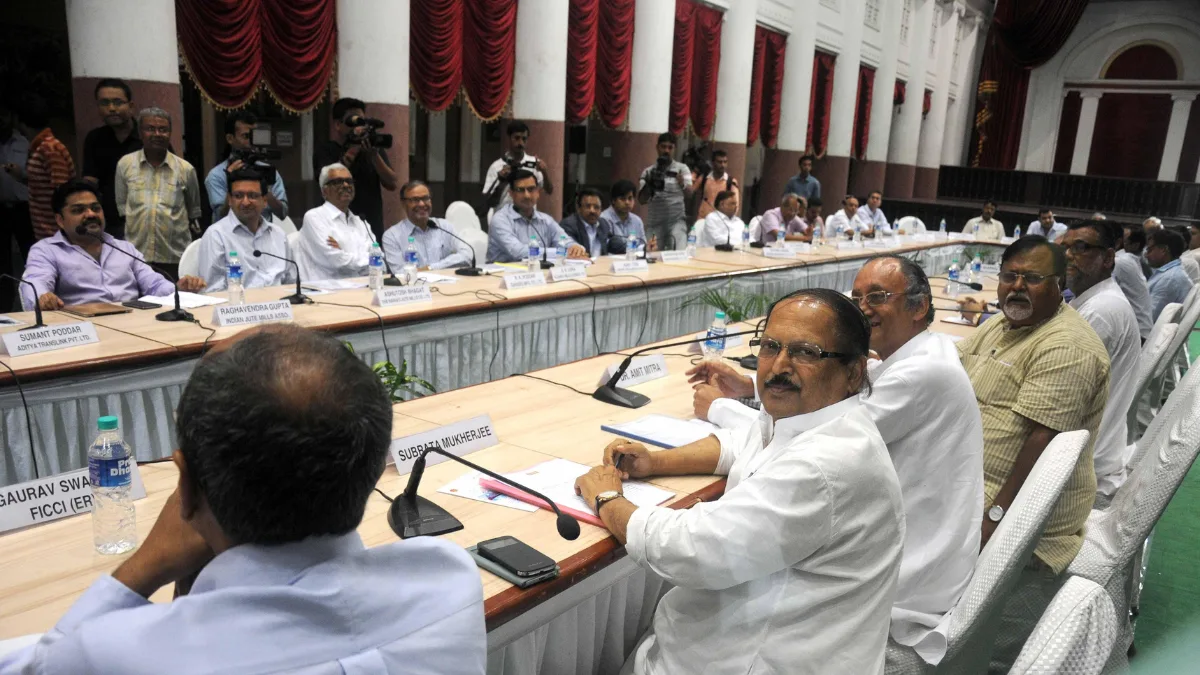
Photo: IANS/File
As many as 14 jute mills across West Bengal, including three in Hooghly district, have resumed operations in a span of less than 90 day after the Bharatiya Janata Party (BJP) came to power in the state.
This follows a series of tripartite meetings initiated by the state government, providing relief to thousands of workers whose livelihoods were hit after the mills shut down nearly five months ago.
Advertisement
Several jute mills in the district had ceased operations citing a shortage of raw jute, leaving thousands of workers and their families without regular income.
Advertisement
The issue had emerged as a major electoral plank ahead of the Assembly elections.
The then Trinamool Congress government had promised to reopen the mills while blaming the Narendra Modi-led Central government for its alleged indifference towards the crisis.
However, the BJP, in its election manifesto, had pledged that reopening all closed jute mills would be among its first priorities if voted to power.
Soon after assuming office, State Labour Minister Arjun Singh and Minister of State Bhaskar Bhattacharya, who also oversees the Labour Department and is the MLA from Serampore, launched a joint initiative to revive the closed mills.
The government held a series of tripartite meetings involving the Labour Department, jute mill owners and managements, and representatives of workers’ unions.
Speaking on the reopening, Arjun Singh said the availability of the new jute crop had addressed concerns over raw material supply.
“The new yield of raw jute is now available, which will enable the mills to function without interruption,” he said.
Bhaskar Bhattacharya said the government had focused on improving the welfare and living standards of jute workers and their families.
He said the mill managements were asked to revise wage structures and ensure the clearance of gratuity dues, provident fund contributions and Employees’ State Insurance (ESI) benefits.
A consensus was also reached on modernising the mills by introducing new technology and machinery without retrenching workers.
Employees will be provided training to operate the upgraded machinery while continuing to receive their salaries, Bhattacharya said.
“The discussions were fruitful. All stakeholders have agreed to ensure smooth and uninterrupted functioning of the mills and to resolve disputes through dialogue so that workers’ unrest can be avoided,” Bhattacharya said.
Among the mills that have resumed operations in Hooghly district are the Gondalpara Jute Mill in Chandannagar, India Jute Mill in Serampore and Wellington Jute Mill in Rishra.
Officials said maintenance work would continue for the next two weeks while workers would be inducted in phases. A fully operational jute mill can employ nearly 4,000 workers across different shifts.
The reopening of the mills was welcomed by workers and their families, many of whom celebrated the development and thanked chief minister Suvendu Adhikari for fulfilling the BJP’s election promise to revive the state’s closed jute mills.
Advertisement