A terror module, ‘Khilafat’, linked to Pakistan, was dismantled by the Special Cell of the Delhi Police and Central agencies with the arrest of five suspected operatives in coordinated raids across multiple states, officials said on Thursday.
The suspects, said to have been radicalised online by a Pakistan-based handler, allegedly intended to acquire land, designate it as a ‘Khilafat zone’, and initiate ‘Jihad’ in India.
Advertisement
The arrested men were identified as Ashar Danish, alias Ashrar Qureshi (23), an English honours graduate from Ranchi; Aftab Qureshi and Sufiyan Abubakar, both from Mumbai; Mohammad Huzaifa from Telangana; and Kamran Qureshi from Madhya Pradesh.
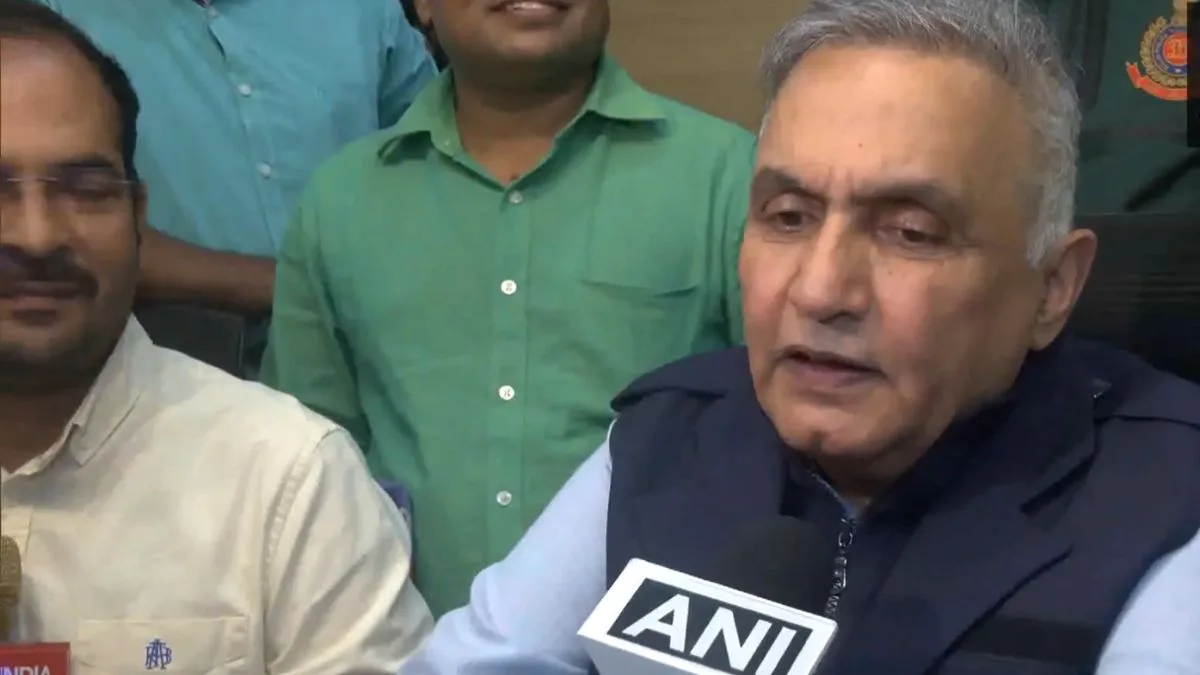
“Danish, the mastermind of the plot, who coordinated with other members and executed tasks on behalf of the handler, who was referred to as the ‘CEO’, also went by the names ‘Professor’ and ‘Gazba’, was arrested in Jharkhand,” Pramod Kushwah, Additional Commissioner of Police (Special Cell), said while addressing a press conference.
The officer, in his statement, mentioned, “They were guided to promote the idea of ‘Ghazwa-e-Hind’ and initiate violent activities.”
“Their plan was two-fold. First, they had to form a Khilafat-style group. They have their own team, which is called Lashkar, and after that, they had to do jihad, the Ghazwa-e-Hind-type, based on their distorted concept of understanding of Islam. Plus, some targeted killings were to be tasked to them,” the additional CP said.
He further said that the Pakistan-based handler shared weapon blueprints, ideological material, and directions for making Improvised Explosive Devices (IEDs) via encrypted social media chats. “Those held in Delhi had been sourcing weapons from a man in Mewat and were preparing to escape the city via Hazrat Nizamuddin Railway Station when the police apprehended them,” the officer said.
“For the past six months, our teams had kept an eye on their activities and maintained surveillance. Two suspects were ultimately arrested in Delhi while trying to leave the city. Their primary agenda included recruiting youngsters into their fold,” he added.
Giving details about the crackdown, he said the operation began with the arrest of two operatives close to Nizamuddin Railway Station in Delhi. Following their disclosures, police teams carried out raids in Ranchi, Rajgarh, and Telangana, arresting three additional suspects. The operations were led by DCP Amit Kaushik.
He further revealed, “From the suspect’s hideouts, officers recovered sulfur powder, sodium bicarbonate, ball bearings, gas masks, electric wires, fuse points, cartridges, and other IED materials. The electronic equipment seized is under scrutiny by central agencies.”
“The group was also being trained in weapon and cartridge-making. We arrested them on Wednesday and taken on police remand to uncover the full module. In addition, 11 people were detained during the operation, out of which five have been arrested,” the officer told the reporters.
The police also said that the group was in the process of raising funds to purchase land to establish a so-called “Khilafat zone”, a model previously attempted in Maharashtra by Saquib Nachan.
Saquib Nachan, an Indian terrorist, was convicted for his role in the 2002 and 2003 bomb blasts at Mumbai Central railway station, Vile Parle, and Mulund. He was found guilty under the Prevention of Terrorism Act (POTA) for possessing weapons and sentenced to ten years in prison. Following his release, Nachan returned to his hometown of Padgha with his relatives. However, after regaining freedom, he once again became involved in terrorist activities, conducting training sessions and even proclaiming Padgha village as the hub of ISIS operations in India.
Initial investigations indicate that the module is part of a fresh network, with no connection to that of earlier dismantled terror groups. The handler, operating from Pakistan, relied solely on social media platforms for communication and recruitment.
“The accused are currently being interrogated by our team to ascertain their wider network, sources of funding, and potential targets,” the officer stated.
Police said their arrests have averted a major terror strike in the country. Further investigation is underway.