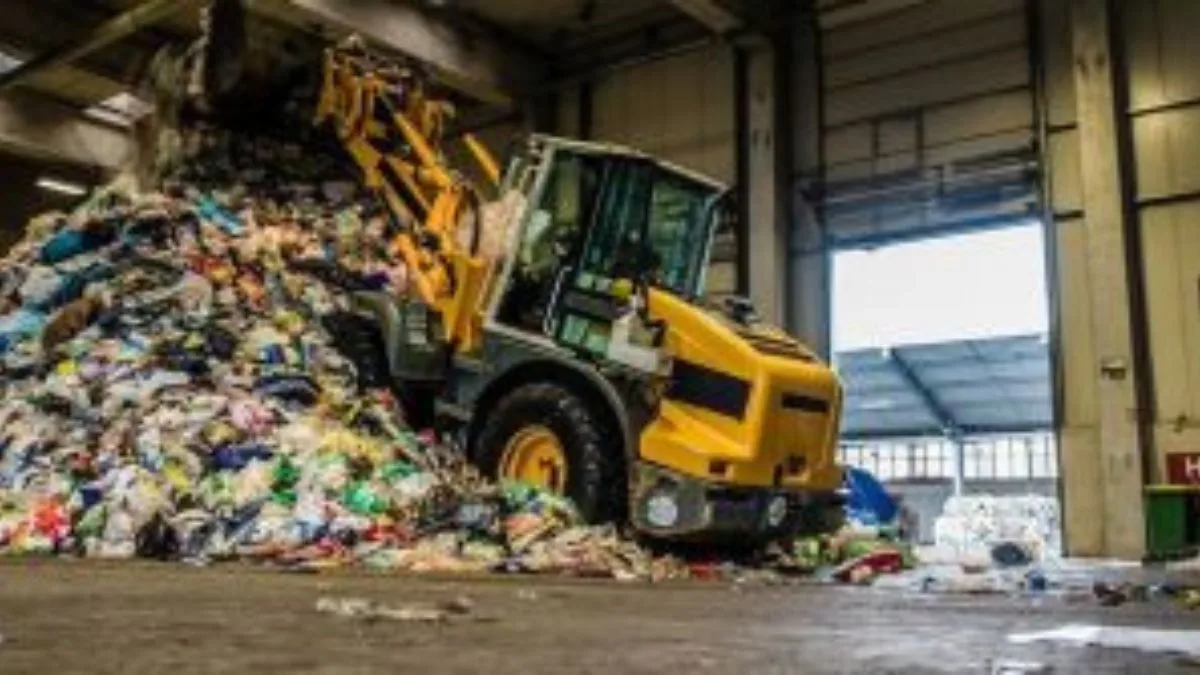
Delhi’s Environment Department on Sunday announced that the upcoming E-waste Eco Park at Holambi Kalan will now be built to handle 1.1 lakh metric tonnes of waste annually—nearly double the original capacity—across almost twice the planned area, and with close to double the initial investment. The revision follows Environment Minister Manjinder Singh Sirsa’s visit to the Revac E-waste Processing Facility in Norway on August 4 and 5.
Originally, the Delhi government planned to develop India’s first-of-its-kind E-Waste Eco Park to be built with an investment of Rs 150 crore to process 51,000 metric tonnes of e-waste annually.
Advertisement
The department added that the Delhi plant will follow the global zero-waste principle, ensuring no pollution, radiation, or untreated discharge, and enabling complete material recovery to support a circular economy.
The visit also dispelled myths about pollution from e-waste facilities. At the Norway plant, zero pollution is ensured by reusing water through in-house purification systems, using threshers and segregators to recover aluminium, iron and refuse-derived fuel from waste, and preventing radiation leaks by concretising the entire floor. The Delhi model aims to adopt similar measures to achieve zero waste and prevent environmental harm.
According to an official statement, the minister toured the European plant to examine the infrastructure used for safely dismantling and segregating e-waste. He also interacted with Revac’s senior engineers and operational heads to discuss technological adaptation, compliance, and community integration.
The visit to the Norway plant also highlighted the need for a robust inspection mechanism during e-waste processing. While the European facility works with not-for-profit organisations to manage Extended Producer Responsibility (EPR), the Delhi government now plans to appoint an expert agency for third-party monitoring, the statement said.
Earlier, Sirsa affirmed his government’s commitment to balancing industrial growth with environmental sustainability. “This is not just about waste,” said Sirsa, “it is about a vision — of a Delhi that is clean, circular, competitive, and future-ready.”