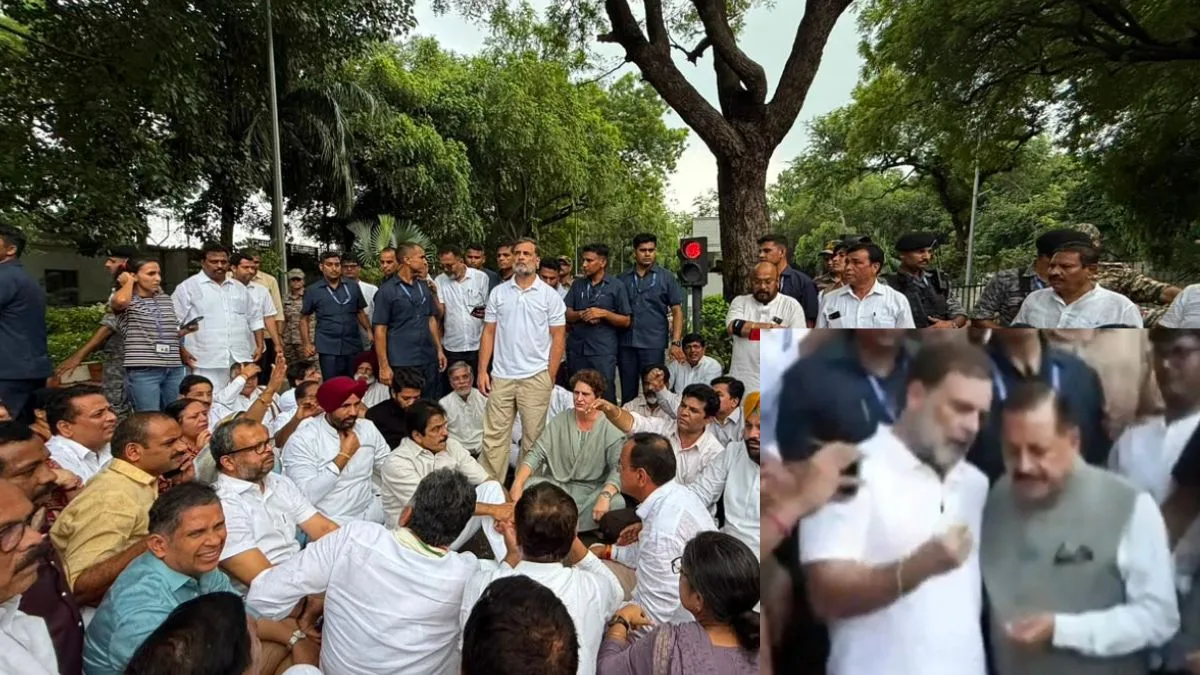
CJP’s Parliament march loses its script at Jantar Mantar, splinters into scattered protests
Student groups and Opposition workers formed a sizeable crowd, but the promised procession towards Parliament never emerged as one organised march.
The 24-hour average Air Quality Index stood at 382, according to the Central Pollution Control Board, driven largely by high PM2.5 levels.




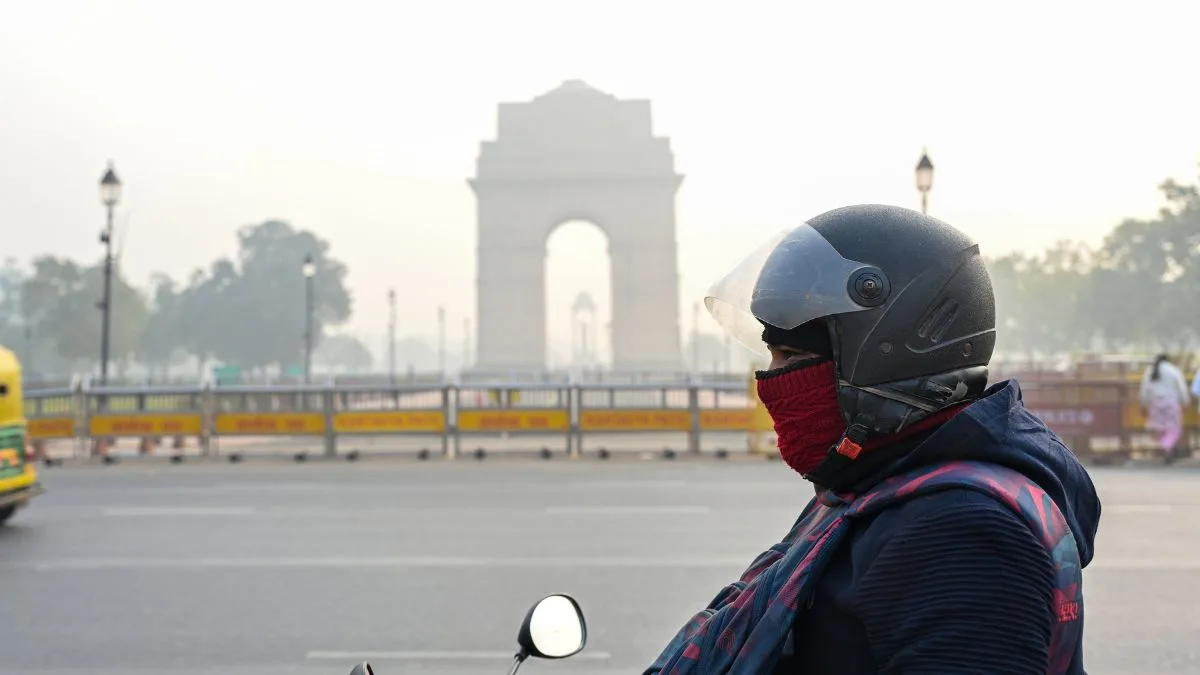
Photo: IANS
Toxic smog continued to cloak the national capital on Monday, with residents forced to breathe foul air as the city remained stuck in the ‘very poor’ category for several days.
The 24-hour average Air Quality Index stood at 382, according to the Central Pollution Control Board, driven largely by high PM2.5 levels.
Advertisement
This persistent haze comes even as stubble-burning emissions have sharply declined over the past week, falling to just 1.884 % of Delhi’s pollution share on Monday, data from the Decision Support System for Air Quality Management reported.
Advertisement
The share of emissions from farm fires, which reached a single-day peak of 22.4 % on November 12, dipped to 2.66 % on November 22. On Monday, the contribution from stubble burning further declined and is expected to stay below 5%, much lower than in recent years. Forecasts indicate the contribution will remain below 3% on Tuesday and Wednesday, dropping down to 1.5% on Thursday.
Meanwhile, the city saw no relief from the toxic mix of pollutants, a blend that, in recent years, has often been blamed primarily on stubble burning during the winter months. This year, however, vehicle exhaust remains the dominant source within Delhi, contributing 21.6% of the city’s PM2.5 load, according to DSS data.
Other significant contributors include residential emissions (5.42%), industries within Delhi and its periphery (4.35%), construction dust (3.18%), waste burning (1.995%), energy use (1.745%), and road dust (1.644%).
Pollution drifting in from neighbouring regions also added to the city’s burden, with emissions from Jhajjar (11.54%), Sonipat (5.18%), and Rohtak (4.38%) ranking among the highest external contributors, as noted in the government data.
Dust remains one of the least significant sources in this period, yet many of the Delhi government’s mitigation measures continue to focus on dust control, including water sprinkling, mechanical road sweepers, anti-smog guns, and mist cannons.
Advertisement