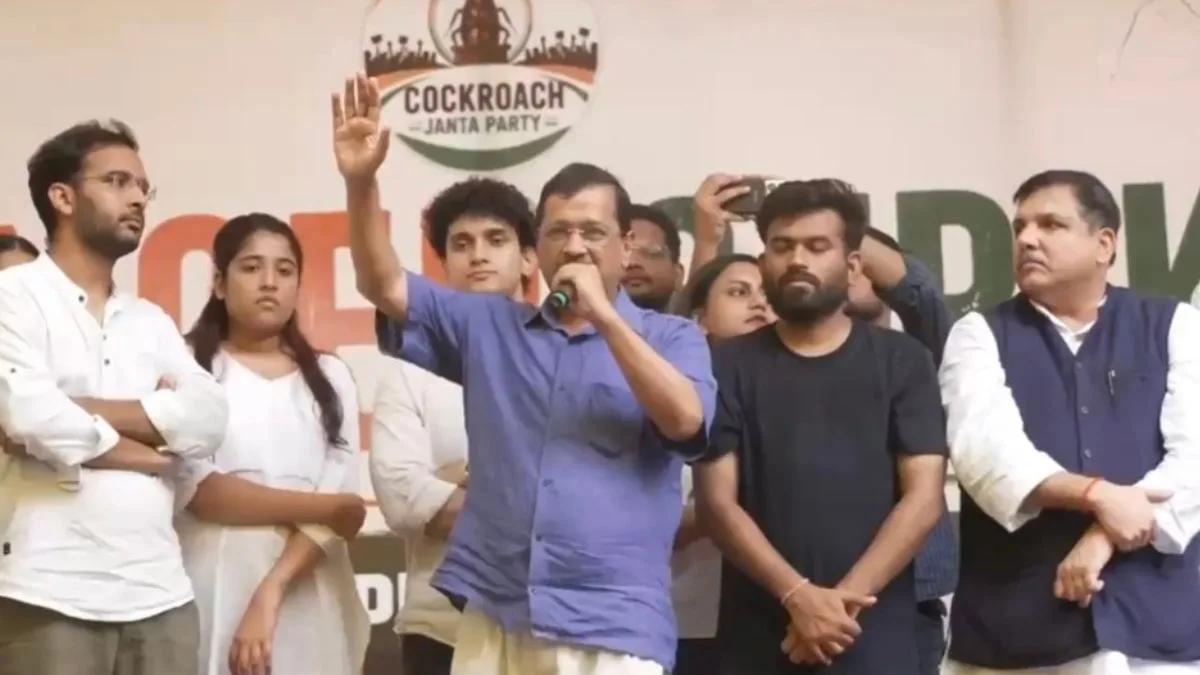
CJP’s Parliament march loses its script at Jantar Mantar, splinters into scattered protests
Student groups and Opposition workers formed a sizeable crowd, but the promised procession towards Parliament never emerged as one organised march.
He stated that the Delhi government had introduced the Delhi Private School Fee Regulation Bill 2025 in the Assembly, which has now become a law following its approval.




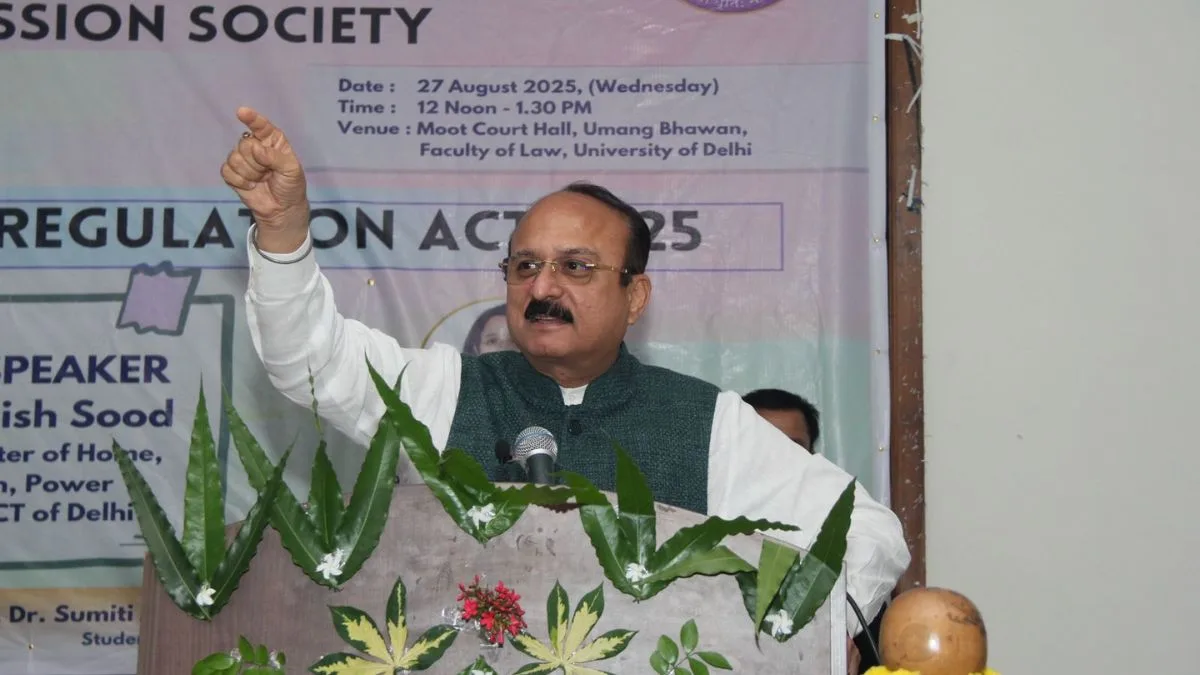
Photo: X/@ ashishsood_bjp
Delhi Education Minister Ashish Sood on Wednesday engaged in an interactive session with law students at the University of Delhi and shared detailed insights on the recent Delhi School Education (Transparency in Fixation and Regulation of Fees) Act 2025, aimed at safeguarding the interests of students and parents by curbing arbitrary fee hikes.
He stated that the Delhi government had introduced the Delhi Private School Fee Regulation Bill 2025 in the Assembly, which has now become a law following its approval.
Advertisement
Responding to questions from the students at the DU’s Law Centre-II, Sood explained how this newly enacted law serves the interests of Delhi’s citizens.
Advertisement
Referring to the older Delhi School Education Act (DSEA), 1973, the Minister pointed out that the law only covered about 300 private schools (those allotted land by DDA) under regulation, and as a result, no action was taken against other schools.
He further mentioned that the number of private schools in Delhi has now increased to about 1,700, with nearly 18 lakh children studying in them.
Sood highlighted that while only 300 schools were earlier subject to regulation, with the enactment of the Delhi School Education (Transparency in Fixation and Regulation of Fees) Act 2025, all 1,700 private schools now come under the purview of this law, not just those governed by the DDA land clause.
He also shared details of the multiple-tier fee regulation mechanism introduced under the new law, under which each school will have a Fee Fixation Committee comprising the management, principal, three teachers, five parents (with mandatory SC/ST/women representation), and a representative from the Directorate of Education.
In case of disagreement at this level, even a single parent can escalate the matter to the district-level committee, he added.
The final authority will rest with the state-level Appellate Committee, whose decisions will be binding on schools, he said.
All decisions will be made by consensus rather than majority vote. Once fixed, the fee structure will remain valid for three years, ensuring financial and emotional stability for parents, Sood added.
Explaining the penalty provisions, Sood said that schools increasing fees without approval or exploiting students and their parents could face fines ranging from Rs 50,000 to Rs 2 lakh per student.
Additionally, the penalty will double every 20 days of delay in compliance, and schools refusing to comply with committee decisions may also face cancellation of their recognition or licence.
Clarifying the intent of the law, the Minister stressed that the government does not aim to control or harm private schools, but only to regulate arbitrary fee hikes.
Stating that Delhi University has always been a hub of social and political change, Sood recalled his student days as DUSU President and told the youngsters that whether it was the anti-Emergency movement or the fight against the Bofors scandal, all such movements originated on this campus.
Advertisement