West Bengal: The only Hindu Homeland blended in secular India
The creation of West Bengal as a state and its inclusion in India is an amazing case study in the political history of India.
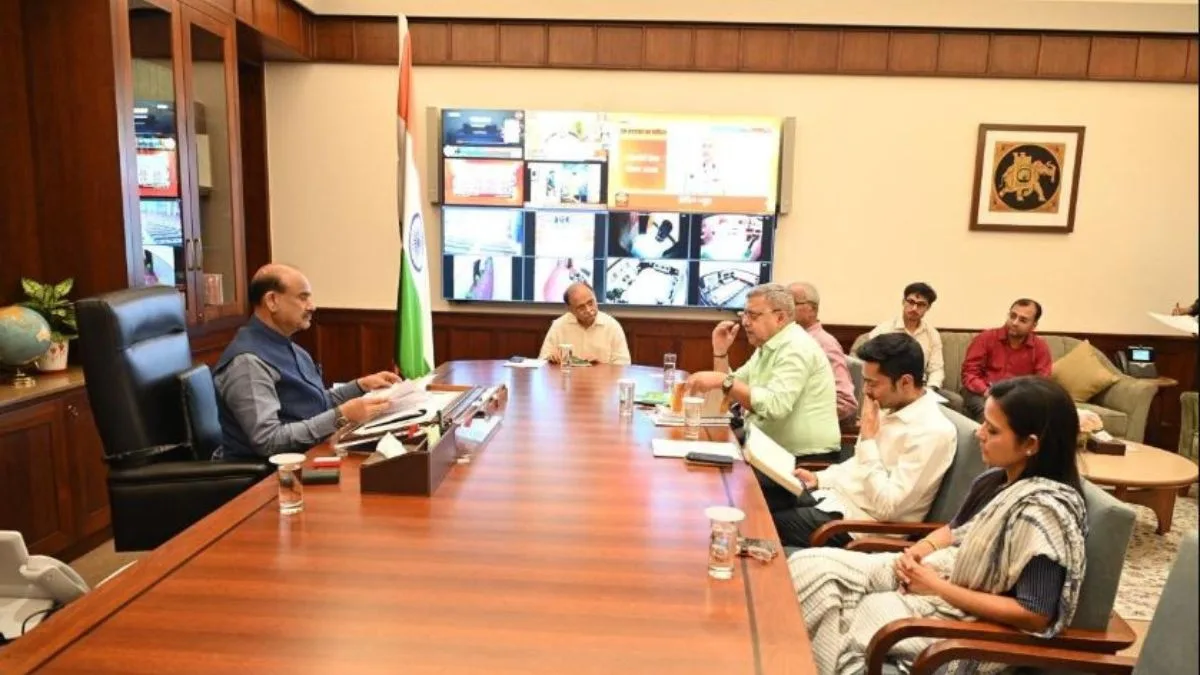
Environment Minister Manjinder Singh Sirsa on Wednesday chaired a high-level roundtable at the Delhi Secretariat, bringing together NGOs, environmental experts, journalists, and senior government officials to discuss strategies for combating air pollution across the city.





File Photo
Environment Minister Manjinder Singh Sirsa on Wednesday chaired a high-level roundtable at the Delhi Secretariat, bringing together NGOs, environmental experts, journalists, and senior government officials to discuss strategies for combating air pollution across the city.
The meeting was held under the leadership of Chief Minister Rekha Gupta.
Advertisement
The session served as an open forum where attendees shared concerns and recommendations on a wide range of issues including AI-driven pollution surveillance, dust mitigation, C&D waste regulation, vehicle and industrial emissions, traffic management, hotspot identification, and measures to curb open waste burning.
Advertisement
The minister assured participants that their inputs would directly inform ongoing policy refinements.
Sirsa highlighted several intensified initiatives currently underway, including strict enforcement at construction sites, expanded daily mechanical sweeping, the use of dust suppressants, and a crackdown on open biomass burning.
The government is also procuring additional Mechanical Road Sweepers, litter pickers, and anti-smog guns to extend dust-control operations to arterial roads measuring 40–60 feet.
Emphasising community engagement, Sirsa called for deeper public participation through citizen-volunteer networks and wider use of grievance-reporting platforms such as the Sameer and Green Delhi apps.
“Delhi’s pollution-free future depends on a partnership among government, institutions, and citizens,” he said, underscoring a science-based, coordinated approach to pollution control.
Representatives from leading organisations including WRI India, SPA Delhi, CSTEP, ICCT, CEEW, CSE, Clean Air Asia, Clean Air Fund, and EPIC India participated in the discussion, alongside officials of the Delhi Pollution Control Committee.
Officials noted that the roundtable reflects the government’s commitment to transparency, evidence-driven policymaking, and a renewed determination to deliver cleaner air through innovation, enforcement, and public cooperation.
Advertisement