Cockroach Rising
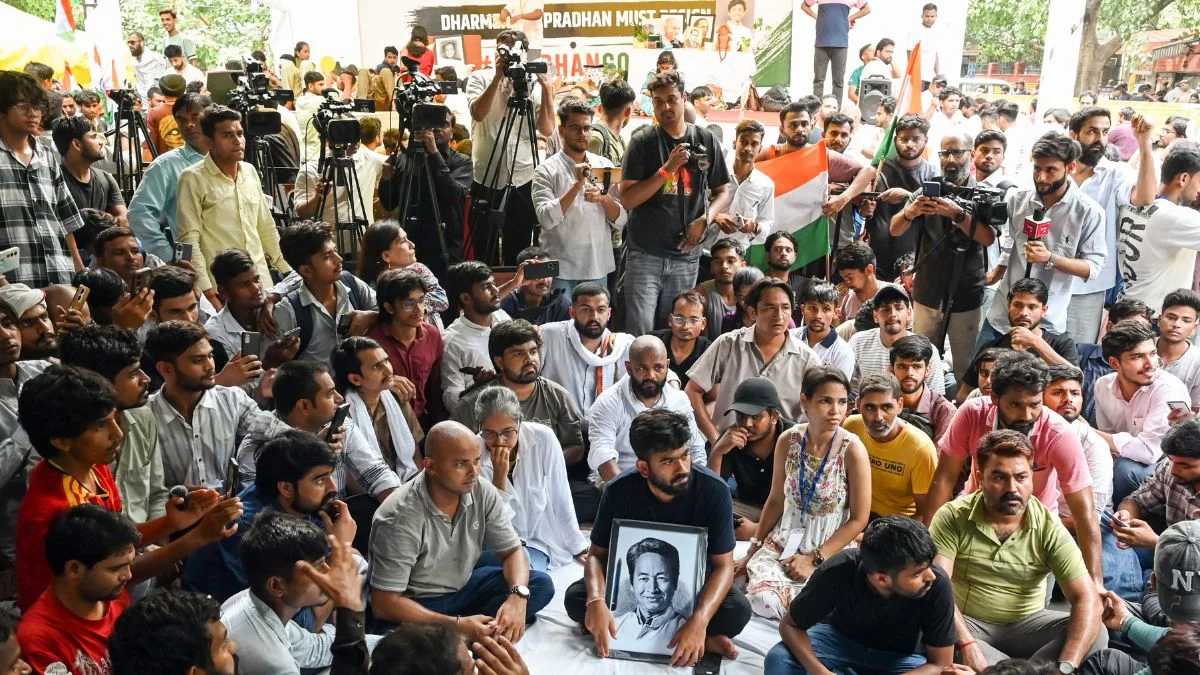
What began as an irreverent internet joke has acquired the unmistakable weight of a political movement.
In a historic step towards making the Yamuna River clean and free-flowing, Delhi has made a significant advancement in sewage treatment.





Photo: SNS
In a historic step towards making the Yamuna River clean and free-flowing, Delhi has made a significant advancement in sewage treatment.
Asia’s largest single-stage wastewater treatment plant is now fully operational at Okhla. The facility’s operations were reviewed on Wednesday by PWD Minister Parvesh Verma.
Advertisement
This state-of-the-art plant, with a capacity of 564 million litres per day (MLD), treats sewage to international standards.
Advertisement
It employs advanced technologies such as the Activated Sludge Process (ASP), tertiary disc filters, and UV systems to treat, polish, and disinfect wastewater, producing high-quality effluent with Biochemical Oxygen Demand (BOD) and Total Suspended Solids (TSS) levels of 10 mg/l or better.
The plant is fully automated and remotely monitored and operated via SCADA systems.
Developed with support from the Central government, the facility serves nearly four million residents across Old Delhi, Central Delhi, the NDMC area, and South Delhi.
After inspecting the plant, Minister Verma stated, “Under the leadership of Prime Minister Narendra Modi, we are taking solid and decisive steps through state-of-the-art water treatment systems to make the Yamuna clean and free our city’s drains from sewage. Our mission is to transform Delhi into a clean, sustainable, and responsible capital.”
He added that this initiative is a key contribution to the vision of Viksit Bharat (Developed India). It not only strengthens water management systems but also supports environmental conservation and sustainable development efforts.
Currently, the treated water is being discharged into the Old Agra Canal. However, it will soon be diverted into the Yamuna River downstream of the Okhla Barrage via the Abul Fazal drain, with construction work for the diversion already underway.
Additionally, since June 2024, about 40 MLD of treated water from this facility has been used across various parts of Delhi for horticultural purposes.
The plant generates 4.8 megawatts (MW) of green energy from sludge biogas, which meets around 50 per cent of its total energy needs.
The Class-A quality sludge produced as a by-product is odorless, pathogen-free, and safe to use as organic fertilizer or soil conditioner. Notably, this is the first plant in India to produce Class-A sludge.
With the commissioning of this facility, 35 million gallons per day (MGD) of sewage from the Barapullah and Maharani Bagh drains will now be treated before being released into the Yamuna, significantly reducing the flow of untreated sewage into the river.
Advertisement