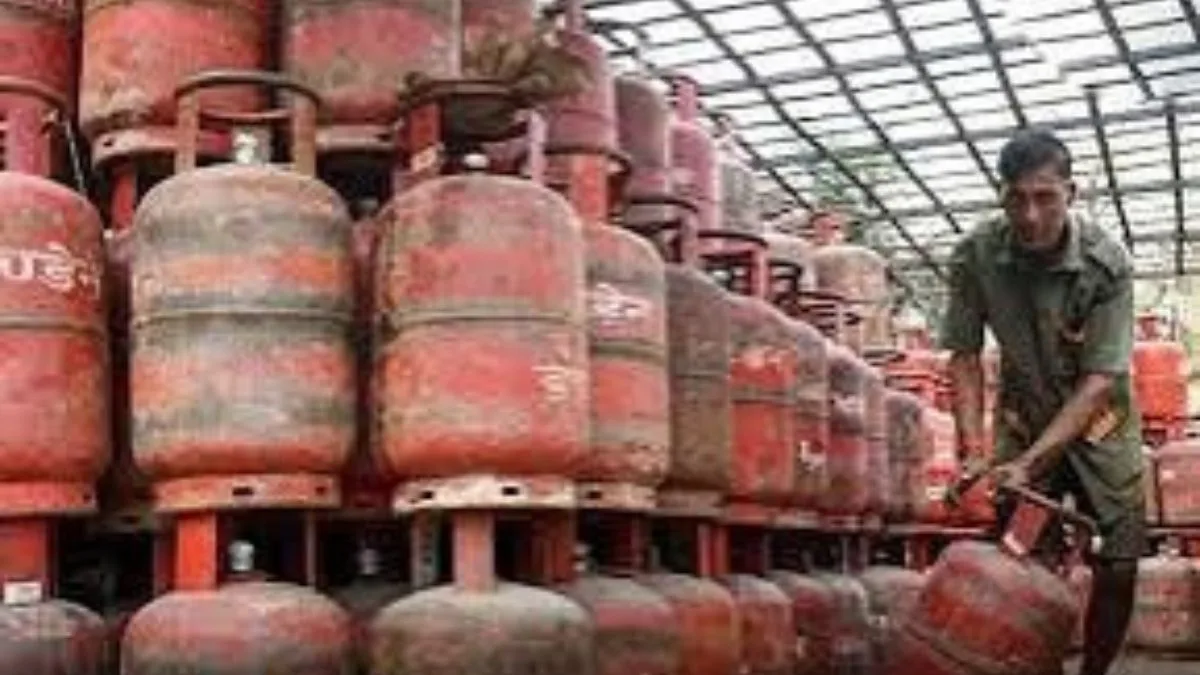
India’s domestic LPG price remains among the lowest in the world compared to neighbouring countries such as Pakistan (₹1,046), Sri Lanka (₹1,242), and Nepal (₹1,208), the Ministry of Petroleum and Natural Gas said.
“Prices of commercial LPG cylinders, used by industries and hotels, are deregulated, market-determined, and revised on a monthly basis. Their consumption accounts for less than 10% of the total LPG consumed in the country,” the ministry said in a post on X.
Advertisement
Reacting to the price hike announced on Wednesday, the ministry said, “The April 1 price increase in commercial cylinder prices is due to a 44% surge in the Saudi Contract Price, from $542/MT in March to $780/MT for April, as 20–30% of global LPG supplies are stuck in the Strait of Hormuz.”
The ministry added that domestic consumers continue to be protected, with the 14.2 kg domestic cylinder priced at ₹913 and the PMUY beneficiary price at ₹613, both remaining unchanged.
“At current prices, OMCs are incurring under-recoveries of ₹380 per cylinder. Cumulative losses by the end of May will reach approximately ₹40,484 crore. Last year, out of total losses of ₹60,000 crore, ₹30,000 crore were absorbed by oil PSUs and ₹30,000 crore by the Government of India, in order to insulate citizens from high international LPG prices,” it said.
On petrol and diesel prices, which are anticipated to witness an uptick due to the ongoing West Asia conflict, the ministry said retail prices remain unchanged at ₹94.77 per litre and ₹87.67 per litre, respectively, in Delhi.
“With global petroleum prices up by up to 100% in the last month, PSU OMCs are incurring under-recoveries of ₹24.40 per litre on petrol and ₹10.49 per litre on diesel at the retail selling price (RSP) level as of April 1, 2026,” the post stated.
On the recent revision of premium petrol prices, the ministry clarified that the ₹2 per litre increase applies only to premium petrol variants—XP95, Power95, and Speed—high-octane performance products whose prices are revised on a fortnightly basis and whose sales volumes account for 2% to 5% of total consumption. “They are purchased by motorists, at a premium, by choice,” it noted.
“Every fuel station in India continues to offer regular petrol and diesel at unchanged prices, even as prices in countries around the world have risen by 30–50%,” the ministry added.
Earlier reports had suggested that aviation turbine fuel (ATF) prices had more than doubled to over ₹2 lakh per kilolitre in Delhi. However, Indian Oil Corporation clarified that the increase is significantly lower.
According to the company, ATF prices have risen by about 8.5%, not 115% as previously indicated. The current price of jet fuel stands at around ₹1.04 lakh per kilolitre.
On the matter, the ministry said, “In order to insulate domestic travel costs from the substantial increase in international prices, PSU Oil Marketing Companies, in consultation with the Ministry of Civil Aviation, have passed on only a partial and staggered increase of 25% (₹15 per litre) to airlines. International routes will bear the full increase in ATF prices, consistent with global benchmarks.”
ATF prices in India were deregulated in 2001 and are revised on a monthly basis using a formula linked to international benchmarks. Due to the disruption in the Strait of Hormuz and the extraordinary situation in global energy markets, ATF prices for the domestic market were expected to increase by more than 100% on April 1, it added.