Special one-day SIR camp at all polling booths in Punjab on July 19
The house-to-house enumeration phase of the Special Intensive Revision (SIR) is currently underway across Punjab and will continue until August 3.
Hearings on claims and objections to West Bengal’s draft voters’ list begin as part of the Special Intensive Revision ahead of next year’s Assembly elections.




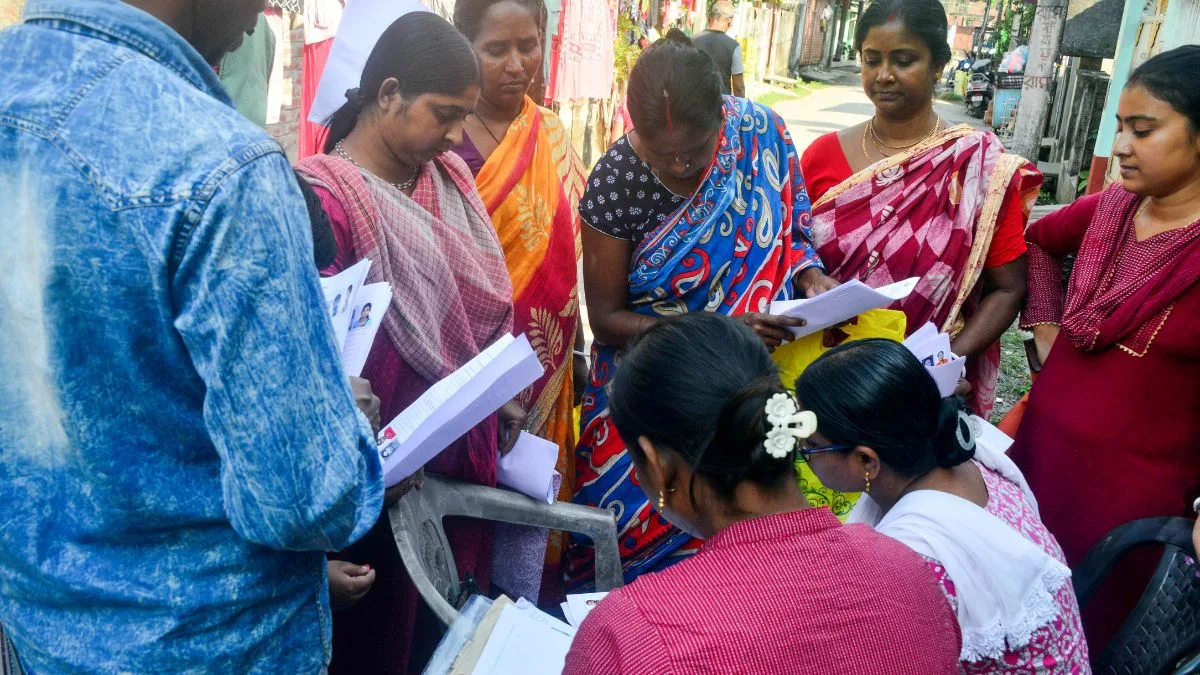
Booth Level Officers and assistant workers check and collect enumeration forms as residents queue up during the Special Intensive Revision (SIR) of electoral rolls in the Ghogomali area of Siliguri, West Bengal. (Photo: ANI)
Hearings on claims and objections to West Bengal’s draft voters’ list begin on Saturday, marking the second stage of the Special Intensive Revision (SIR) exercise ahead of next year’s Assembly elections.
The first stage of the revision, which involved enumeration and data collection, has already been completed. The draft voters’ list was published on December 16.
Advertisement
Each hearing will be conducted by an Electoral Registration Officer (ERO), assisted by an Assistant Electoral Registration Officer (AERO).
Advertisement
To monitor the process, the Election Commission of India has posted one micro-observer at every hearing table.
In total, about 4,600 micro-observers have been deployed across the state. Most of them are central government employees or staff from public sector undertakings and banks.
Officials have been instructed to handle around 150 cases per day at each table.
The first round of hearings will focus on “unmapped” voters, which means people whose names could not be linked to the 2002 electoral roll, either directly or through family records.
Officials estimate that there are around 30 lakh such voters in the state.
West Bengal last carried out a Special Intensive Revision of electoral rolls in 2002.
Also Read: West Bengal SIR voter list 2025–26: How to check if your name is missing or deleted
In the next phase, hearings will examine cases flagged as doubtful during family-tree verification, also known as progeny mapping. The number of such cases is estimated at around 1.36 crore.
These include voters aged 45 or above who do not appear in the 2002 roll, records showing people becoming parents at unusually young ages, and cases where both parents have the same name.
The Election Commission has said steps have been taken to ensure forged identity documents are not accepted during the hearings.
Responsibility for clearing entries has been fixed at multiple levels, including Electoral Registration Officers, district magistrates and district electoral officers.
The final voters’ list will be published on February 14 next year.
After that, the Election Commission is expected to announce the polling dates for the West Bengal Assembly elections scheduled for next year.
Advertisement