Flood, landslides in north Bengal as heavy rain disrupts normal lives
The National Highways and Infrastructure Development Corporation Ltd. (NHIDCL) has announced temporary traffic restrictions on National Highway-10.
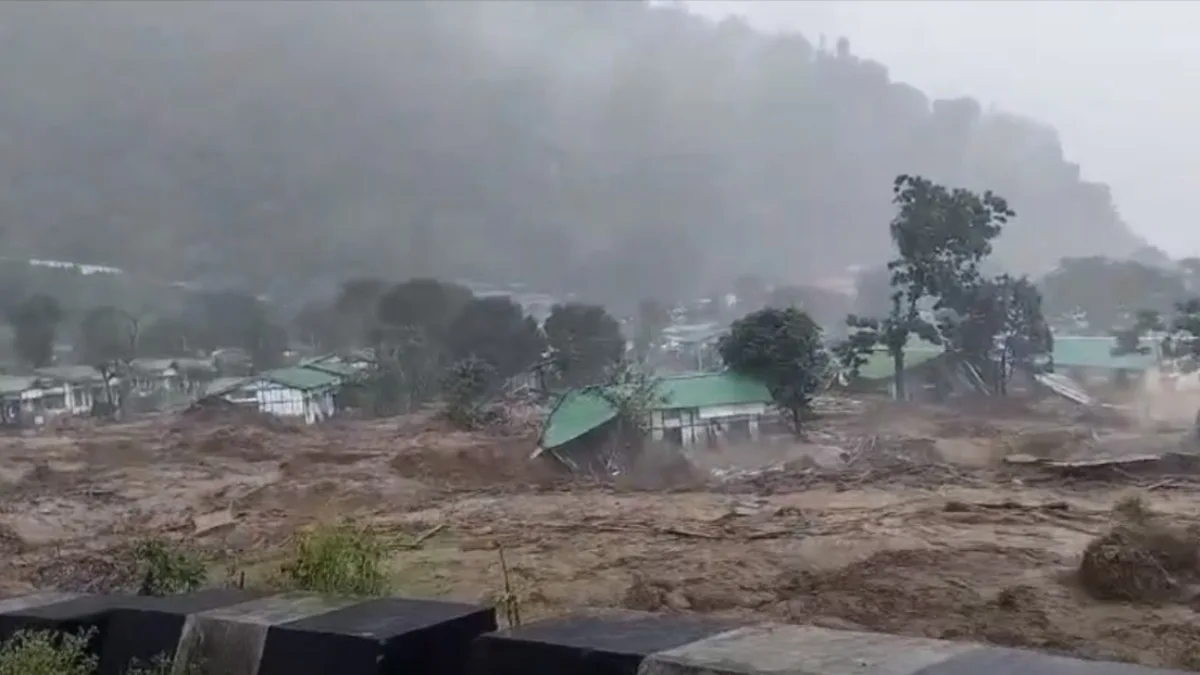
Continuous overnight rainfall has triggered flood-like conditions in parts of North Bengal, with the Torsa River emerging as the major cause of concern in Alipurduar district and the Teesta causing disruption in Kalimpong district.




(Pic: IANS)
Continuous overnight rainfall has triggered flood-like conditions in parts of North Bengal, with the Torsa River emerging as the major cause of concern in Alipurduar district and the Teesta causing disruption in Kalimpong district.
Large areas under Kalchini in Alipurduar were inundated on Monday as the Torsa continued to rise. According to irrigation officials and river experts, most of the river’s flow is now passing through the Malangi Jhora channel after the Torsa changed its course following the devastating floods of October last year.
Advertisement
Emergency anti-erosion and bank protection works are underway near the Suhasini Tea Estate, where an embankment damaged last year is again under threat. The work is being carried out on a war footing. Several staff quarters near an air base in the area have already been evacuated as officials fear further erosion if the river level continues to rise.
Advertisement
Officials said heavy siltation along the right bank of the Torsa has forced a larger volume of water towards the left bank through Malangi Jhora, causing severe erosion on both banks. Tea bushes have been uprooted at some places to create temporary access roads for transporting materials required for the anti-erosion work.
Meanwhile, traffic on national highway 10 at Teesta Bazar in the West Bengal sector remained suspended after floodwaters from the Teesta overtopped the road and entered adjoining areas. Authorities said vehicular movement would remain suspended until the water recedes.
Traffic on national highway 10 has also been disrupted since Monday morning following a landslide at 20th Mile in the Sikkim sector. Restoration work is underway, and authorities have advised commuters to avoid the route until it is cleared.
The Teesta Barrage at Gazoldoba in Jalpaiguri is currently releasing about 3,200 cumecs of water, the highest discharge of the year so far. Although the barrage has a designed discharge capacity of 20,500 cumecs, engineers said heavy siltation and debris deposited after the devastating glacial lake outburst flood (GLOF) in Sikkim in October 2023 have significantly reduced the river’s carrying capacity.
The October 2023 GLOF carried massive quantities of debris and silt downstream, significantly altering the Teesta’s course affecting NH 10 and contributing to heavy siltation in the Gazoldoba barrage area.
An engineer associated with the Teesta Barrage Project said recent surveys indicate that the Teesta riverbed has risen by nearly 1.5 metres due to siltation, reducing the river’s carrying capacity and increasing the risk of downstream flooding even at comparatively lower discharge levels.
Officials also said water is being released from the NHPC’s Teesta Stage-IV hydel project at Kalijhora as reservoir levels continue to rise. The released water is reaching Gazoldoba, where controlled discharge is being maintained.
Irrigation officials warned that if the Torsa rises further, apart from Malangi Jhora, the Shishamara channel may also overflow, posing a flood threat to Shishamara and Shalkumar areas of Alipurduar district.
The administration remains on high alert and is closely monitoring the situation. Officials cautioned that conditions could worsen if rainfall continues, particularly in the upper catchment areas. Recently, the Governor chaired a disaster management review meeting at Uttarkanya to assess preparedness for such situations.
Advertisement