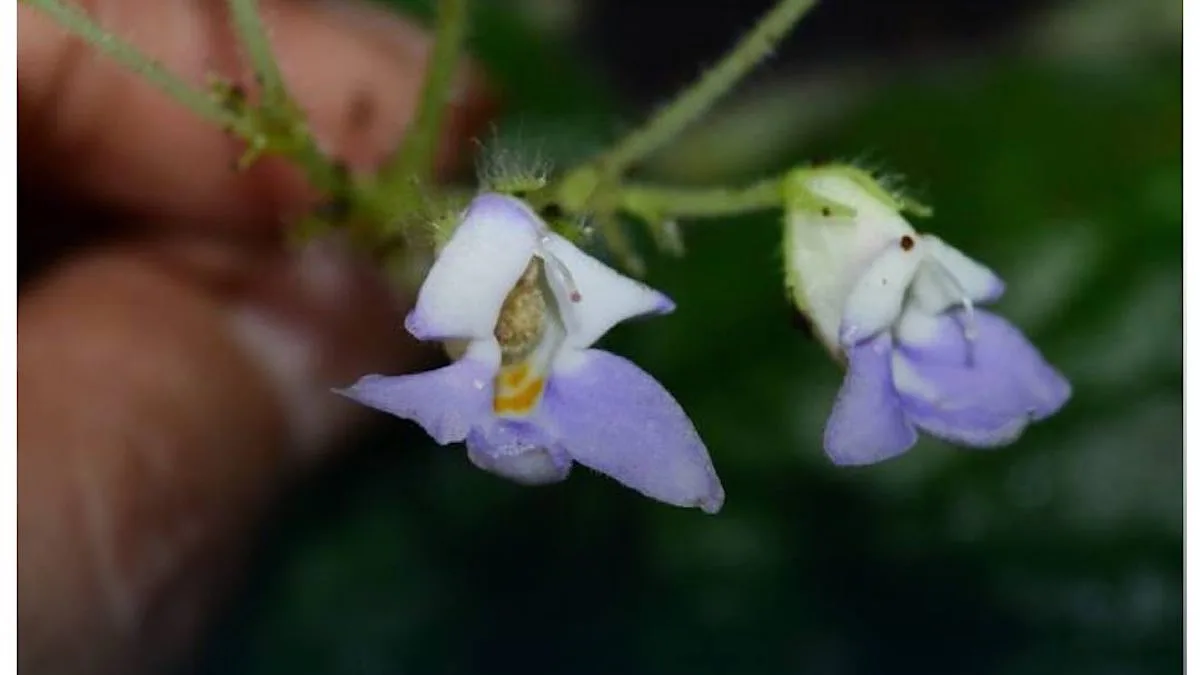
In the damp, shaded crevices of the Ayodhya Hills, where some of earth’s earliest land plants still quietly endure, scientists have discovered a species so minute it measures barely a millimetre in width — yet momentous enough to bear the name of Bengal’s iconic reformer, Ishwar Chandra Vidyasagar.
The newly-identified liverwort, Solenostoma vidyasagariensis, has been formally described in the international botanical journal Phytotaxa in September 2025. The discovery was made by researchers from Vidyasagar University in collaboration with the Botanical Survey of India (BSI), following extensive field surveys in the forested belt of Junglemahal, spanning parts of Purulia and West Midnapore.
Advertisement
Belonging to the division Marchantiophyta ~ among the oldest lineages of land plants ~ the species is part of the subgenus Plectocolea. Liverworts are moisture-dependent bryophytes that often escape notice because of their diminutive size and simple structure, yet they represent a crucial evolutionary chapter in the colonisation of land by plants. At approximately 1 mm in width, Solenostoma vidyasagariensis forms delicate mats over moist substrates, blending almost invisibly with the forest floor.
Morphologically, the species is characterised by ovate leaves with a shortly decurrent dorsal base. Under microscopic examination, its spores display a distinctive crenulate and lamellate-reticuloid ornamentation ~ a defining feature that sets it apart from its close relative, Solenostoma truncatum. It was this unique spore pattern and leaf structure that confirmed to researchers that they were dealing with a species previously unknown to science.
The research was led by Professor Amal Kumar Mondal, head of botany and forestry at Vidyasagar University, along with research scholar Sk. Rasidul Islam, in collaboration with Devendra Singh of the Botanical Survey of India. Detailed morphological analysis and taxonomic comparison were undertaken before the findings were peer-reviewed and accepted for publication.
The naming of the species is both symbolic and deliberate. By christening it vidyasagariensis, the researchers sought to honour Ishwar Chandra Vidyasagar, whose contributions to education reform, women’s rights, and social upliftment in 19th-century Bengal continue to resonate. As the university where the discovery originated bears his name, the botanical tribute links scientific advancement with Bengal’s intellectual heritage.
Beyond taxonomy, the discovery carries potential applied significance. Researchers have observed that the species exhibits resistance to certain viruses and fungi, raising the possibility that it may contain bioactive compounds of medicinal value. While further biochemical and pharmacological investigations are required, bryophytes are known to produce unique secondary metabolites, many of which remain underexplored in modern medicine. In an era marked by rising antimicrobial resistance, such leads assume considerable importance.
India’s bryophyte diversity, particularly in eastern regions, remains insufficiently documented. The forests of Junglemahal ~ more frequently discussed in socio-political narratives ~ are now revealing themselves as reservoirs of botanical richness. The identification of Solenostoma vidyasagariensis not only expands West Bengal’s floristic inventory but also underscores the ecological value of preserving fragile microhabitats that shelter ancient plant lineages.
From a nearly invisible patch of green in a forested hillscape to the pages of an international scientific journal, the journey of this tiny liverwort serves as a reminder that even the smallest life forms can carry immense scientific weight, and occasionally, the enduring name of a giant in history.