Generally, it is taken for granted that the journey on the path of development is accompanied by increasing urbanization. Mahatma Gandhi instead emphasized a path based on rural communities as he felt that despite all the problems in villages (including social discrimination that was completely unacceptable to him), the values he cherished the most – of peace and harmony – could be better realized in villages.
Although he did not use words such as protection of the environment, the way of life based on voluntary simplicity he sought was better achieved in rural communities that can be self-reliant to a significant extent. Nearly 78 years after the Mahatma breathed his last, today in times of climate change and forever wars we need to give more consideration both to his prioritization of villages (without of course neglecting balanced urban development) and to a pattern of rural development that places high value on peace and social harmony based on a just socio – economic order and on protection of the environment.
Advertisement
If the essence of the model of rural development India needs today is to be captured briefly, we can say that this should be based on justice and equality, peace and harmony, protection of environment and of all forms of life. These important objectives need to be integrated in mutually consistent ways. In this context the work of voluntary organizations striving sincerely to walk on this path is important. They may not always succeed, they may make some mistakes, but their sincerity is taking them closer to achieving a balance of these important objectives in some of their work areas.
Seva Mandir is a voluntary organization in south Rajasthan which was started by visionary leader Dr. Mohan Singh Mehta who despite having served as India’s ambassador to several countries and as Vice-Chancellor of Rajasthan University was keen to serve people in more direct ways. This yearning led him, along with several other public-spirited friends, to start Seva Mandir. Today with many-sided interventions, Seva Mandir has been able to evolve a model that links promotion and strengthening of rural livelihoods with climate mitigation and adaptation.
Its work relating to regeneration of pastures, increasing tree cover, protecting and re-generating community forests, water conservation, waste management, renewable energy, spreading natural farming, self-reliant, low-cost and diverse farming is particularly important in the context of integrating these objectives. In addition, its sister organizations are helping to spread less carbon-emitting stoves with much reduced smoke and wood use. Secondly, Seva Mandir is promoting a model of significantly increasing social equality, harmony and peace, using efforts and processes that strive for justice based on ‘common good’ solutions in peaceful ways and patient consensus-building. Village entry and early efforts for this organization often starts with a jajam approach. Jajam in local communities means carpet – not a fancy carpet but the common dhuree which even a humble community building is likely to possess.
Essentially this means that the organization starts its village organization with meetings where members of all communities, the rich and the poor, are supposed to share the same jajam, and when the occasion demands share food, in an equality-based setting without any discrimination or hierarchy. This is aimed at creating a consensus on programmes which, to correct existing inequalities, are likely to give higher emphasis to the needs of poorer sections. In the context of gender, the equality of women is emphasized. Education, child care, health and livelihood interventions succeed in giving considerable relief to villagers with special emphasis on poorer households. Special efforts are made to ensure equality and dignity to those sections of rural society (like sanitation workers) who have traditionally faced the most discrimination in the past.
The path to a relatively just and equal society should be a peaceful one, and to achieve this Seva Mandir emphasizes the need for continuing dialogue involving those with differing views. With the involvement of community members, this dialogue is taken forward and facilitated. If an encroacher is to vacate his unjust occupation of pasture land, Seva Mandir’s approach is to make best efforts to remove the encroachment without the encroacher retaining his hostility for too long. Once he agrees to go with public interest, others come forward to help him so that the burden of his loss can be minimized.
By placing emphasis on otherwise neglected issues like pastures, community forests and the ‘common good’ and by initiating community involvement processes for this, Seva Mandir has strengthened the base for people to work regularly for common causes and for the welfare of entire village communities, thereby also reviving some good traditions of communities, particularly tribal communities. These and several related activities and processes have helped Seva Mandir to come close to evolving a model of rural development based on equality, peace, non-violence, protection of the environment, sustainability, climate resilience and community strengths. Future progress will be helped by the emphasis already placed on nurturing and encouraging leadership at grassroots level.
There are still gaps and a need for continuing assessments and corrections in some contexts, but if Seva Mandir carefully nurtures its achievements and takes them forward in thoughtful ways in keeping with emerging needs, it will be able to get increasingly closer to the model of rural development that Gandhi dreamt of and the world yearns for.
(The writer is Honorary Convener, Campaign to Save Earth Now. His recent books include Man over Machine, Protecting Earth for Children and Planet in Peril.)






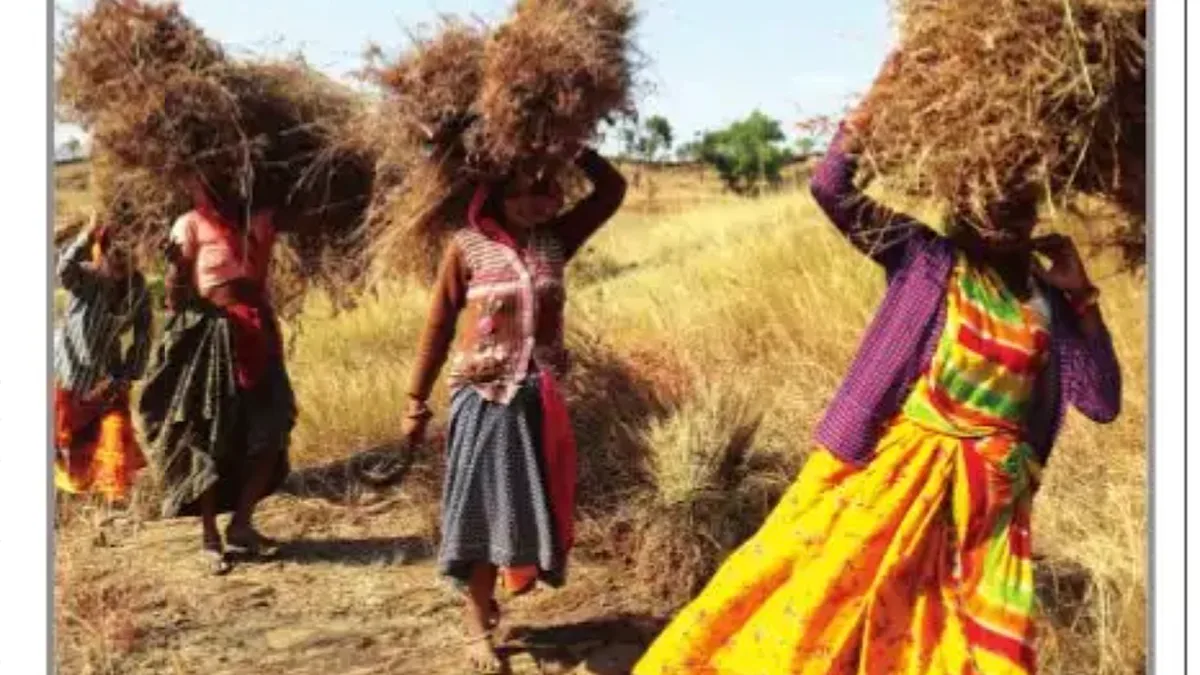

![‘Beginning of accountability’: Sonam Wangchuk reveals 3 written assurances from Centre before ending fast [VIDEO]](https://www.thestatesman.com/wp-content/uploads/2026/07/Sonam-Wangchuk-1-1-300x200.webp)
![‘Beginning of accountability’: Sonam Wangchuk reveals 3 written assurances from Centre before ending fast [VIDEO]](https://www.thestatesman.com/wp-content/uploads/2026/07/Sonam-Wangchuk-1-1.webp)