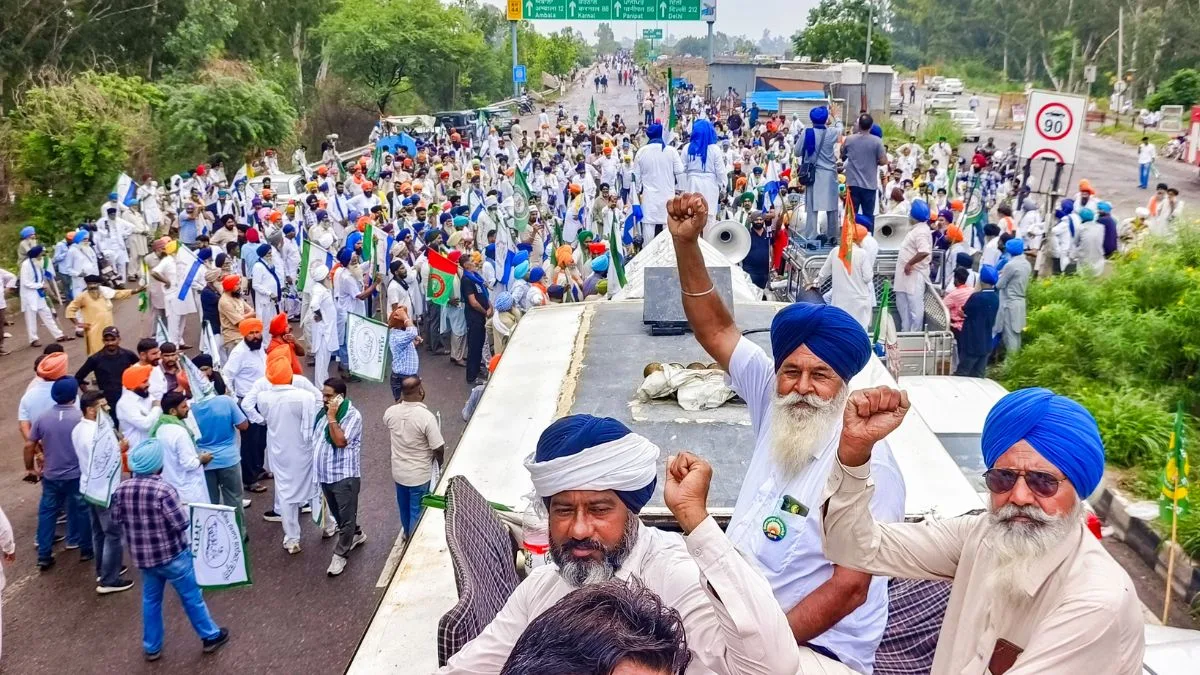
Punjab farmers attempting to march towards Delhi on Tuesday to protest the proposed India-US trade deal were stopped at the Shambhu and Khanauri border points after Haryana authorities sealed both entry routes and deployed heavy security, leading to a fresh standoff between protesters and the administration.
Farmers began assembling early in the day at the Shambhu border on the Patiala-Ambala route and the Khanauri border connecting Sangrur and Jind, with plans to proceed to Delhi’s Kisan Ghat. Anticipating the march, Haryana Police strengthened barricading at both locations, preventing the protesters from moving forward. Security personnel, along with earthmoving machinery, were stationed at the sites to prevent the establishment of any permanent or temporary protest structures.
Advertisement
With their movement halted, several farmers remained at the borders and indicated they were preparing to continue their agitation from the spot. The protest is being led by Kisan Mazdoor Morcha (KMM) coordinator Sarwan Singh Pandher, who has been coordinating with farmer organisations present at the protest sites.
The administration imposed prohibitory restrictions under Section 163 near the Shambhu border, warning demonstrators not to approach within 100 metres of the barricades. The renewed closure of the Shambhu crossing also disrupted traffic on the Jalandhar-Delhi stretch of National Highway-44, prompting Haryana Police to divert vehicles and issue traffic advisories. Authorities asked commuters to contact the emergency helpline in case of difficulty.
The protest has been organised against the proposed trade arrangement between India and the United States, which farmer groups believe could adversely affect the agricultural sector if it results in greater access for imported farm and dairy products. Farmer organisations have demanded wider consultations with stakeholders before any such agreement is finalised.
Following a meeting with Haryana Agriculture Minister Shyam Singh Rana, Pandher said the minister had conveyed that detained farmer leaders would be released soon. He also said efforts were being made to facilitate talks between farmer representatives and Union Agriculture Minister Shivraj Singh Chouhan within the next several days. According to Pandher, the next course of the agitation would be decided after the release of farmer leader Gurnam Singh Chaduni and consultations with other organisations. He added that the proposed trade agreement would also be a key subject during future discussions with the Centre.
The Shambhu border has once again emerged as a flashpoint after remaining closed for more than 13 months during the previous farmers’ agitation. The crossing, which had been sealed in February 2024 and reopened in March 2025 following judicial intervention, has now been shut again as authorities seek to prevent protesters from entering Haryana and proceeding towards the national capital.
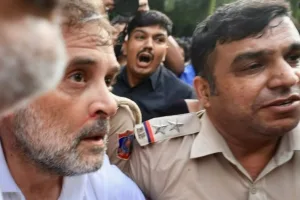
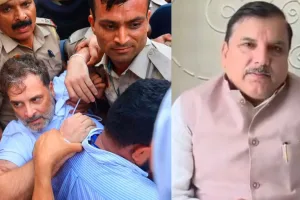
Security arrangements were tightened across several districts of Haryana, particularly along routes leading to Delhi. Police conducted intensive vehicle checks at multiple entry points, including the Kundli-Singhu border, where long traffic congestion was reported due to enhanced security screening. In some districts, police also detained or restricted the movement of farmer leaders travelling towards the protest venue.
Reacting to the demonstrations, Punjab BJP spokesperson Anil Sareen questioned the basis of the protest, stating that no final trade agreement had yet been concluded or made public. He argued that opposing a proposal whose details were yet to emerge was premature and alleged that certain groups were attempting to create unnecessary unrest.
The Aam Aadmi Party, however, backed the farmers’ right to protest. Party leader Baltej Pannu said farmers feared that an eventual free trade agreement could expose Indian agriculture and dairy producers to increased foreign competition, affecting their livelihoods. He urged the Centre to allow peaceful demonstrations in Delhi and called for dialogue instead of restrictions on movement.
Separately, Bhim Sena chief and Samvidhan Suraksha Party president Nawab Satpal Tanwar announced a nationwide Bharat Bandh on July 27, citing alleged human rights violations, corruption and other public issues, although the call was made independently of the farmers’ protest.
The situation remained tense but peaceful till the filing of this report, with security forces maintaining a strong presence at key border points while farmer organisations held consultations on their next course of action.