Under Indian Railways’ flagship “52 Reforms in 52 Weeks” initiative, Railway Minister Ashwini Vaishnaw on Tuesday presented a fresh set of eight major structural reforms in construction, the container sector, and fly ash transportation, among others.
These reforms aim to improve project execution, encourage private sector innovation in freight transportation and make logistics more efficient.
Advertisement
The Rail Bhoomi portal has also been introduced to streamline land acquisition, with the Ministry of Railways estimating it could reduce acquisition timelines by 30-40 per cent, depending on the state.
Rail Bhoomi is a web-based platform developed by CRIS to manage the complete process of, enabling online processing of major land acquisition stages
Among the freight reforms, the Railways have introduced container-based transportation of fly ash, which is currently transported mainly in open wagons.
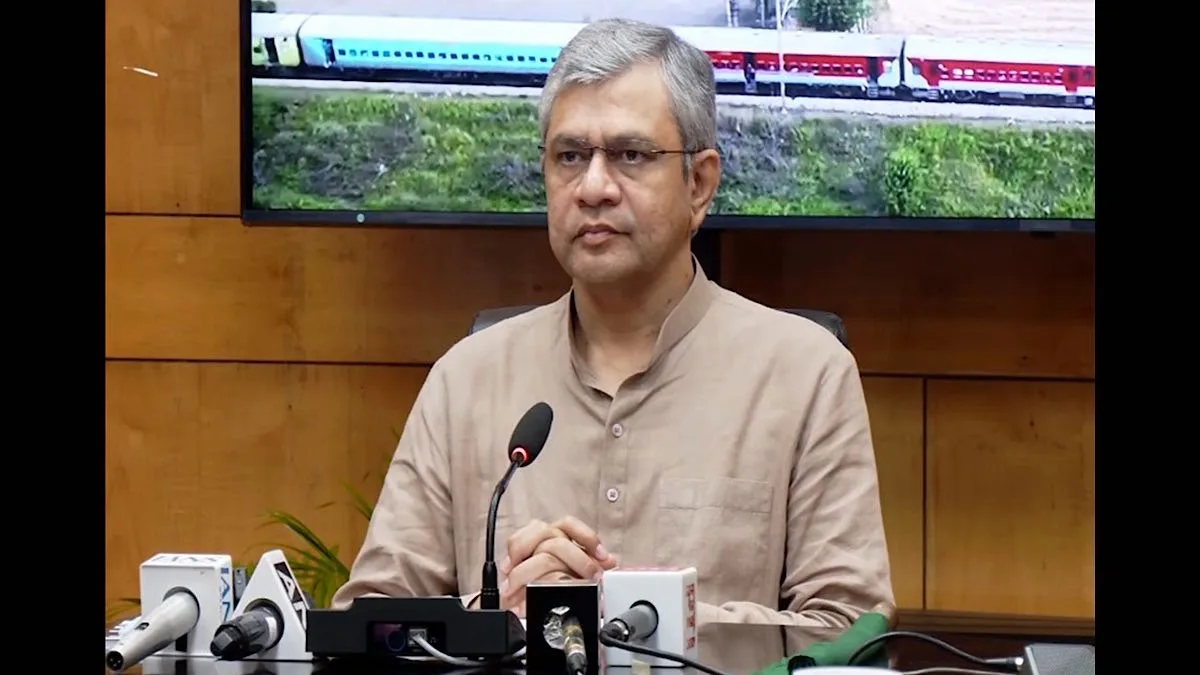
Addressing a press conference here, the Railway Minister, while elaborating about the new reforms said, “Today, we begin with Reform Number 10 and will go up to Reform Number 17. This year, we have set a target of implementing 52 reforms. Reform Number 10 focuses on the transportation of fly ash.”
He stated that thermal power plants generate fly ash, with an annual production of around 340 million tonnes. “The largest share, about 96 million tonnes, is used in the cement industry, while some is used in building and road construction. The remaining fly ash becomes a major environmental hazard, accumulating in large ponds or mounds near power plants,” Vaishnaw said.
Special containers have been designed for fly ash transportation, the Railway Minister informed, adding that, “The container is closed. Fly ash will not pollute if transported by container”.
“Until now, the challenge was in rail transportation. When fly ash is loaded into wagons, since it is a very fine material, a large amount of dust is generated during loading. Then, when the train runs at around 100 kmph, fly ash escapes from the open wagons, creating pollution throughout the route. That is why we introduced this reform,” he said.
A key reform tightens contractor eligibility for railway projects.
Contractors will now have to provide an upfront performance security of 10 per cent before work begins instead of deductions being made from running bills. In addition, contractors whose pending litigation exceeds 50 per cent of their net worth will not be eligible to bid for railway contracts. Professional indemnity insurance and all-risk insurance have also been introduced to strengthen project management.
Explaining the move, Vaishnaw said, “The more serious people will participate in the work of the railway,” adding that the reforms are intended to improve construction quality while discouraging contractors focused primarily on arbitration and litigation.
Railways have also opened the door for industries to develop freight wagon designs based on their operational requirements. The Research Designs and Standards Organisation (RDSO) will evaluate new designs, followed by prototype testing, safety certification and approval before they are inducted into the railway network.
The Ministry of Railways has also announced reforms for transporting petroleum products, fertilisers and agricultural produce through containers to improve handling, reduce contamination and lower logistics costs.
In addition, rules for container train operators have been simplified through a unified all-India licence, a uniform registration fee of Rs 25 crore for all routes and the removal of renewal fees after 20 years of successful operations.
Vaishnaw also announced a skill certification framework for railway projects to ensure workers in critical trades such as welding, plumbing, masonry and concrete testing are properly trained.
“This project can be implemented across all projects in a maximum of 24 months,” while stressing the need for a skilled workforce to support India’s large-scale infrastructure expansion,” he noted.