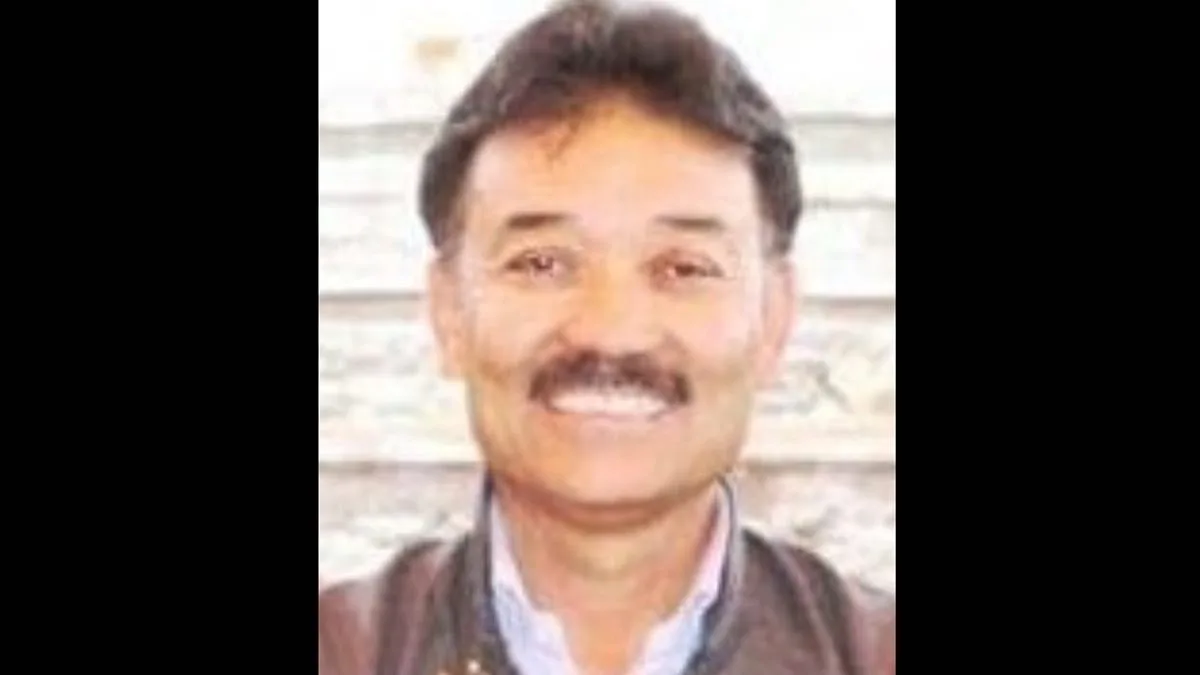
Former Chairman and Chief Executive Councillor of the Ladakh Autonomous Hill Development Council (LAHDC), Leh, Rigzin Spalbar, on Tuesday welcomed the extension of the LAHDC Act to all seven districts of the Union Territory, describing it as a historic measure that would deepen democratic decentralisation and ensure balanced development across the region.
In a letter addressed to Lieutenant Governor Vinai Kumar Saxena, Spalbar said the move marked another important milestone in Ladakh’s political evolution after the creation of the Union Territory in 2019 and the Centre’s in-principle agreement to provide Ladakh with a customised Union Territory with a Legislature under Article 371.
Advertisement
He observed that extending the Hill Council framework to all seven districts would shift decision-making closer to the people, enabling each district to address its own developmental priorities in accordance with local needs, geography and aspirations.
Spalbar said the decision would also strengthen safeguards for Ladakh’s land, employment, language, culture, environment and traditional way of life while ensuring adequate representation for all sections of society, including women through a 33 per cent reservation in the councils.
Emphasising the strategic significance of the region, he said stronger local institutions in border districts would not only improve governance but also contribute to India’s long-term security interests in the sensitive Himalayan frontier.
Referring to the functioning of the existing Hill Councils in Leh and Kargil, Spalbar said their success had demonstrated the effectiveness of decentralised governance in promoting development, peace and administrative efficiency, making the model suitable for expansion to the remaining districts.
He further said the proposed district councils would create greater opportunities for youth participation in governance, generate local employment and ensure focused development of remote border villages that often remain disadvantaged due to difficult terrain and harsh climatic conditions.
Spalbar maintained that Ladakh’s vast geographical expanse and sparse population required a governance model based on administrative realities rather than population alone. He said the decision could serve as a model for governance across the Indian Himalayan region.
Describing the extension of the LAHDC Act as another landmark reform after the creation of the Union Territory, Spalbar said it reflected the Centre’s commitment to politically empowering the people of Ladakh while preserving the region’s distinct identity.
He expressed gratitude to Prime Minister Narendra Modi, Union Home Minister Amit Shah, Lieutenant Governor Saxena and Chief Secretary Ashish Kundra for what he termed a visionary initiative aimed at building a stronger, more empowered Ladakh.