India’s West Asia opportunity
Geopolitical crises early arrive with neat labels. They unsettle markets, test diplomacy and expose economic vulnerabilities.
As Pakistan seeks a larger diplomatic role amid renewed geopolitical attention, its gravest challenges remain within its own borders.




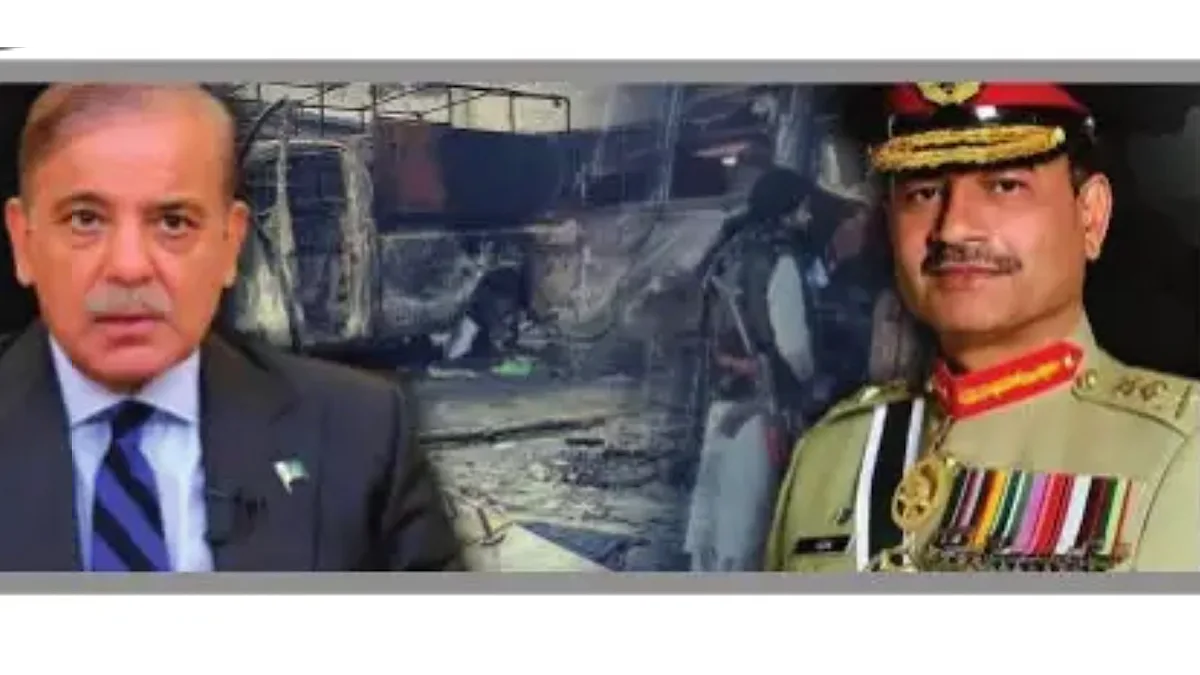
Photo:SNS
As Pakistan seeks a larger diplomatic role amid renewed geopolitical attention, its gravest challenges remain within its own borders. The conflict in West Asia, renewed American engagement, Saudi financial support and strategic competition over critical minerals and regional connectivity have once again enhanced Islamabad’s diplomatic relevance. However, such geopolitical opportunities are inherently transient.
Durable regional influence ultimately rests not on external relevance but on internal stability. Pakistan’s economy has shown signs of short-term stabilisation, with growth projected at 3.7 per cent, inflation declining to around 11 per cent from nearly 40 per cent, foreign exchange reserves rising to about $22 billion, and continued support from the IMF and Saudi Arabia providing temporary relief. Yet structural weaknesses remain entrenched. Excessive public borrowing, low investment, a narrow tax base, a stressed energy sector and weak export performance continue to constrain long-term economic resilience. Sustainable prosperity will depend less on external assistance than on creating wealth at home. Against this backdrop, Pakistan’s military leadership has sought to project the country as an increasingly important regional stakeholder.
Advertisement
Army Chief General Asim Munir’s engagements with major powers have reinforced Islamabad’s diplomatic profile. Yet Pakistan’s external ambitions continue to be constrained by mounting domestic security challenges. The contrast between growing diplomatic visibility abroad and persistent instability at home has rarely been starker. The insurgency in Balochistan remains one of Pakistan’s most serious internal security challenges. The Balochistan Liberation Army (BLA) has repeatedly targeted Pakistani security forces, infrastructure and Chinese interests associated with the China-Pakistan Economic Corridor (CPEC). Recent attacks, including the hijacking of the Jaffar Express passenger train, demonstrate the group’s continued operational capability despite sustained counter-insurgency efforts.
Advertisement
Unlike Islamist militant organisations, the BLA is driven primarily by Baloch nationalism. It opposes what many Baloch groups perceive as the exploitation of the province’s natural resources without adequate local political representation or economic benefits. Consequently, Chinese nationals and CPEC projects have increasingly become symbolic targets, raising security costs for both Islamabad and Beijing while undermining investor confidence. An equally formidable challenge comes from the Tehrik-e-Taliban Pakistan (TTP). Considerably larger than the BLA, the organisation seeks to establish an Islamic emirate in Pakistan’s north-western regions and rejects the Pakistani state as insufficiently Islamic. Over the past decade, the TTP has transformed itself into a more disciplined and capable insurgent movement, rebuilding its networks and increasingly concentrating attacks on security personnel and law enforcement agencies.
The resilience of the TTP also reflects deeper structural problems. High unemployment, weak governance, limited economic opportunities and inadequate state presence in remote regions continue to facilitate militant recruitment. Military operations may suppress violence temporarily, but they cannot address the underlying grievances that sustain insurgencies over time. Pakistan’s deteriorating relationship with Afghanistan has further complicated the security environment. Islamabad has repeatedly accused the Afghan Taliban of providing sanctuary to TTP fighters, prompting cross-border strikes against alleged militant camps. However, these operations have failed to eliminate the threat and have instead deepened tensions between Kabul and Islamabad.
The relationship has also been strained by Pakistan’s deportation of large numbers of Afghan refugees and restrictions on cross-border trade. Meanwhile, the Afghan Taliban appear reluctant to act decisively against the TTP because of long-standing ideological affinity and concerns that any confrontation could strengthen rival extremist organisations. The result is a strategic impasse in which Pakistan’s military pressure has not neutralised the TTP, while bilateral relations with Afghanistan continue to deteriorate. Islamabad has often attributed unrest in Balochistan to external interference. Yet the persistence of the insurgency points to deeper domestic causes, including political alienation, uneven development, economic exclusion and a longstanding deficit of trust between local communities and state institutions.
Experience suggests that insurgencies rooted in political and socio-economic grievances are rarely resolved through force alone. Durable stability ultimately requires political accommodation, economic inclusion and institutional reform alongside effective security measures. Another important challenge has emerged in Pakistan occupied Kashmir (PoK), where protests that began in 2023 over rising electricity tariffs and shortages of subsidised wheat have evolved into a broader movement demanding greater political representation and institutional accountability. The Joint Awami Action Committee (JAAC) has spearheaded these protests, arguing that despite the Mangla Hydropower Project being located in PoK, local residents continue to bear disproportionately high electricity costs. Many also contend that the dam was constructed without adequate consultation or compensation for displaced communities.
The protests have also exposed concerns regarding political representation. Of the 53 seats in the PoK Legislative Assembly, only 33 are directly elected by local residents. Twelve seats are reserved for migrants from the erstwhile State of Jammu and Kashmir now residing elsewhere in Pakistan, while the remaining seats are reserved for women, technocrats, religious scholars and overseas Kashmiris. Since elections for the 12 migrant seats are held outside PoK, critics argue that they dilute local political representation while influencing decisions affecting the region’s governance and finances. The ban imposed on JAAC has further intensified concerns regarding democratic space. Similar concerns have periodically surfaced in Gilgit-Baltistan, where demands for greater political representation, equitable economic development and fuller constitutional rights have generated recurring protests.
Together, developments in PoK and Gilgit-Baltistan underscore broader governance challenges in territories administered by Pakistan. Pakistan therefore faces a strategic choice. It can continue prioritising external diplomatic visibility while relying predominantly on coercive responses to internal unrest, or it can address the political, economic and governance deficits that lie at the heart of many of its domestic challenges. The latter course is undoubtedly more demanding, but it offers the only credible path to durable stability.
For Islamabad, the road to regional influence ultimately runs through domestic stability. Diplomatic engagement abroad cannot substitute for political reconciliation and effective governance at home. For India, Pakistan’s internal trajectory warrants close attention. While prolonged instability may constrain Islamabad’s capacity for external adventurism, it also carries risks of cross-border terrorism, humanitarian pressures and heightened regional uncertainty. Indian policymakers must therefore continue to combine robust security preparedness with a nuanced understanding that Pakistan’s internal stability will remain an important determinant of South Asia’s strategic landscape.
(The writer is a retired Brigadier of the Indian Army and writes on strategic and international affairs.)
Advertisement