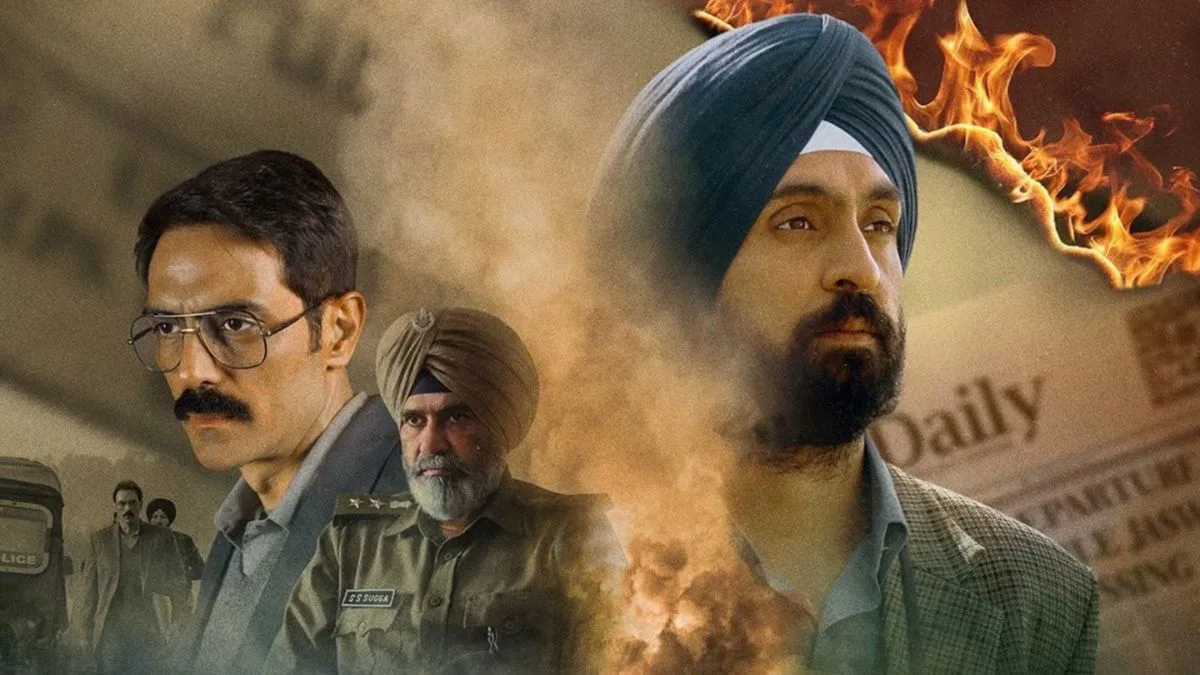
There are definitive moments in regional politics when a single cultural event ceases to be just an isolated incident and becomes the volatile starting point for a much larger institutional conversation. India’s strategic northern border state of Punjab is currently witnessing one such structural shift. What began as an administrative and creative dispute over the Punjabi feature film Satluj has rapidly broken past the boundaries of cinema, censorship, and artistic freedom. Within days of the film’s abrupt removal from a prominent digital platform following federal interventions under Section 69A of the IT Act citing public order risks, this has triggered a cascade of political reactions that extend far beyond the entertainment industry.
The development has systematically reopened deep-seated historical wounds, bringing competing ideological narratives directly into the mainstream discourse as the state begins its long, volatile transition toward the crucial 2027 Assembly elections.
Advertisement
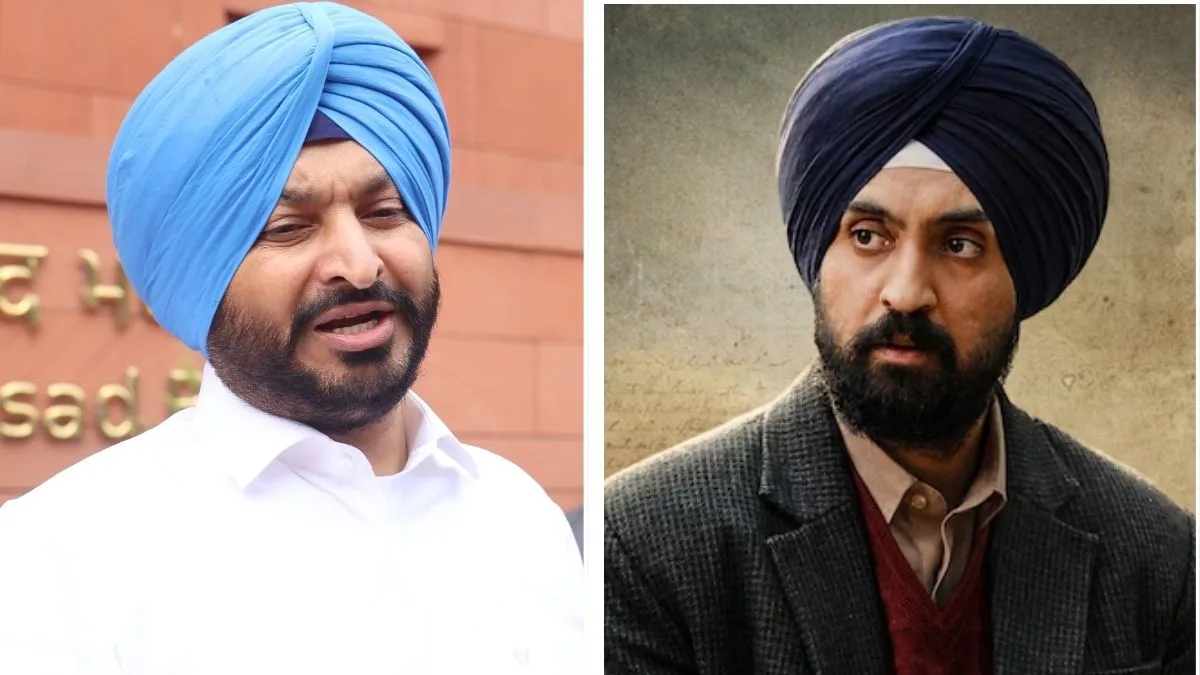
The immediate flashpoint centers on the radical shift from creative license to legal and historical accountability. Federal Minister of State Ravneet Singh Bittu, a prominent leader of the ruling Bharatiya Janata Party (BJP) and the grandson of former Punjab Chief Minister Beant Singh, who was assassinated by an insurgent car bomb in 1995, has aggressively fronted the state’s counter-narrative. By directly challenging the filmmakers to produce official judicial records, authenticated findings, and verified institutional evidence to substantiate the film’s central depiction of 25,000 missing or illegally cremated individuals during the counter-insurgency era, Bittu has shifted the debate from simple censorship to strict evidentiary proof. Warning the producers of impending structural legal action for propagating unauthenticated and inflammatory claims as settled history, Bittu effectively questioned the deliberate omission of the systemic, targeted massacres of thousands of innocent civilians and minority Hindu families by militant groups during the state’s darkest years of terrorism.
This aggressive intervention has effectively shattered a fragile, three-decade-old political consensus in Punjab, rapidly escalating into highly synchronized ground mobilizations by right-wing organizations. Reviewing the ongoing cinematic standoff, Pawan Gupta, the National President of Shiv Sena Hindustan, who arrived in Moga to chair a strategic workers’ meeting, strongly validated Bittu’s computational challenge to the producers.
“The demand raised by Union Minister Ravneet Singh Bittu for the audited list of 25,000 individuals is entirely justified and legally sound,” Gupta stated during the workers’ meet. “The film Satluj presents a deeply biased, one-sided narrative that completely erases the historical suffering of the other side. You cannot heal historical wounds by airbrushing the systemic targeting of an entire community.”
To institutionalize this counter-narrative, Shiv Sena Hindustan has announced a massive ‘Trishul March’ across nine major districts of Punjab, with a critical demonstration slated for Moga on July 26, effectively migrating the digital and cinematic friction onto the physical streets of the state.
This escalating street mobilization has revived severe financial and political questions regarding state accountability toward the victims of terrorism. According to Gupta, during the peak of the militancy era, over 35,000 Punjabi Hindus were systematically massacred. While the then Congress government led by Chief Minister Captain Amarinder Singh had formally approved an initial rehabilitation grant of ₹781 crore for the riot-affected Hindu families, successive administrations, including the subsequent Shiromani Akali Dal-BJP coalition, later Congress regimes, and the incumbent Aam Aadmi Party (AAP) government, have consistently failed to disburse the funds.
“Over 35,000 Hindus were slaughtered during the dark days of terrorism in Punjab. While the then Captain Amarinder Singh government had officially approved a package of ₹781 crore for these victim families, successive regimes have played cruel politics with their grief,” Gupta asserted. “Whether it was the Akali Dal, the subsequent Congress governments, or the current AAP administration, nobody fulfilled the promise. With accumulated interest, this legal relief has now swelled to ₹5,100 crore. We will take to the streets with our Trishul March on July 26 to force this state government to clear its multi-decadal debt to the minority community.”
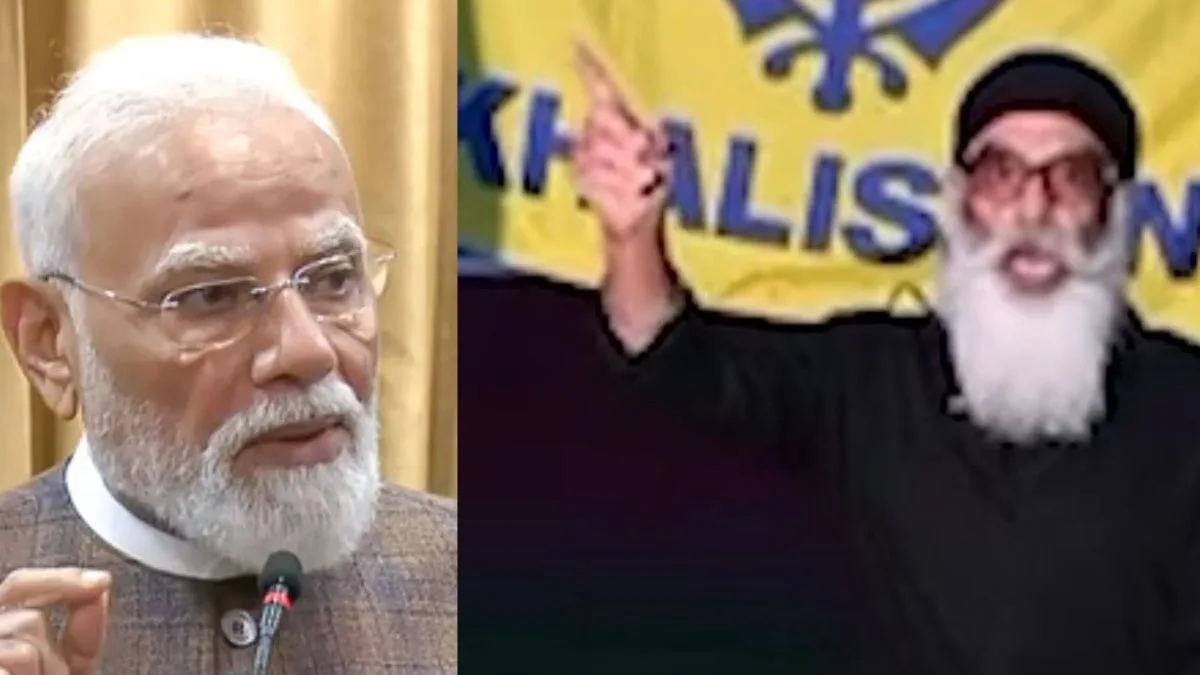
The rapid institutionalization of these historical and financial claims over the past weeks indicates that history itself is being weaponized as a primary political tool to reshape the electoral landscape before 2027. For decades after the militancy ended in the mid-1990s, the state’s mainstream political ecosystem consciously attempted to steer public discourse away from historical trauma, choosing instead to anchor electoral campaigns on secular, developmental themes such as agriculture, fiscal management, federal water disputes, unemployment, and drug abuse. The current geopolitical friction is, however, being swiftly exploited by external extremist elements seeking to internationalize the regional debate. Gurpatwant Singh Pannun, the leader of the banned overseas secessionist outfit Sikhs for Justice (SFJ), who has been designated a terrorist by the Indian government under the Unlawful Activities Prevention Act (UAPA), recently released a highly provocative digital video message timed precisely with an upcoming proposed visit by Prime Minister Narendra Modi, urging local sympathizers to display secessionist flags.
This highly volatile environment has forced Punjab’s major political entities into distinct, heavily defensive ideological corners ahead of the upcoming polls. The regional Shiromani Akali Dal (SAD) has slammed the central restrictions on Satluj, demanding an honest confrontation with the past, yet the party faces the complex task of consolidating its core panthic Sikh religious identity without alienating broader sections of the electorate that demand social harmony. The Congress Party finds itself questioning the selective parameters of state censorship while striving to avoid being portrayed as insensitive toward the victims of past terrorism. The ruling AAP government faces the immediate administrative burden of maintaining law and order on the ground while desperately trying to ensure that these explosive identity debates and impending street marches do not completely eclipse its governance track record on health, education, and welfare. Conversely, the BJP is anchoring its strategy firmly on national security, judicial discipline, and factual accuracy, seeking to frame the discourse around verified evidence to consolidate institutional and minority votes across urban and semi-urban centers.
The primary operational risk of this communal polarization lies in Punjab’s transformed digital information ecosystem. Unlike the information environment of the 1980s and 1990s, today’s political messaging travels instantly through encrypted chat platforms, short-video applications, and global diaspora networks. A highly charged political statement delivered in Amritsar, Moga, or Chandigarh can polarize and mobilize communities across Canada, the United Kingdom, and the United States within minutes, internationalizing local domestic friction instantaneously and deploying out-of-context digital clips to cultivate mutual distrust between the Hindu and Sikh communities. This global circulation transforms what used to be localized grievances into permanent digital divides that could significantly pollute the broader electoral environment.
Ultimately, ground-level observers emphasize that Punjab’s fundamental social fabric remains uniquely resilient against total communal polarization. Unlike other regions where communal lines are deeply entrenched, Hindus and Sikhs in Punjab share deep familial, cultural, and commercial ties; they have collectively endured the violence of the militancy era, and their integrated social reality acts as a powerful barrier against lasting divisions. However, the current debate surrounding Satluj and the shifting demands for multi-crore compensations demonstrate that the contest is increasingly about legitimacy – who possesses the moral authority to narrate Punjab’s complex history. If the public and political discourse completely abandons verified factual and judicial parameters in favor of short-term electoral expediency, history will cease to be a tool for collective reconciliation and instead become a fresh arena for severe political confrontation.