Putin-Modi Summit may focus on arms, nuclear power and rare earth, besides politics
Indian and Russian officials are preparing a slate of defence agreements that would mark one of the most substantial military-technical packages in years.
Biswajit Bera, geoscientist at Sidho-Kanho-Birsha University said that the district possesses enormous strategic mineral potential.




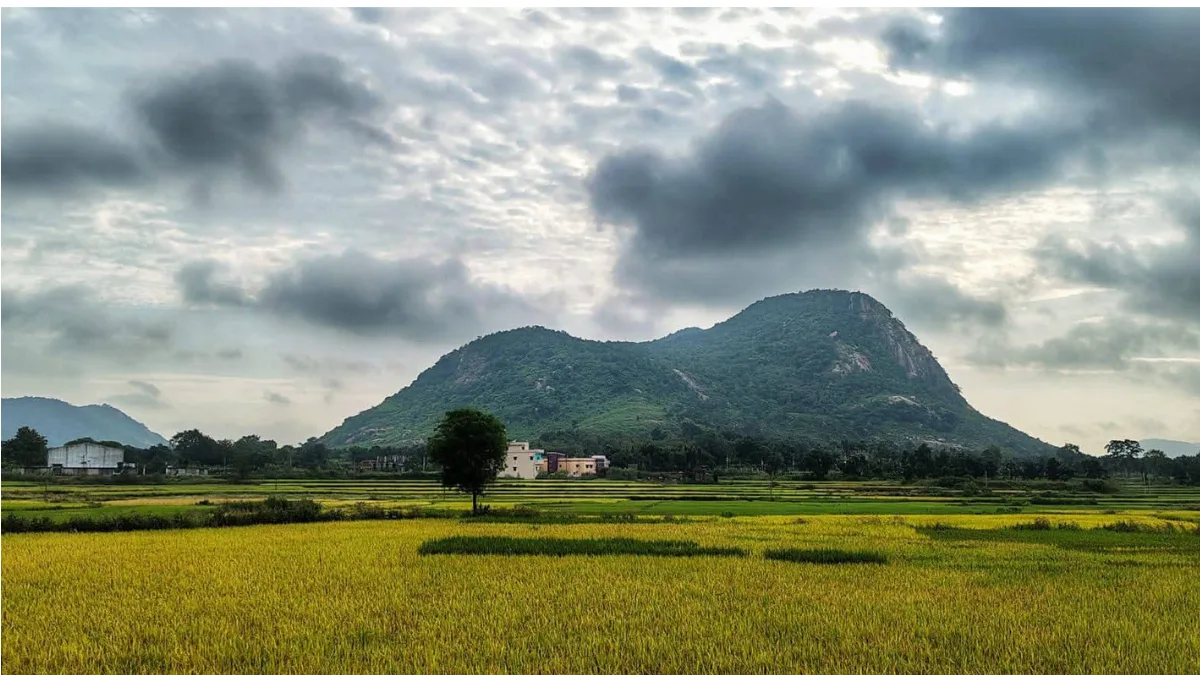
Photo: SNS
The centuries-year-old hills of Purulia, a district located in the westernmost part of West Bengal along the Jharkhand border, may become the next frontier in India’s critical mineral mission.
Rich deposits of rare earth elements (REEs) hidden beneath the district’s ancient geological formations promise jobs, investment and strategic self-reliance. However, they have also brought to light a difficult question: can India mine the minerals of the future without destroying one of eastern India’s oldest geological landscapes?
Advertisement
That debate is no longer confined to scientific circles. In villages scattered across Purulia’s rocky uplands, where agriculture remains largely rain-fed and seasonal migration is a way of life, the prospect of rare earth mining has generated both optimism and apprehension.
Advertisement
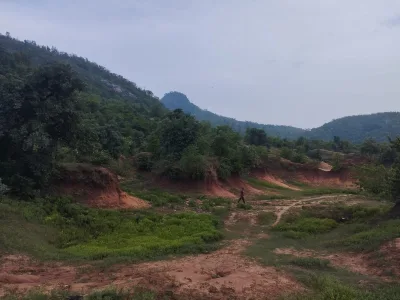
Geological investigations by the Geological Survey of India (GSI) and the Atomic Minerals Directorate (AMD) have identified substantial deposits of rare earth elements and associated critical minerals across the North Purulia Shear Zone (NPSZ) and the South Purulia Shear Zone (SPSZ).
The most significant discovery is the Kalapathar-Raghudih deposit, estimated to contain nearly 0.67 million tonnes of rare earth resources, making it one of eastern India’s most important critical mineral prospects.
The North Purulia Shear Zone, stretching between Jhalda and Raghunathpur, is known for its enrichment in rare earths, apatite-magnetite and barytes.
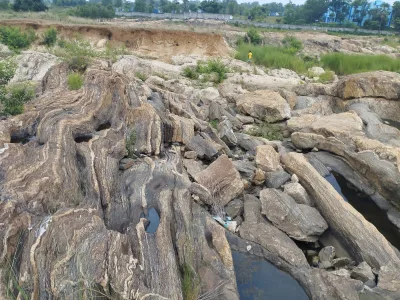
The South Purulia Shear Zone hosts REEs associated with fertile pegmatites and alkaline carbonatite rocks, along with occurrences of niobium and lithium.
Among the best-known mineral localities are Nawahatu and Kotam-Kutru, where geologists have identified rare earth-bearing minerals belonging to the euxenite and aeschynite groups.
In all, Purulia is known to host between 14 and 17 rare earth-bearing minerals, primarily occurring in allanite, monazite and the euxenite-aeschynite groups. The district also contains associated deposits of columbite-tantalite, beryllium, lithium and apatite-magnetite.
The mineral wealth buried beneath these ancient rocks has drawn increasing attention because rare earth elements are indispensable for manufacturing electric vehicles, wind turbines, semiconductors, smartphones, advanced communication systems and defence equipment. As India attempts to reduce dependence on imported critical minerals, Purulia is increasingly being viewed as a strategic resource base.
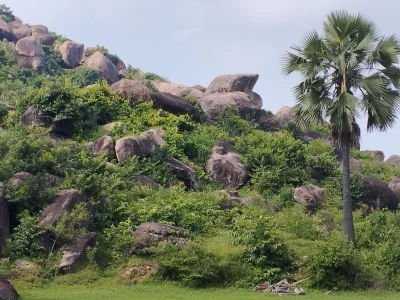
For many residents, however, the conversation begins with livelihoods rather than geopolitics.
“We have seen generations leaving Purulia in search of work,” Gopal Mahato, a resident of Jhalda said, adding, “If industries come and local youths get employment, people will welcome it. But the jobs should go to local people first, and not only to outsiders.”
A resident of Nawahatu echoed similar hopes but urged caution. “Development is necessary, but our forests, water sources and agricultural land should not be sacrificed. Mining elsewhere has shown that once the environment is damaged, villages suffer for decades,” he said.
Local tribal leaders also emphasised the need for consultation before any large-scale extraction begins.
“Our hills are not merely rocks. They are part of our history, culture and livelihood. If mining is planned, local communities must be taken into confidence and rehabilitation should not remain only on paper,” said a community representative from the Baghmundi area.
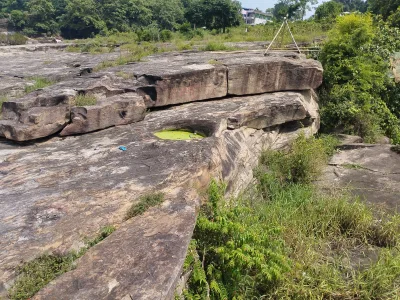
According to Biswajit Bera, geoscientist at Sidho-Kanho-Birsha University and an environmental activist, the district undoubtedly possesses enormous strategic mineral potential.
“Mining of rare earth elements will definitely create employment opportunities and strengthen both West Bengal’s and India’s economy,” Bera told The Statesman. “The country requires these critical minerals for future technologies, and Purulia can play an important role in achieving mineral security.”
However, he warned against treating the district solely as a mining destination.
“Purulia’s Precambrian geosites and geomorphosites are of immense scientific importance. These billion-year-old landforms preserve the geological evolution of eastern India and should be protected. If planned carefully, geotourism can generate sustainable livelihoods for both tribal and non-tribal communities while conserving this invaluable heritage,” he said.
Bera added that any mining proposal should be preceded by rigorous geological, environmental and social impact assessments to ensure that extraction does not irreversibly alter the fragile landscape.
Geologists point out that the rare earth deposits occur within the Chhotanagpur Granite Gneiss Complex along the fringe of the Singhbhum Shear Zone, making the region not only economically valuable but also scientifically significant. These rock formations are regarded as natural archives documenting some of the earliest chapters of Earth’s geological history.
The West Bengal government has earlier indicated that Purulia’s iconic Precambrian hill systems would be protected from indiscriminate mining. Yet, as India’s demand for critical minerals accelerates and exploration advances towards commercial development, the district finds itself at a crossroads.
For Purulia, the challenge will be far greater than extracting rare earths. It will be determining whether the promise of strategic minerals can coexist with the preservation of a landscape that has survived for billions of years and continues to sustain the communities that call it home.
Advertisement