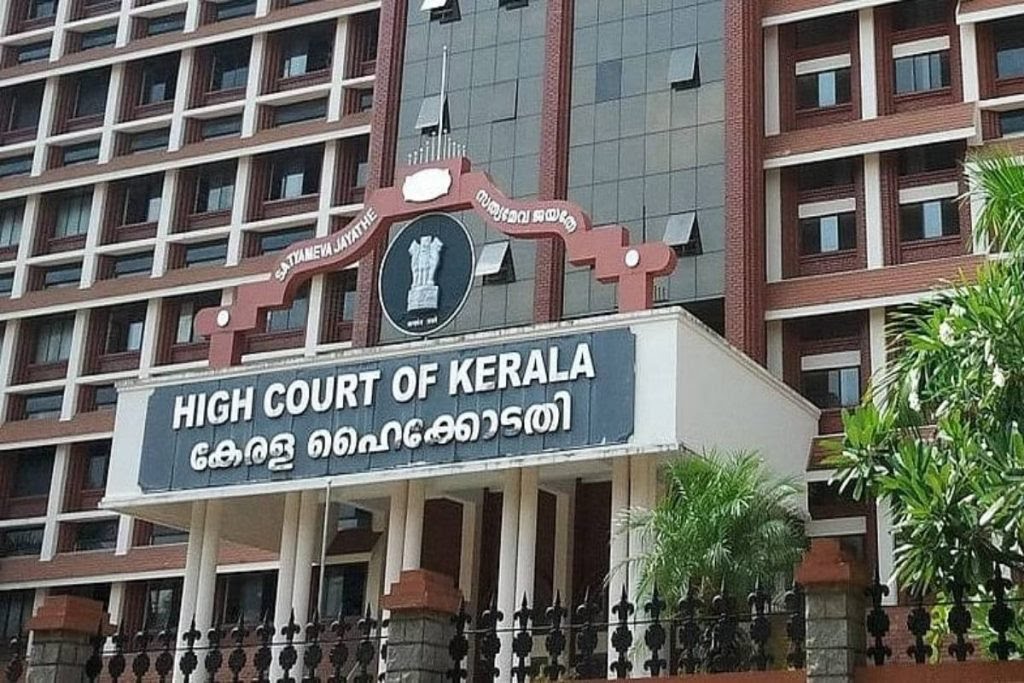
The Kerala High Court recently ordered the Chief Vigilance and Security Officer of the Travancore Devaswom Board (TDB) to inspect temple records and the iconic ‘Ezharapponnana’ (seven-and-a-half golden elephants) at the Ettumanur Mahadeva Temple in Kottayam.
A Division Bench comprising Justice Raja Vijayaraghavan V and Justice K V Jayakumar, while considering a suo motu case based on a devotee’s request for an inquiry into the suspected misappropriation of gold on the ‘Ezharapponnana’, directed the Chief Vigilance and Security Officer to conduct an inquiry and submit a report to the court. The Bench also directed the vigilance officer to use a professional goldsmith to scientifically verify the exact weight, quality, and originality of the gold covering the statuettes.
Advertisement
A devotee, A G Prasad Kumar, filed a complaint with the TDB claiming that the gold plates of the Ezharaponnana had recently undergone repair and renovation. He alleged that during the work, the original gold plates were removed and replaced with copper or other low-value metals.
The High Court subsequently initiated a suo motu case and sought a report from the TDB. In its affidavit to the court, the TDB included findings from the Administrative Officer and the Assistant Devaswom Commissioner. These reports stated that a thorough inspection and cross-verification of all relevant registers revealed no maintenance records for the Ezharaponnana, nor any evidence of misappropriation.
While finding no grounds to dispute the reports of the Administrative Officer and the Assistant Devaswom Commissioner, the court determined that an independent investigation by the TDB Vigilance Wing was necessary. Consequently, it directed the Chief Vigilance and Security Officer to audit the temple registers and the Ezharaponnana, and to file a report detailing his findings.
The ‘Ezharapponnana’ comprises eight distinct elephant idols. Seven are crafted at a height of two feet, while the eighth is precisely half that size. They are exhibited publicly only once a year during temple festivities.