The United States military carried out a new round of strikes on Iran on Saturday after an Iranian drone hit a Panama-flagged oil tanker in the Strait of Hormuz. It was the second attack on a commercial vessel in three days and pushed an already fragile ceasefire closer to collapse.
US Central Command said its forces targeted Iranian military surveillance infrastructure, communications systems, air defence sites, drone storage facilities, and mine-laying capabilities. The strikes came hours after a drone struck the MT Kiku, which was carrying more than two million barrels of crude oil through the strait.
Advertisement
“Iran was given a chance to honour the ceasefire agreement but elected not to when its forces launched a one-way attack drone that hit MT Kiku,” Centcom said in a statement. The strikes, it added, were “in direct response to continued Iranian aggression against commercial shipping.”
Iranian state broadcaster IRIB reported explosions in Sirik, a coastal city in southern Iran, shortly after the strikes concluded. The IRGC said the US had hit five of its coastal posts, framing the attack as an assault on legitimate Iranian naval operations rather than a response to ceasefire violations.
The attack that triggered it
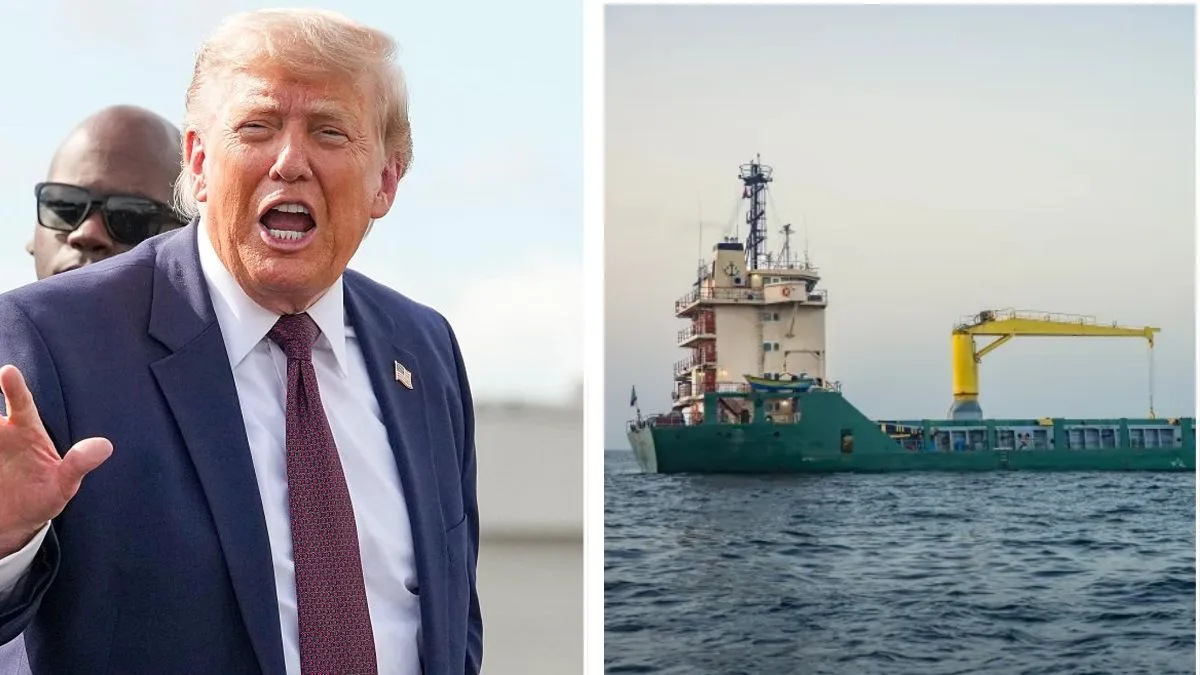
The MT Kiku was transiting the Strait of Hormuz on Saturday morning when it was struck by a one-way Iranian attack drone at around 4:30 a.m. local time. The tanker was carrying Qatari crude oil and was headed to the port of Fujairah in the United Arab Emirates.
It was the second such incident in three days. On June 25, an Iranian drone had hit the MV Ever Lovely, a Singapore-flagged cargo ship operated by Taiwan’s Evergreen Marine. That vessel was exiting the strait along a southern route near the Omani coast, a corridor the US had cleared and was promoting for commercial traffic. The Ever Lovely sustained damage to its bridge but remained operational. The crew, cargo, and vessel were reported safe.
Centcom had described its response to the Ever Lovely attack as “a powerful response,” hitting Iranian missile and drone storage locations and coastal radar sites. Iran said those US strikes were themselves a ceasefire violation. Rather than stand down, Tehran launched the drone that struck the MT Kiku the following day.
What the US struck and why
Saturday’s US strikes went further than the first round. Centcom said it targeted a broader set of Iranian military assets, including surveillance infrastructure, communications networks, air defence positions, drone storage sites, and facilities used for laying mines in the waterway.
The expansion in targets reflected Washington’s position that Iran had been given an opportunity to comply with the ceasefire and had chosen not to. “Commercial vessel transits through the Strait of Hormuz continue,” Centcom said. “US forces remain vigilant, lethal, and ready.”
The Pentagon has not released details on the number of aircraft or specific locations involved in Saturday’s strikes beyond Sirik, where explosions were confirmed by Iranian state media.
The IRGC pushed back on the US framing. It said the strikes hit five coastal posts and were carried out under what it called the “pretext” of confronting a vessel that had violated the passage rules Iran says it is entitled to enforce. “America’s blind shots at Sirik will not resolve our dominance over the Strait of Hormuz,” the IRGC said. “But our shots at violators will remind the rest of the vessels of the clear passage route.”
Iran retaliates: Missiles and drones hit Kuwait and Bahrain
Hours after the US strikes, Iran escalated further. The IRGC said its navy and air forces conducted joint missile and drone operations targeting US military infrastructure in Kuwait and Bahrain.
Kuwait’s armed forces confirmed the attack. “Kuwaiti air defenses are currently confronting hostile missile and drone attacks,” the military said in a statement posted to X. Citizens were asked to follow security instructions. In Bahrain, sirens sounded and the Ministry of Interior asked citizens to “remain calm and head to the nearest safe place.”
Bahrain hosts the US Navy’s Fifth Fleet and has been a central hub for American military operations in the Gulf throughout the conflict. A US official confirmed that American facilities in both countries had been targeted and said there were no reported casualties or major damage at this time.
Both Kuwait and Bahrain condemned the Iranian attacks. Bahrain’s foreign ministry called it “a blatant violation of its sovereignty.” Saudi Arabia and Qatar also issued condemnations. The attacks came roughly 48 hours after US Secretary of State Marco Rubio had visited Bahrain for meetings with Gulf Cooperation Council foreign ministers.
Trump threatens to finish the war
Shortly after news of the US strikes spread on Saturday evening, Trump posted on Truth Social. He wrote that it was “very possible” Tehran would “never learn.”
“There may come a point when we are no longer able to be reasonable, and will be forced to militarily complete the job that we very successfully started,” Trump wrote. “If that happens, the Islamic Republic of Iran will no longer exist!”
The IRGC responded in kind. It warned that “any potential enemy aggression, under any pretext, even if the aggressions are against minor targets, as happened last night and tonight, will have a crushing response.” The statement also said US strikes violated the ceasefire and “will lead to a complete halt to the process.”
Iran’s foreign ministry blamed the “treaty-breaking US regime” for the breakdown. Vice President JD Vance posted on X that “violence will be met with violence” but added that Iran could “pick up the phone” if it had disagreements about how the MOU was being applied.
The route dispute behind the attacks
The tanker attacks are not random. They are part of a deliberate Iranian strategy over which shipping lane commercial vessels use through the Strait of Hormuz.
The US has been directing traffic through a southern corridor running close to Oman’s coastline. Iran insists ships must use a northern route that passes through waters it controls. Iran has warned vessels against using the US-supported southern passage and has followed through on those warnings with drone strikes.
Tehran has also signalled it wants to eventually charge fees for passage through the strait. Washington calls that a breach of international maritime law. Trump posted on Wednesday that Iran had assured him there would be “no tolls, no insurance costs and no other charges of any kind.” He warned that if the statement proved false, negotiations would end immediately.
Iran’s chief negotiator, Mohammad Baqer Ghalibaf, offered a different view the same week. “Everyone should know that the administration of the Strait of Hormuz will never go back to the way it was before the war,” he told state-affiliated media.
Where the ceasefire stands
The MOU signed on June 17 required Iran to use its “best efforts for the safe passage of commercial vessels with no charge for 60 days.” With two tankers struck, US forces having hit Iran twice in 48 hours, and Iranian missiles now falling on US bases in the Gulf, that agreement is under severe strain.
One formal round of talks was held in Switzerland last week. Washington waived sanctions on Tehran after those talks as a goodwill gesture. Since then, the fighting has resumed and intensified on every front.
Centcom said commercial vessels were still transiting the strait as of Saturday. But with the IRGC threatening that diplomatic processes would be halted entirely and Trump threatening to finish the war, the path back to the negotiating table is narrowing quickly.