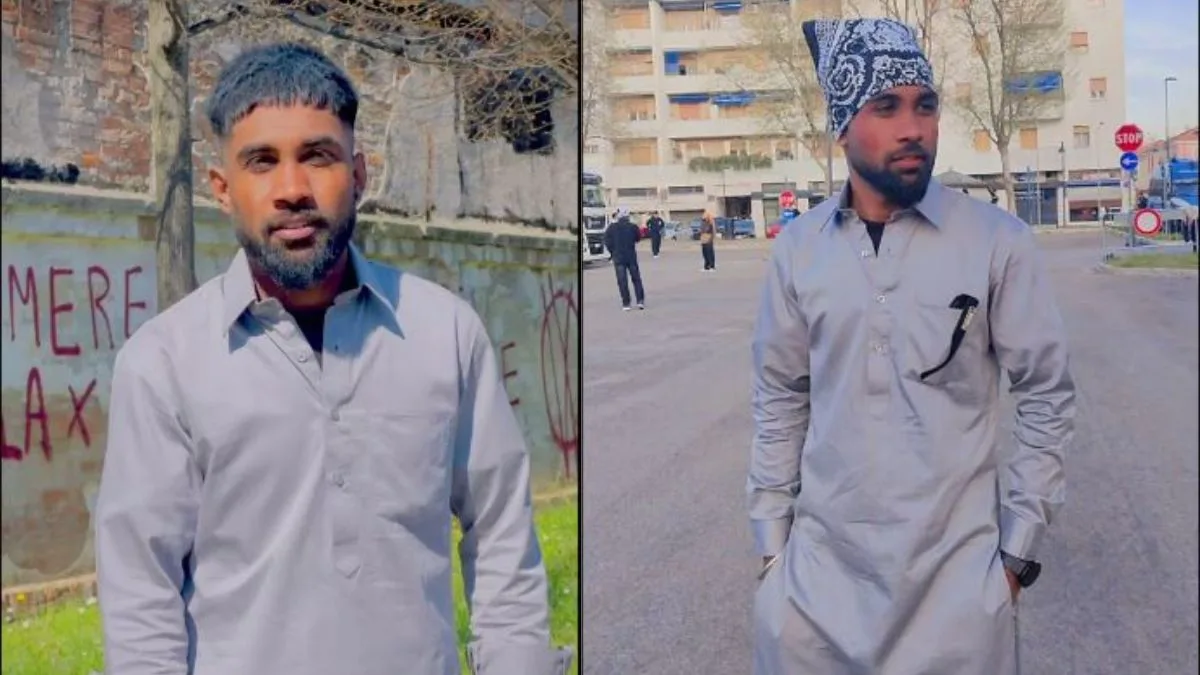
Kerala Court finds accused guilty in Dr Vandana Das murder case; sentencing on March 19
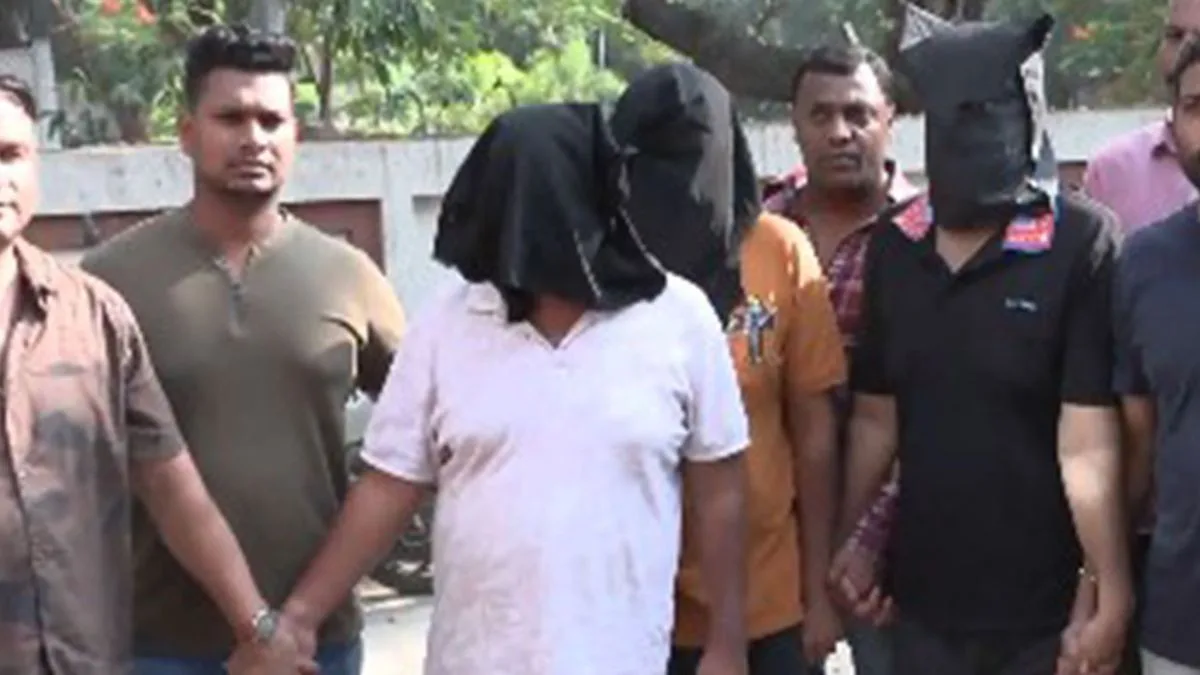
The Kollam Additional Sessions Court on Tuesday found the accused in the sensational Dr Vandana Das murder case guilty.
India has its own long and bitter experience of this asymmetry, and Jammu and Kashmir is its sharpest instance.




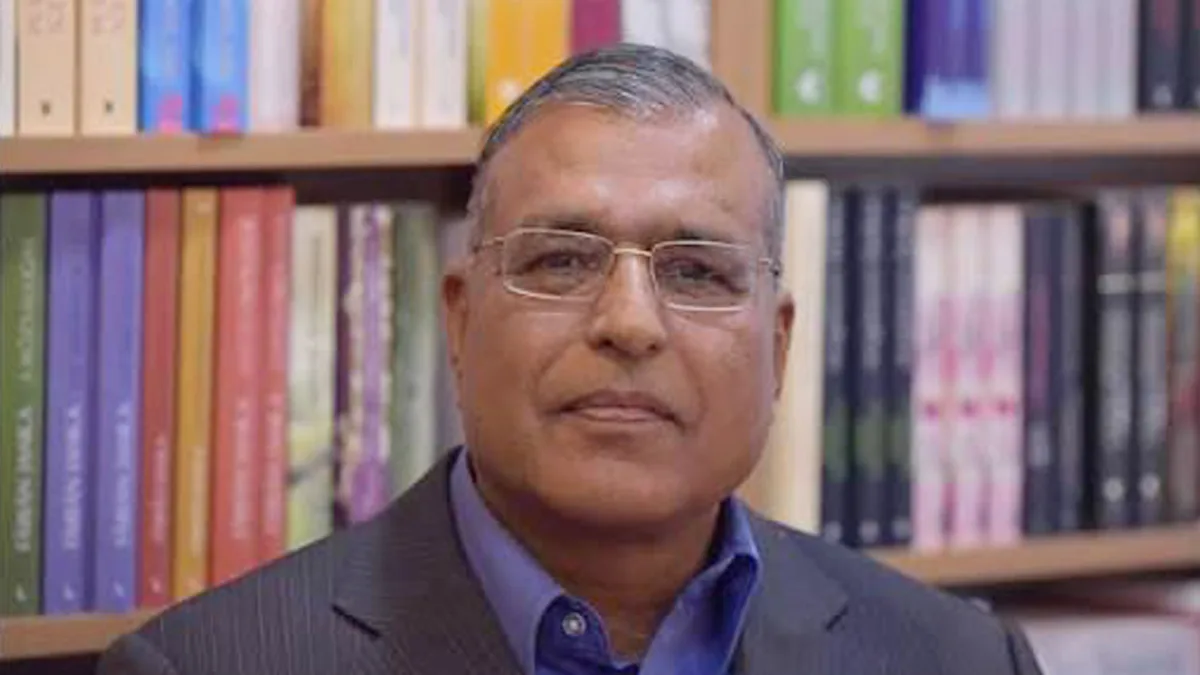
Over more than three decades in the Indian Foreign Service, I served in Indian missions across the world – from Brussels to Dhaka and Mexico City to Paris and Manila, and subsequently as India’s Ambassador to Mongolia, Hungary and Bosnia & Herzegovina, and as High Commissioner in the Caribbean. As part of my career, I sat on the Executive Board of UNESCO, to gaze at the functioning of the multilateral machinery from within. This unique vantage teaches a lesson the chancelleries prefer to avoid. An institution is best judged by its conduct where scrutiny is the deepest and thinnest, rather than by the language of its charter and the public pronouncements.
The United Nations, seen from the capitals outside looks generous and lofty with declarations has indeed decayed to the core and has reached its nadir. I have come to a conclusion many of my former colleagues still flinch from stating: the organisation has outlived the world that founded it and needs to be demolished.
Advertisement
Just a few days ago the Commission appointed by the UN Human Rights Council has delivered its latest report on Gaza, finding reasonable grounds to conclude that Israel has committed atrocities against Palestinian children accusing some of the senior figures in the government. Observing from the developing world, the selectivity is impossible to miss. This is not a judgment on how Israel has fought its war, a matter on which there are many honest differences. The question is why Israel alone was singled out. In those same years, comparable or larger civilian tolls in Syria, Yemen and Sudan drew no attention of the Council. Are the human sufferings in one place are different from the other?
Advertisement
The proof lies in the architecture of the UN system. The Security Council remains frozen around the five powers that won a war concluded eighty years ago. The fate of conflicts and human sufferings in Africa or Asia still does not rattle a handful of capitals in Europe and North America. The debate and resolutions in the General Assembly are conveniently ignored and buried. As S. Jaishankar rightly said, the problems of Europe are world’s problem but the problem’s world are not Europe’s problems. This architecture of 1945 has clearly outlived its utility. It has now crumbled under the weight of a multipolar global reality for it has failed to adapt and renovate.
Here the defenders of the system argue that Israel is shielded by the United States, a permanent member of the Security Council, so how was a commission against it ever created at all? The answer lies in the fact that the enquiry commission was not a creation of the Security Council, where the American veto would have killed it in an afternoon. It was made in the Human Rights Council, where no veto exists and a simple majority of those who vote suffices. In a council of 47 members, the resolution was passed with 24 votes in favour and 9 against with 14 abstentions. This is yet another ploy and hypocrisy of arithmetic. Ironically, the resolution of May 2021, was moved by Pakistan a state known for its footprints in terror activities across the world and where the minorities have been tortured for decades reducing their number from over 20% in 1947 to less than 3 percent today. We also need to ask then why gross discrimination in investigating human rights violations. Another glaring example of such ridiculous decisions is the appointment of Iran as Vice Chair of the UN commission on Social Development that examines democracy, gender equality, tolerance and non-violence. Strangely, under the UN system many a times the culprits are allowed to sit in judgement over others.
Many countries that are gross violators have been able to escape this scrutiny, including the sponsor of the resolution – Pakistan. The conflicts that escape all scrutiny are those in which a permanent member of UNSC is itself the accused, for there no door into the system can be forced open. Take the case in Xinjiang. A great power that levels a city answer to no commission, because it commands the veto; a state without that shield is condemned by majority vote in a lesser forum.
India has its own long and bitter experience of this asymmetry, and Jammu and Kashmir is its sharpest instance. The illegal armed aggression by Pakistani forces was allowed to prevail against the legal instrument of accession of Jammu and Kashmir to India signed by the then Ruler as per agreed terms.
The state-sponsored terrorism against India has endured for decades and has attracted no scrutiny, is precisely the double standard the post-colonial world was promised would end in 1945 and it never did. In fact, it has perpetuated itself with glaring discrimination. The incumbents of the present arrangement would argue that imperfect institutions are better than none. It is the argument of every establishment that has outlived its usefulness and knows it. The proposal is that international order quietly captured, lending its prestige to verdicts decided by arithmetic among blocs, should not be mistaken for the rule of law.
The verdict on this commission is that it is the work of an architecture frozen in 1945, selective by design, pursuing the state without a veto while the conflicts of permanent members pass unexamined. Its authority is borrowed from an institution the world has outgrown, and its conclusions are the foregone product of a forum that has confused its own opinions with the conscience of humankind. None of this excuses impunity. It condemns impunity in its present, selective form. India, often made to answer charges its accusers would never face, has the standing and the duty to lead the building of something fit to replace what has failed.
About the author: Dr. Gauri Shankar Gupta is a distinguished former Indian diplomat of the 1981 batch of the Indian Foreign Service (IFS) and an author. He has served as India’s Ambassador to Hungary, Bosnia and Herzegovina, and Mongolia, as well as India’s High Commissioner to Trinidad and Tobago.
(The views expressed in this article are solely those of the author and are personal in nature. They do not necessarily reflect the views, opinions, or editorial stance of The Statesman.)
Advertisement