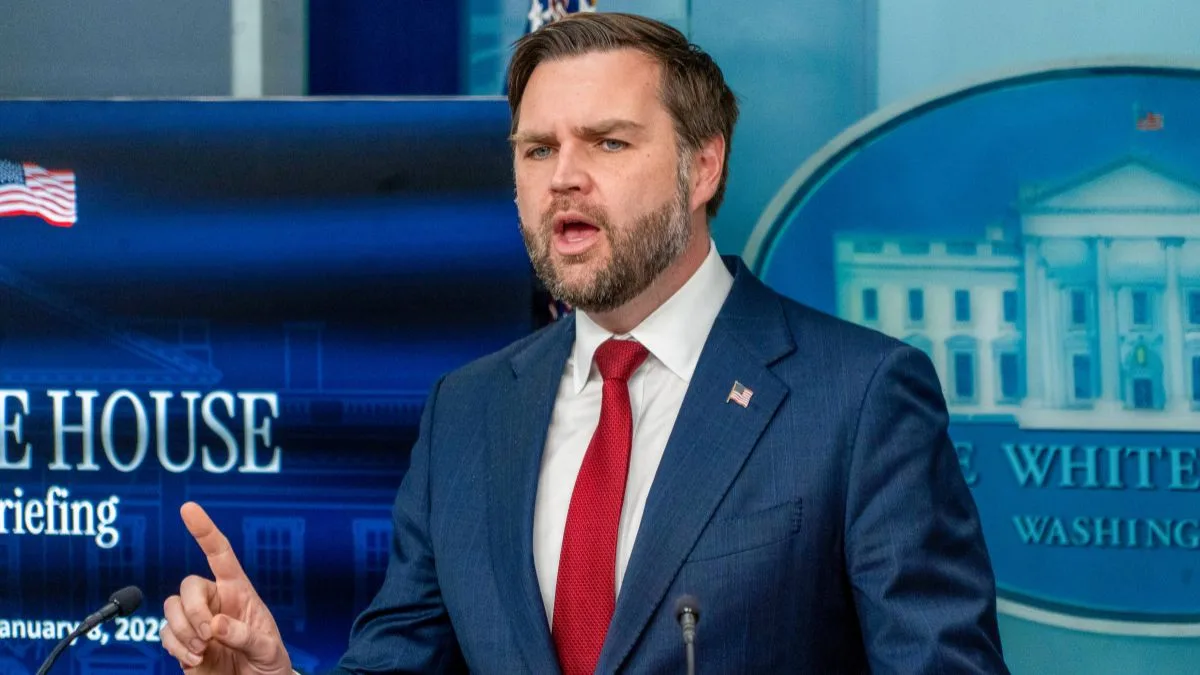
The first phase of negotiations under the newly signed US-Iran peace memorandum has run into uncertainty, with US Vice President JD Vance shelving plans to travel to Switzerland as Washington and Tehran continue to work out the details of upcoming technical talks.
The development comes a day after US President Donald Trump and Iranian President Masoud Pezeshkian signed a 14-point memorandum intended to halt hostilities, reopen the Strait of Hormuz and launch negotiations on sanctions relief and Iran’s nuclear programme. While both sides have expressed support for the framework, the next stage of discussions has yet to be scheduled.
Advertisement
A White House spokesperson said preparations for the talks were still underway and no final arrangements had been made.
“As the Vice President said at his press conference, the plans for the upcoming technical talks have not been finalised, and the US delegation has been prepared to depart at the first available opportunity. But the logistics of these negotiations have never been simple or predictable,” the spokesperson said.
“As of now, the Vice President is not departing tonight. We will let you know as soon as we have a concrete update about next steps. We look forward to beginning technical talks as soon as possible.”
JD Vance cites economic impact of US-Iran agreement
Speaking earlier at a White House briefing, Vance argued that the agreement was already producing economic benefits.
According to him, more than 12.5 million barrels of oil passed through the Strait of Hormuz after the accord was signed. He also pointed to lower oil prices and falling fuel costs in the United States.
“The president’s peace plan in Iran is already bearing real fruits for the American people,” Vance said.
He rejected claims that the memorandum would result in direct American financial support for Tehran.
“The part of the peace plan, the part of this MoU that I think has been most misrepresented by certain parts of the media, is the idea that the Iranians get all these benefits. You will hear things about $300 billion or $24 billion or this or that number of money or amount of money. The simple fact is that the only way the Iranians get any of those resources–not a single penny, by the way, from the United States of America under any circumstances–but the only way that they would ever get any benefit of the bargain is if they comply fully and change their behaviour,” he said.
Lebanon developments cast shadow over agreement
Questions over the durability of the deal emerged after reports of Israeli air strikes in southern Lebanon on Thursday.
The memorandum calls for an end to military operations across all fronts, including Lebanon. However, Lebanese media reports cited by international outlets said at least three people were killed in the strikes.
Israel’s Ambassador Yechiel Leiter said his country remained committed to the ceasefire arrangement.
“Israel remains committed to the ceasefire agreement reached between Israel, Lebanon and the US. If Hezbollah does not violate the agreement, it will be kept,” he said.
Vance also issued a warning to Israeli officials who have publicly criticised Trump over the agreement with Iran.
“If I was in the Cabinet of the Israeli government, I might not be attacking the only powerful ally that I have anywhere left in the entire world,” he said.
Trump says markets responding positively
Trump defended the agreement and said financial markets had reacted positively to the diplomatic breakthrough.
“The stock market just hit a new all-time high. Oil is dropping like a rock,” Trump told reporters during a Medal of Honour ceremony.
In a separate message on Truth Social, he said Washington expected all parties to honour the ceasefire commitments and allow negotiations to proceed.
“The United States is committed to PEACE, and we encourage everyone in the Middle East Region to maintain their commitment to allowing our negotiations to beautifully unfold,” Trump wrote.
Iran links support for deal to Lebanon commitments
Iranian officials also signalled that the future of the agreement could depend on developments in Lebanon.
Foreign Ministry spokesperson Ismail Baghaei said Tehran viewed guarantees relating to Lebanon’s sovereignty and territorial integrity as essential components of the memorandum.
“In this case, the Memorandum of Understanding would be considered null and void,” Baghaei said while discussing potential violations of those commitments.
He maintained that any resolution of the conflict must apply across all theatres of confrontation.
“When we speak of ending the war, it must end on all fronts and completely,” he said.
Iran’s Parliament Speaker Mohammad Bagher Ghalibaf separately warned against what he described as excessive demands during future negotiations.
“In the event of bad faith, breach of contract, and excessive demands by the opposing side, we have no hesitation in delivering a crushing response to the enemy,” he wrote on X.
Meanwhile, Iran’s Supreme Leader Ayatollah Seyyed Mojtaba Khamenei reportedly confirmed that he had approved the agreement.
The next round of technical discussions is expected to determine whether the ceasefire framework can move towards a broader settlement, even as tensions persist over Lebanon and both sides continue to trade warnings.