The fragile US-Iran framework deal entered its first real test on Thursday, with Tehran warning Washington against “bad faith” even as maritime restrictions began easing around Iranian ports and the Strait of Hormuz.
The 14-point memorandum, signed virtually by US President Donald Trump and Iranian President Masoud Pezeshkian, has opened a 60-day negotiating window for a final agreement on sanctions, Iran’s nuclear programme, missile capabilities and regional security. But early reactions from both sides show the process is likely to remain politically volatile.
Advertisement
Iran’s Parliament Speaker and top negotiator Mohammad Bagher Ghalibaf said Tehran would not hesitate to retaliate if the US or its partners violated the framework or tried to add fresh conditions.
“We are at your command; the task assigned to us by the Supreme Leader is to pursue the realisation of the conditions and clauses of the agreement. In the event of bad faith, breach of contract, and excessive demands by the opposing side, we have no hesitation in delivering a crushing response to the enemy,” Ghalibaf said in a post on X.
“They were once slapped during the war; if they wish to tread that path again, they will receive an even harder slap,” he added.
Khamenei says talks do not mean acceptance of US position
Iran’s Supreme Leader Ayatollah Mojtaba Khamenei also struck a guarded note after the signing of the memorandum.
He said future face-to-face talks with Washington should not be read as acceptance of the American position.
“However, it is self-evident that the in-person negotiations that will take place in the future will not mean acceptance of the enemy’s position,” Khamenei said.
Khamenei said he had initially held a different view on the agreement. He said he gave permission only after receiving assurances from President Pezeshkian and members of Iran’s Supreme National Security Council that Iran’s rights and the Resistance Front would be protected.
“I, as a matter of principle, held a different view; however, out of the commitment that the esteemed president–as the head of the Supreme National Security Council–gave to me on his own behalf and on behalf of the other members regarding the safeguarding of the rights of the Iranian nation and the Resistance Front, and his explicit acceptance of that responsibility, I granted my permission,” he said.
He also said Iranian negotiators had made it clear that Tehran would not accept excessive American demands.
US says 60-day clock has begun
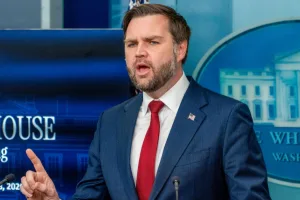
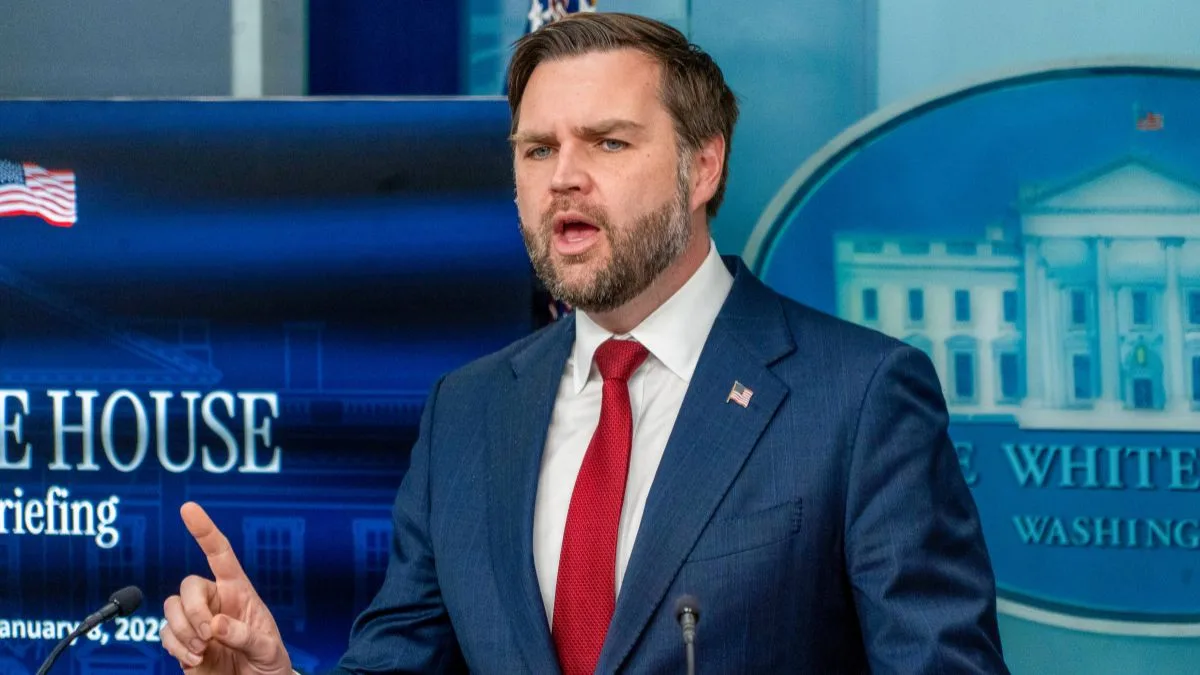
US Vice President JD Vance said the formal negotiating period began on June 18, a day after the memorandum was reached.
“I would say the 60-day period officially started today. So, yes, the deal started yesterday. We’re going to start the 60-day clock today,” Vance told reporters at the White House.
Vance defended the deal as an agreement backed by military gains. He said the US had destroyed a substantial number of Iran’s ballistic missiles and launchers.
“The nuclear weapons program is destroyed. It is gone,” he said.
He also said the agreement did not take away the right of self-defence from either Israel or Iran.
“Israel doesn’t give up the right of self-defence… The Iranians don’t give up the right of self-defence,” Vance said.
Maritime blockade lifted, Hormuz passage process begins
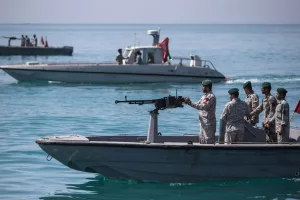
The US Central Command said American forces had lifted the maritime blockade on all traffic entering and exiting Iranian ports and coastal areas.
“Today, US forces lifted the blockade on all maritime traffic entering and exiting Iranian ports and coastal areas, in accordance with the President’s direction. American forces are not impeding the transit of vessels to or from Iranian ports. All US military blockade enforcement efforts have ceased,” CENTCOM said.
It added that US naval ships would remain in the region to ensure compliance with the agreement.
Iran’s Supreme National Security Council also said it had ordered swift processing of vessel requests to pass through the Strait of Hormuz.
According to the Iranian body, ships will not be charged any fee for 60 days. The expenses will be covered by the Iranian government.
Vessels seeking passage have been asked to send requests to the Persian Gulf Strait Authority. Iran said ships must follow the announced route and timing because of safety hazards along the passage route.
Trump expects ceasefire across Lebanon, Hezbollah and Israel fronts
Trump, in a post on Truth Social, said the US remained committed to peace in West Asia and expected the negotiations to move forward.
“The United States is committed to PEACE, and we encourage everyone in the Middle East Region to maintain their commitment to allowing our negotiations to beautifully unfold. The Markets are loving what is happening with Oil Prices way down, and Stocks way up. We expect a complete Ceasefire on all fronts, including Lebanon, Hezbollah, and Israel. Thank you for your attention to this matter!” Trump wrote.
Vance said implementation had already begun. He said more than a dozen commercial vessels had been facilitated to Iranian ports and that over 12.5 million barrels of oil moved through the Strait of Hormuz overnight.
“Last night, 12.5 million barrels of oil went through the Strait of Hormuz, which is a high since the beginning of the conflict,” he said.
He also said oil prices had moved close to pre-war levels and gasoline prices in the US had fallen below USD 4 a gallon.
Bolton says deal favours Iran
The agreement has also drawn sharp criticism from former US National Security Advisor John Bolton.
Bolton said the deal was “very favourable to Iran” and argued that it did not fully resolve the issue Trump cared about most: free navigation through the Strait of Hormuz.
“I think the deal is very favourable to Iran, and the one issue that mattered most to Trump, which is opening the Strait of Hormuz, is not fully resolved by this deal,” Bolton said in an interview with ANI.
“I mean, we’ll see what happens, we’ll see whether Iran tries to charge tolls, for example, or imposes other conditions on maritime traffic. This agreement does not prohibit that,” he added.
Bolton said Trump wanted to exit the conflict because of concerns over gasoline prices and global oil flows.
“I think Trump has put himself in a very difficult position. It was clear he wanted out of the war; he’s worried about the price of gasoline in the United States, he wanted to release more Gulf oil into international markets to get global prices down and therefore the price in the United States, and he didn’t really care what he gave up to get it,” Bolton said.
He warned that renewed oil revenue could help Tehran rebuild its military, the Revolutionary Guard, its proxy network and its nuclear programme.
Bolton also said Washington should now make freedom of navigation through Hormuz the central test of Iran’s compliance.
“The Strait of Hormuz is an international waterway, and that means there is a right of innocent passage through the strait for all commercial vessels. That means no tolls, no restrictions,” he said.
“And if Iran varies from that conduct, then I think the deal’s off. That’s what I’d advise him,” Bolton added.