Saving Aravallis from death by definition, all eyes on Jan 21
The Supreme Court’s December 29, 2025, decision was welcomed as a major relief for those working to protect the Aravallis—India’s oldest mountain range.
If the Aravallis disappear, North India could gradually turn into a desert, environmentalists warned on World Desertification Day on Wednesday.




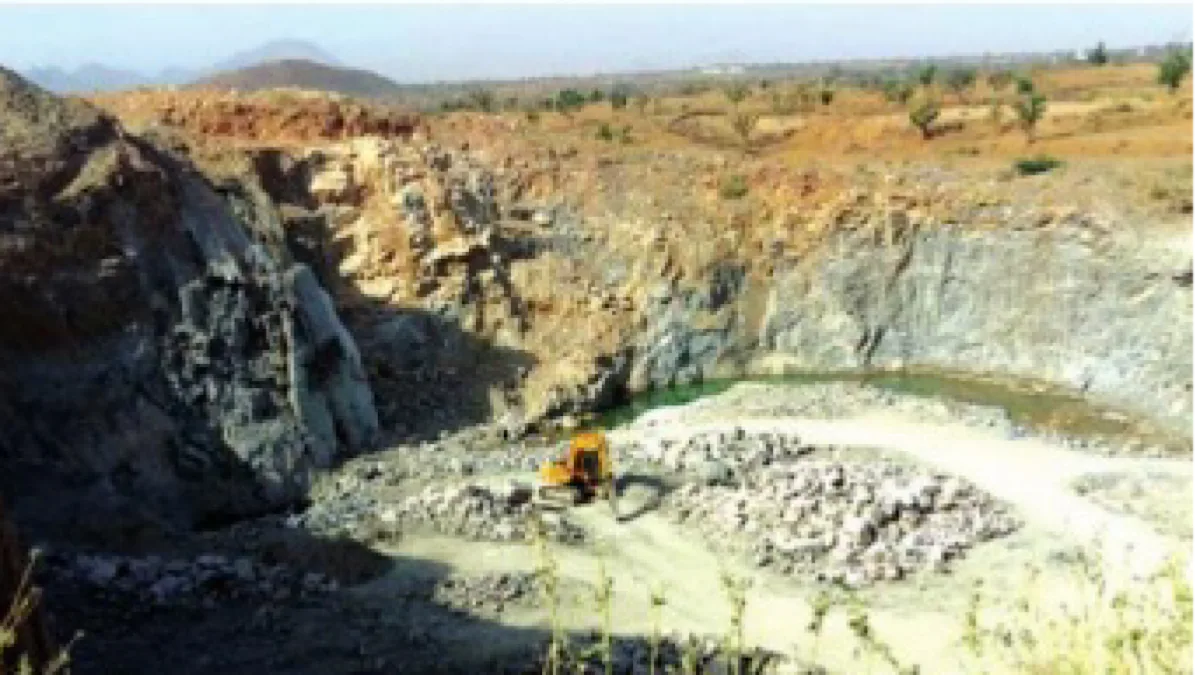
Aravallis
If the Aravallis disappear, North India could gradually turn into a desert, environmentalists warned on World Desertification Day on Wednesday.
Over the past few decades, extensive destruction of the Aravalli hills — a 700-km-long ancient mountain range that acts as a natural barrier against desertification — has resulted in the emergence of more than 12 breaches stretching from Ajmer district in southern Rajasthan to Jhunjhunu in northern Rajasthan and Mahendragarh in southern Haryana. These gaps have allowed dust from the Thar Desert to sweep into eastern Rajasthan, Haryana, western Uttar Pradesh and the Delhi-NCR region, worsening air pollution, they added.
Advertisement
The two-billion-year-old Aravalli range, spread across Delhi, Haryana, Rajasthan and Gujarat, is facing an “existential crisis” due to decades of mining — both legal and illegal — as well as real estate and construction activities, according to Neelam Ahluwalia, co-founder of Aravalli Virasat Jan Abhiyaan.
Advertisement
The group has also raised concerns about the Supreme Court-appointed high-powered committee on the Aravallis, arguing that it is “neither truly high-powered nor independent”. According to activists and environmentalists, the committee, headed by the Director General of the Indian Council of Forestry Research and Education (ICFRE), includes officials who lack the seniority and independence expected of such a body.
“This committee’s report defined Aravalli hills as landforms rising 100 metres or more above the surrounding terrain while excluding slopes and smaller hills from legal protection, thereby permitting mining in those areas,” said Prakruti Srivastava, a former Indian Forest Service officer. “There is a perception that the committee is aligned with the government, which has previously produced reports that do not adequately prioritise conservation.” Climate activist Lokesh Bhiwani added that the panel reviewing the contentious 100-metre definition should genuinely be a high-powered committee.
Ahluwalia said the intensity of dust storms has increased significantly in recent years. Citing the Desertification and Land Degradation Atlas 2021, she said 62 per cent of Rajasthan’s geographical area and 8 per cent of Haryana’s area (around 3.6 lakh hectares) underwent desertification during 2018–19 due to wind erosion and vegetation degradation.
“In 2018, a Supreme Court-appointed committee found that 31 Aravalli hills had completely disappeared in Rajasthan’s Alwar district because of mining. This represented nearly 25 per cent of the sampled hills in just one district,” she said.
“In Haryana’s Charkhi Dadri and Bhiwani districts, licensed mining over the past decade has devastated large sections of India’s oldest mountain range. No technology can restore these lost hills. Only a few hillocks remain in the name of the Aravallis in these districts.”
Mining accelerates vegetation loss, heightens the risk of desertification and threatens the food and water security of northwestern India, she added. Kailash Meena, who advocates for the rights of mining-affected communities in northern Rajasthan, said the health of the Aravallis is extremely critical for water security in the region.
Advertisement