Peace without peace
The announcement of a framework agreement between the United States and Iran has understandably been greeted with relief.
A CNN report citing sources familiar with a US intelligence assessment says Iran may now possess the ability to shut the Strait of Hormuz at will, raising fresh concerns over the security of one of the world’s most important energy corridors.





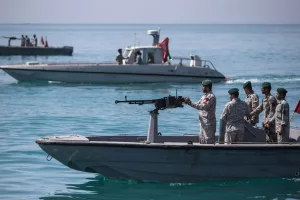
Iranian soldiers patrol the Strait of Hormuz in southern Iran on April 30, 2019. (Photo: Xinhua/IANS)
Even as Washington prepares to formalise a new agreement with Tehran, concerns remain within the US intelligence community over Iran’s ability to influence movement through the Strait of Hormuz, according to a CNN report published on Wednesday.
The assessment, cited by CNN and attributed to sources familiar with the matter, suggests Iran has acquired the capability to effectively halt activity in the strategic waterway if it chooses to do so. The finding has reportedly fuelled concerns that a diplomatic breakthrough may not fully eliminate risks to global shipping in the Gulf region.
Advertisement
The report said US officials believe Iran’s leverage over the strait could remain intact regardless of the framework agreement expected to be signed on Friday.
Advertisement
According to CNN, some intelligence officials view the development as one of the most significant strategic outcomes of the recent conflict. The report quoted a source familiar with the assessment as saying that Iran had gained a tool capable of exerting pressure far beyond its nuclear programme.
“We have now handed Iran de facto control over the strait – a weapon more powerful than any nuke,” CNN quoted one of the sources acquainted with the US intelligence assessments as saying.
The assessment also pointed to Iran’s previous strikes on energy infrastructure and attacks targeting US military facilities in neighbouring countries, CNN reported.
Washington has since engaged in extensive negotiations aimed at ensuring the full reopening of the Strait of Hormuz, the report said.
Comments from US Vice President JD Vance appeared to underscore the importance of the waterway in the broader negotiations.
Speaking about the agreement expected to be signed in Switzerland on Friday, Vance said the deal would ensure that Iran does not obtain a nuclear weapon and that the Strait of Hormuz remains open.
“It says, one, Iran can’t have a nuclear weapon, two, the Straits of Hormuz are open, and number 3, there are all of these benefits contemplated that the Iranians can get if they behave… If they don’t [behave], they don’t get anything,” Vance said.
However, uncertainty surrounding the final text of the agreement may continue to affect commercial shipping, according to industry officials and maritime experts quoted by CNN. The report said traffic through the strait could remain below normal levels for weeks or even months.
Meanwhile, US President Donald Trump has indicated that the full agreement will soon be made public.
Speaking during a meeting with UAE President Mohamed bin Zayed Al Nahyan on the sidelines of the G7 summit in France, Trump said he expected to release the document after a formal announcement.
“I’d like to get a formal setting first before we do that, but I have no problem with that. It’s a great document,” Trump said.
The US President also reiterated what he described as the central provision of the agreement.
“Here’s what it says: Iran will never have a nuclear weapon,” he said.
According to the report, Trump signed the agreement electronically on Sunday, although the full text has not yet been released publicly.
Advertisement