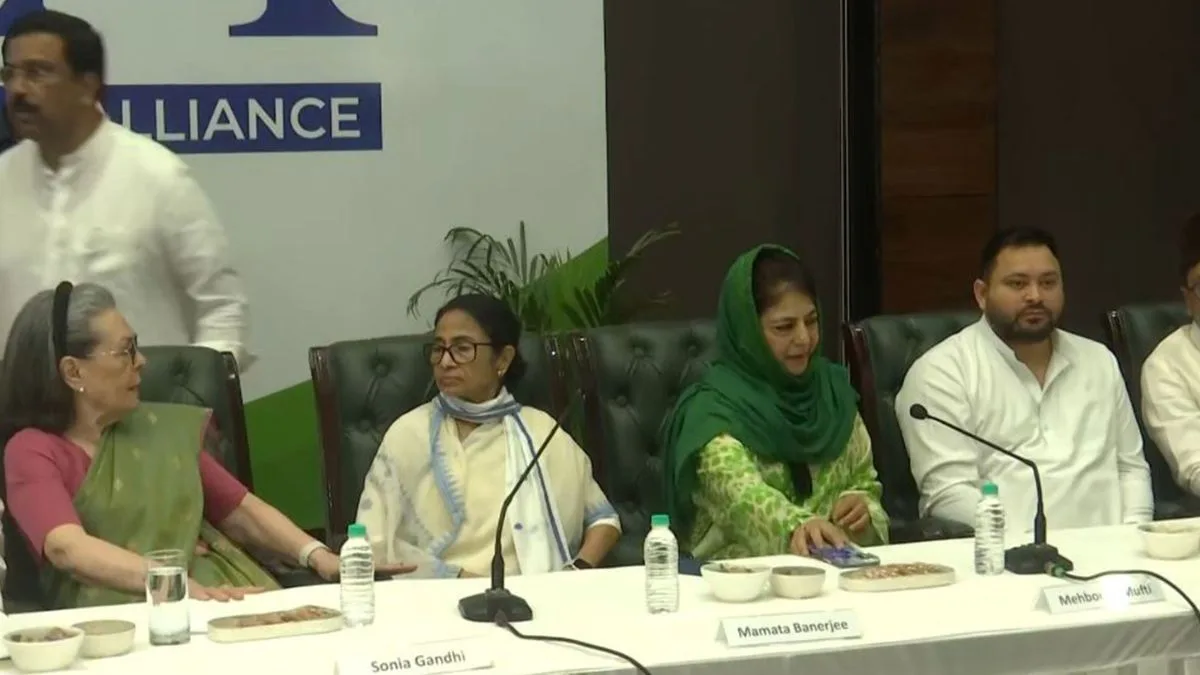
The latest gathering of opposition parties in New Delhi offered a reminder that the central challenge before India’s non-BJP political forces is no longer one of arithmetic. It is one of credibility. For years, opposition politics has revolved around alliance-building. The assumption was that if regional parties and the Congress could overcome local rivalries and pool their votes, they would create a formidable electoral challenge.
Yet recent elections have demonstrated that political chemistry cannot be reduced to mathematics. Voters may be dissatisfied with governments, anxious about the economy, worried about unemployment or disturbed by institutional controversies, but dissatisfaction does not automatically translate into votes for the opposition. This reality appears to be dawning on opposition leaders. Their discussions reportedly ranged from examination controversies and economic concerns to questions about electoral processes and the state of democratic institutions.
Advertisement
What ties these disparate issues together is a growing recognition that electoral contests are only one part of a broader political struggle. Winning elections requires winning public confidence. That confidence cannot be secured through press conferences, parliamentary coordination or occasional conclaves in the national capital. It must be built through sustained political work on the ground. The Bharatiya Janata Party’s greatest advantage today is not merely its organisational strength or leadership appeal. It is its ability to maintain continuous engagement with voters between elections. Opposition parties, by contrast, often appear active only during campaigns or moments of crisis. The internal criticisms aired during the meeting are therefore significant.
Regional parties appear increasingly unwilling to accept a hierarchical arrangement in which the Congress is the unquestioned anchor of the alliance. Their message is simple: unity requires consultation, accommodation and mutual respect. If opposition parties cannot manage differences within their own ranks, convincing voters that they can govern together becomes considerably harder. Equally notable is the emergence of independent protest movements that operate outside traditional party structures like the Cockroach Janata Party. Whether such movements endure is less important than what they signify. They suggest that public anger does not only seek expression through established political parties. In a democracy, that should concern these parties.
Citizens who are unhappy with the government but remain unconvinced by its challengers create a political vacuum that no alliance formula can easily fill. The opposition’s frequent focus on the fairness of the electoral playing field reflects another dilemma. If voters come to believe that institutions are under strain, such concerns deserve scrutiny and debate. But arguments about process cannot substitute for political mobilisation. Parties that wish to govern must persuade citizens not only that the system needs reform but also that they themselves offer a credible alternative. The meeting’s most important takeaway is therefore not that the opposition remains united. It is that its leaders increasingly understand the scale of the task before them. The real test lies ahead: transforming scattered discontent into organised political support. Until that happens, unity will remain a slogan rather than a strategy