How the lot of women has changed
The latest National Family Health Survey-6 (NFHS-6) Rep or t gives us some crucial insights regarding the different facets of development.
A state with a per capita income well below the national average has, over the years, surprised demographers and public health researchers with faster-than-expected gains on child mortality, institutional births, and school enrolment.




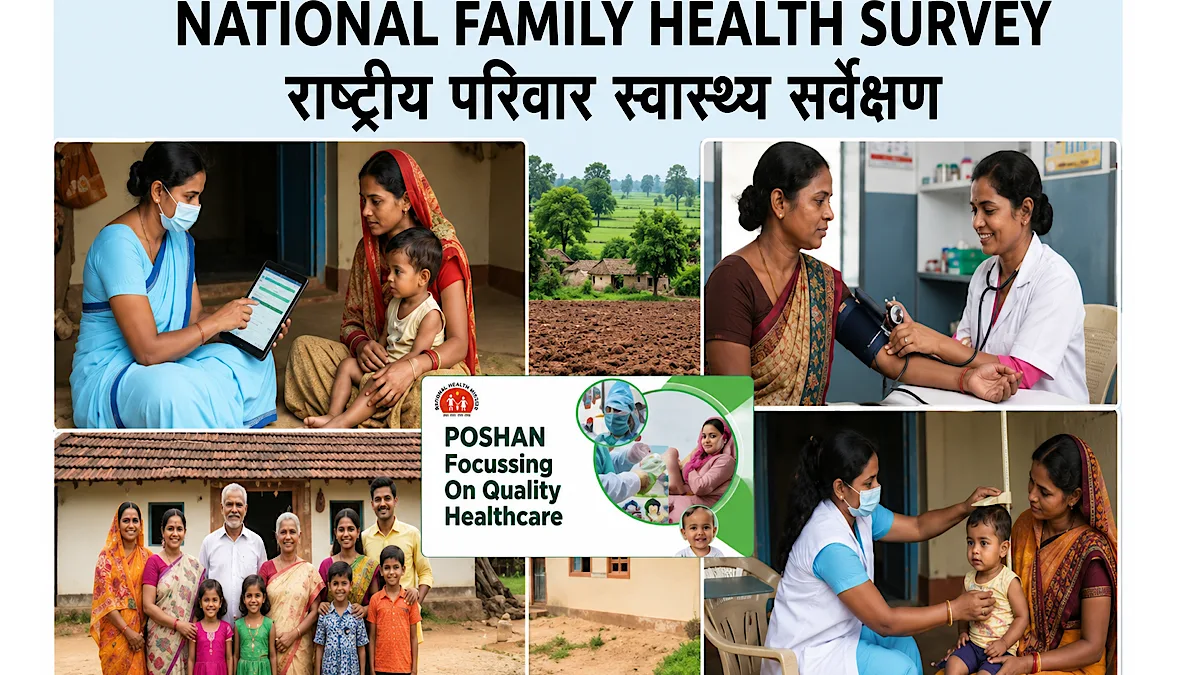
Photo:SNS
A state with a per capita income well below the national average has, over the years, surprised demographers and public health researchers with faster-than-expected gains on child mortality, institutional births, and school enrolment. The National Family Health Survey-6 (NFHS-6), conducted in 2023-24, continues that tradition of partial celebration ~ but it also plants several deeply troubling flags that policymakers cannot afford to ignore.
A careful, indicator-by-indicator read of the NFHS-6 fact sheet for Odisha reveals a state in transition. Here are the red flags that demand immediate attention. Let’s start with the number that should be causing alarm at every level of Odisha’s administration: 22.1 per cent of children under five are wasted ~ meaning they are acutely malnourished, too thin for their height. This is worse than NFHS-5 (18.1 per cent) and worse than the national average of 19.0 per cent. Severe wasting stands at 5.8 per cent, nearly matching the national figure of 5.2 per cent.
Advertisement
Wasting is not a slow, structural problem like stunting. It is an acute, immediate indicator of children in nutritional distress right now. A worsening wasting rate, even as stunting falls (from 31 to 26.8 per cent, which is good), tells us that macro-level improvements in food security and poverty may not be translating into adequate dietary quality for the youngest children. It also points to gaps in the management of acute malnutrition through NRC (Nutrition Rehabilitation Centres) and ICDS supplementary feeding.
Advertisement
Even more troubling: only 14.9 per cent of children aged 6-23 months receive an adequate diet, down from 20.1 per cent in NFHS-5. Non-breastfed children in rural Odisha receiving an adequate diet? Just 6.3 per cent. These figures speak to a child feeding crisis that programmes like Poshan Abhiyaan have not yet made much difference in Odisha. One of the starkest numbers in the Odisha fact sheet is the caesarean section rate: 29.4 per cent of all births, up sharply from 21.6 per cent in NFHS-5.
The national average is 27.2 per cent. The WHO’s benchmark is that C-sections should constitute no more than 10-15 per cent of births. Any rate above that suggests medically unjustifiable procedures. In Odisha’s private facilities, a jaw-dropping 76.8 per cent of all births are by C-section. Even in public facilities ~ traditionally the domain of the poor and the tribal ~ the rate has jumped to 19.9 per cent from 15.3 per cent. This is a multi-dimensional problem.
At its crudest, it reflects sheer commercialisation of childbirth in private facilities where C-sections generate significantly higher revenues. But the surge in public facility rates also reflects inadequate skilled birth attendant training, fear of litigation, and systemic pressure on staff. For women in Odisha, especially in rural areas, this trend means unnecessary surgical risk, longer recovery periods, and downstream complications for subsequent pregnancies ~ all without clinical justification. NFHS-6 records a significant fall in contraceptive use: modern method use has dropped from 48.8 per cent to just 40.8 per cent in Odisha. Simultaneously, unmet need for family planning has risen from 7.2 to 10.0 per cent ~ now above the national average of 8.5 per cent.
Unmet need for spacing has nearly doubled, from 2.6 to 4.7 per cent. This is a convergence of two bad trends. Women want to space or limit births but cannot access contraception. The likely culprits: post-Covid disruption of family planning supply chains that never fully recovered, over-reliance on female sterilisation as the default method (still at 26.1 per cent, disproportionately high), and inadequate counselling infrastructure. The dip in overall contraceptive use also suggests that ASHA and ANM outreach ~ the backbone of the community health system ~ is fraying in its family planning mandate.
The irony is that Odisha’s Total Fertility Rate (TFR) has already fallen to a replacement-level of 1.7. The unmet need problem is therefore not about population management ~ it is about women’s bodily autonomy and maternal health. An unintended pregnancy in rural Odisha often means an unsafe termination or a closely spaced birth that depletes maternal nutrition. Odisha’s blood sugar data should trigger an immediate non- communicable disease (NCD) response. Among women aged 15 and above, 21.7 per cent have blood sugar levels classified as high, very high, or are taking medication ~ up from 14.0 per cent in NFHS-5. Among men, the figure is 26.6 per cent, up from 17.0 per cent.
The jump ~ from 14 to 21.7 per cent for women and 17 to 26.6 per cent for men – in just three to four years is extraordinary. These are not figures that reflect only a rise in testing and diagnosis; they represent a genuine epidemiological shift. The double burden of malnutrition ~ undernutrition in children and metabolic disease in adults ~ is now firmly visible in Odisha’s data. This is compounded by the rise in overweight and obesity. Women who are overweight or obese have jumped from 23 to 29.7 per cent; men from 22.2 to 27.8 per cent. Urban Odisha is seeing dramatic rises ~ 46.3 per cent of urban women are overweight or obese.
The dietary transition driven by ultra-processed foods, combined with increasingly sedentary urban livelihoods and a healthcare system still geared toward infectious disease, is creating a crisis that the state’s health infrastructure is wholly unprepared for. The NFHS-6 data starkly illustrates the two-speed nature of Odisha’s development. On nearly every indicator ~ education, internet use, vaccination completeness, nutrition ~ urban Odisha performs dramatically better than rural Odisha.
But the gap is particularly striking in a few areas: With respect to child vaccination, full vaccination coverage is 90.8 per cent overall, but urban coverage (81.2 per cent) is lower than rural (92.4 per cent) ~ a counterintuitive finding likely explained by urban migrant populations, non-registration with public facilities, and over-reliance on private providers who have lower vaccination card compliance. Wasting in urban areas (22.6 per cent) nearly matches rural (22.1 per cent), suggesting the urban poor face nutritional deprivation comparable to the rural poor ~ but without the rural safety nets of community-based ICDS outreach.
Female school attendance in rural areas is only 71 per cent, compared to 84.6 per cent in urban areas. Despite years of interventions, over a quarter of rural Odisha’s women above age six have never attended school. Odisha’s antenatal care figures show a troubling regression. Mothers who received antenatal check-ups in the first trimester fell from 76.9 to 70.6 per cent. Those receiving at least four ANC visits dropped from 78.1 to 73.6 per cent. These are against the direction of national trends where first trimester ANC has improved.
Early ANC is critical for detecting gestational diabetes, hypertension, and anaemia ~ conditions whose prevalence in Odisha is clearly rising. New A fall in first-trimester ANC access, precisely when the state’s metabolic disease burden is growing, is a dangerous mismatch. Postnatal care for mothers also slipped slightly (from 88.4 to 86.3 per cent), and vitamin A supplementation for children fell from 87.1 to 82.7 per cent. These regressions, small as they seem, signal a system under stress. Odisha must treat rising wasting as a public health emergency, not a routine indicator.
This means a state-wide NRC expansion, mandatory community-based management of acute malnutrition, and a fundamental redesign of supplementary nutrition under ICDS ~ moving away from dry rations toward hot, diversified meals that actually improve dietary adequacy. The state health department must introduce mandatory second-opinion protocols for elective C-sections in private facilities, audit C-section rates district-by-district for public hospitals, and tie JSSK (Janani Shishu Suraksha Karyakram) facility payments to normal delivery outcomes. Strengthening midwifery and birth companion programmes can reduce unnecessary surgical interventions.
Odisha needs to diversify its contraceptive method mix urgently. The over-reliance on female sterilisation must give way to investment in spacing methods ~ injectables, IUDs, and male condom promotion ~ particularly for younger women in the 20-29 age group. ASHA incentive structures must be reoriented away from sterilisation targets toward meeting unmet need comprehensively. The state must fast-track the rollout of HWC (Health and Wellness Centres) as genuine primary care platforms for NCD screening.
Every adult above 30 visiting a public health facility should be screened for diabetes and hypertension. The current infrastructure is built for maternal and child health ~ it must urgently retrofit for metabolic disease. Odisha’s urban health mission needs a complete overhaul. The data consistently shows that urban pockets ~ particularly slums and migrant settlements in cities like Bhubaneswar, Rourkela, and Cuttack ~ are falling through the cracks of both urban and rural health systems.
The decline in first-trimester ANC registration must be investigated at the district level. Health workers’ incentives need to be restructured to reward early registration. Mobile outreach for tribal and remote populations ~ who are disproportionately likely to miss first-trimester care ~ must be intensified. NFHS-6 gives Odisha credit where it is due. The fall in child marriages (18.6 per cent vs 20.5 per cent nationally), the dramatic improvement in health insurance coverage (82.7 per cent, well above the national 60.2 per cent), the near-universal institutional birth rate (93.9 per cent), and the rise in women’s education and internet access are real, meaningful gains.
The state has built infrastructure. It has moved the big structural levers. But infrastructure without quality, and gains in some indicators that are matched by reversals in others, amount to an unfinished revolution. A state that has brought women to institutional deliveries but then subjects them to a one-in-three chance of an unjustified caesarean has not solved the problem of maternal health ~ it has simply moved it indoors. The NFHS-6 data is a gift: a detailed, granular, honest account of where Odisha stands now. The question is whether the policymakers will read it in full ~ or only the headlines.
(The writer is a technocrat and policy specialis)
Advertisement

![‘Beginning of accountability’: Sonam Wangchuk reveals 3 written assurances from Centre before ending fast [VIDEO]](https://www.thestatesman.com/wp-content/uploads/2026/07/Sonam-Wangchuk-1-1-300x200.webp)
![‘Beginning of accountability’: Sonam Wangchuk reveals 3 written assurances from Centre before ending fast [VIDEO]](https://www.thestatesman.com/wp-content/uploads/2026/07/Sonam-Wangchuk-1-1.webp)